Start with the ad everyone actually remembers, because it makes the sharpest possible case that the industry keeps blaming the wrong culprit. In December 2025, McDonald’s Netherlands released a 45-second Christmas commercial called “It’s the Most Terrible Time of the Year,” built entirely with generative AI by agency TBWA\Neboko and production house The Sweetshop. It reworked “It’s the Most Wonderful Time of the Year” into a bleak, glitchy tour of holiday mishaps: presents knocked off a car roof, Santa stuck in traffic, a man dangling from his own Christmas lights, all rendered in the slightly-off, too-smooth style anyone who’s spent time with AI video will recognise instantly. The backlash was fast and total. McDonald’s pulled it from YouTube within days and put out a statement admitting the spot had misjudged what the season means to its customers.
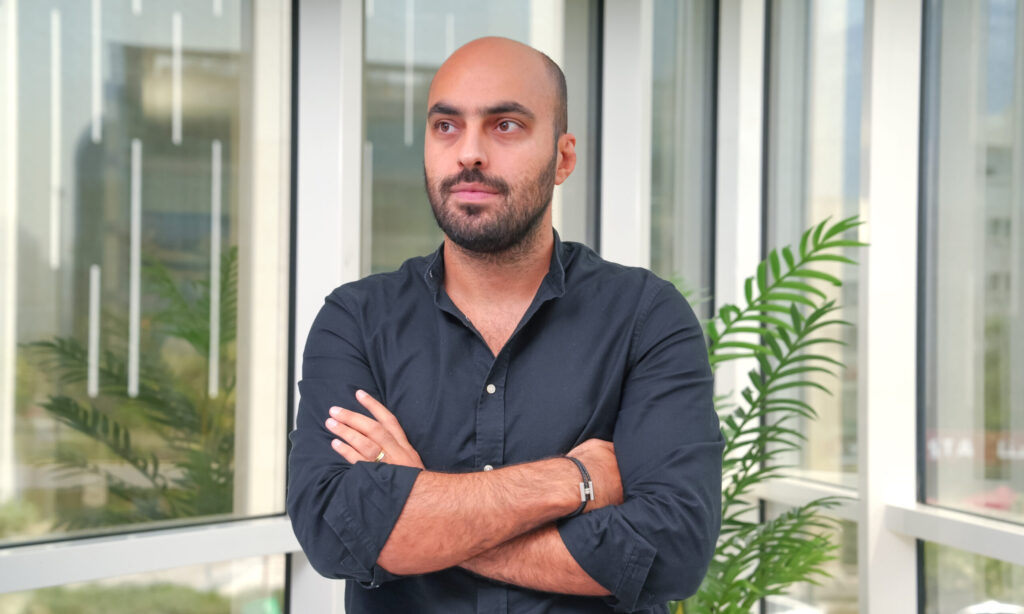
Everyone blamed the AI. Hubert Boulos doesn’t. “For me the biggest of AI use in creative fail was McDonald’s Christmas ad by TBWA Netherlands, people wrongly attributed the failure to AI,” he said. “The disastrous results were, in my opinion, due to the fact that it was totally off-brand, ridiculing all the values McDonald’s is known for, family, joy, togetherness, at the ultimate time of celebrating such values: Christmas.” His read is that the strategic decision was broken well before anyone opened an AI tool: a fast-food brand built on warmth chose to spend its most emotionally loaded week on a joke about how miserable the holidays are. “AI was not responsible,” he said. “AI only was the catalyst for making it a total disaster. Cold and emotionless execution added to what was already a major strategic error. This is probably the biggest disaster, but it is wrongfully attributed to AI.”
Come Back Stronger… Maybe….
That distinction, AI as amplifier of a bad decision rather than the source of it, connects every AI creative failure worth studying this year, including two closer to home. Volvo’s 2025 “Come Back Stronger” campaign for Saudi Arabia, produced by Dubai-based Lion Creative using MidJourney and Runway, generated an entire car commercial with no car in it, built around AI-rendered runners, cheering crowds and a man in a red keffiyeh. Volvo’s own headquarters later pulled it, saying it wasn’t in line with the company’s global guidelines, after viewers called the result uncannily inhuman. The strategic call to sell a car with no car in the ad was made by people. AI just executed it in a way that made the absence impossible to miss.
A separate incident this year showed the same amplifying effect colliding with history and grief rather than brand tone. A Ramadan campaign in Iraq, produced by Bana Marketing under the banner “United Iraq,” used AI to digitally recreate the revered poet Muhammad Mahdi al-Jawahiri, depicting him serving tea to the sitting prime minister. The backlash was severe: the Iraqi Writers and Authors Union condemned it, the prime minister’s office ordered an investigation, and the ad’s creator reportedly received death threats. Someone decided resurrecting a national icon to sell tea was a good idea. AI just made the resurrection convincing enough to be genuinely upsetting.
The MENA Examples
That’s a MENA story, not a GCC one, worth being precise about given how differently national memory functions outside the Gulf. But it’s the same failure mode the region’s own AI builders warn about from the inside. Avneesh, co-founder of CAMB AI, describes the guardrail both campaigns skipped in almost identical terms. “Something said in a certain part of the world is not acceptable in another part of the world,” he said. “Simply by way of translation, it has to be adapted. You cannot misrepresent what has been said in the original language. Those are the guardrails you have to respect.” Nobody adapted anything in either case. They generated first and asked forgiveness later.
Yohan Wadia, whose studio builds entire campaigns on generative tools, draws the same line even more bluntly, worth hearing from someone who runs GenAI production for a living rather than reacting to its failures from outside. “We trust the tools for what they can demonstrably do, and we verify the output,” he said. “We don’t trust them with final creative judgement, brand accuracy or factual certainty.” That’s exactly the judgment McDonald’s, Volvo and the Iraq campaign each outsourced without meaning to, whether a Christmas joke read as too bleak, a car ad needed a car, or a national poet should be pouring tea for a politician.
AI Blunders and More
Faisal Abbas, watching brand AI blunders from the Arab News newsroom, put the accountability question most sharply of anyone we spoke to. “An AI blunder isn’t a software bug,” he said. “It’s a decision by leadership to prioritize speed and margin over quality control, ethics, and cultural intelligence. Journalists don’t judge the tool, they judge the lack of a human-in-the-loop.” His non-negotiable guardrail, hard-won running AI translation across 50 languages at Arab News, would have stopped every failure here: “Establishing a strict human-in-the-loop verification protocol, or editorial firewalls, before any piece of content reaches a live audience.”
What AI gets wrong in regional and global creative, then, isn’t really a technology problem, and it’s worth saying that plainly given how much coverage of these disasters still leads with the tool rather than the decision. McDonald’s, Volvo, and the Iraq campaign all had a strategic or cultural misjudgment sitting underneath them well before a single frame was generated. AI’s job in each case was simply to execute that misjudgment at high fidelity and high speed, with none of the friction that might once have given a human team the chance to notice the problem and pump the brakes. That’s the real risk. Not that AI creates bad ideas, but that it removes the delay in which someone might have caught one.