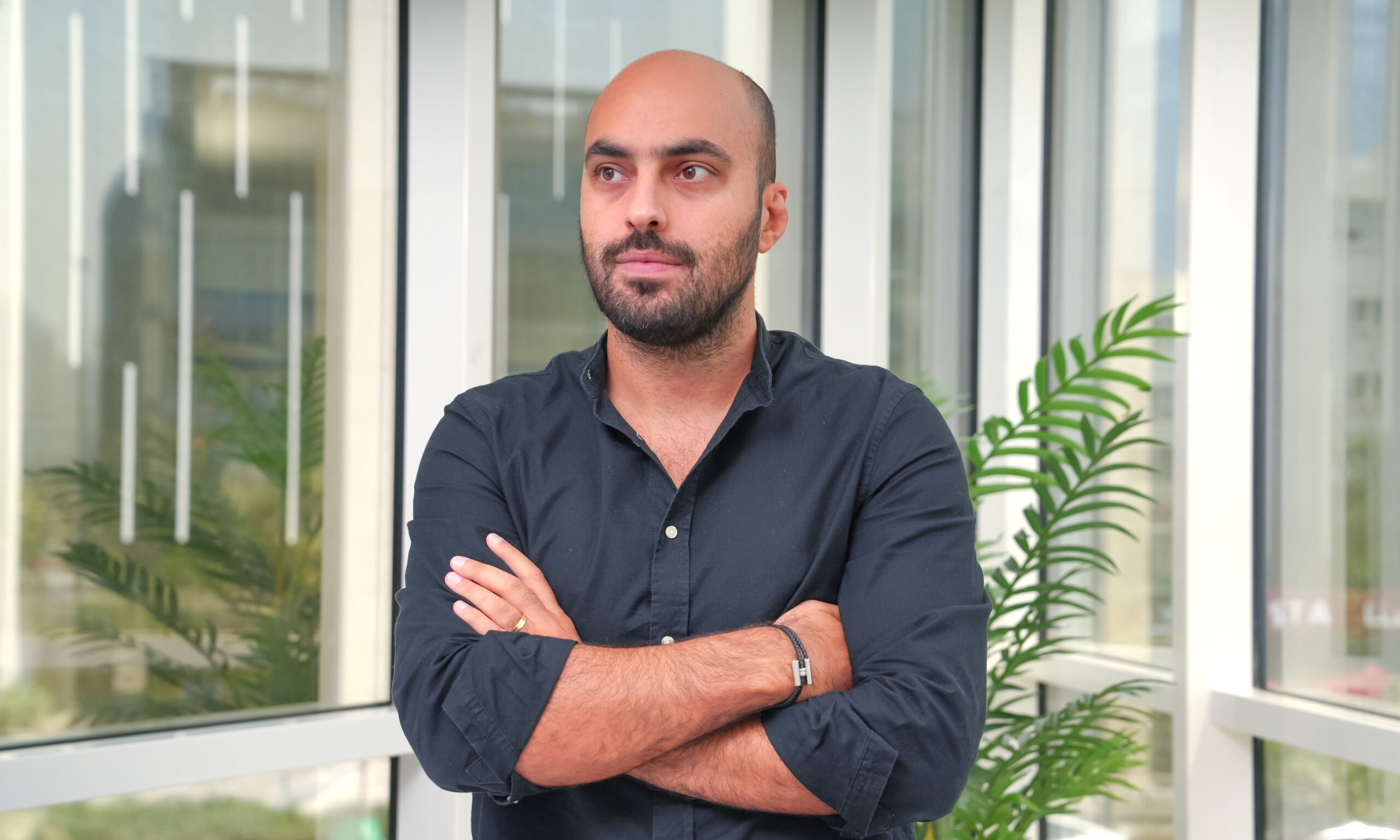
When a crisis hits, agencies feel it first. Oliver Elobeid, VP of Human Resources at Havas, has been here before. We spoke to him at the end of summer, while researching Communicate’s 2026 GCC Advertising and Marketing Salary Survey. He covers hiring freezes, the 50% pay jumps tempting talent away from Saudi agencies, and why the retention problem has moved up from juniors to mid-level and senior staff.
Give us a snapshot of the GCC’s HR landscape right now. Hiring freezes? A market pause? Layoffs?
I think there is definitely caution in terms of workforce decisions. I think everyone today is looking more at their current talent pool and trying to understand how to navigate the situation with the current resources that they have. So I think we are shy on investment, because at the end of the day, in our industry, we are the first ones to be heavily impacted when any crisis comes, because you’re all about people.
And then you’re also linked a lot to marketing budgets. So if marketing budgets today are being shrunk or canceled, there’s a huge impact on agencies.
Now, at the same time, there are opportunities, of course, with any challenge. And I think it’s also time for us to really take a step back, understand what our needs are and maybe focus on what our clients are expecting today. There are a lot of areas and verticals within the agency that are actually thriving due to the current situation, potentially in crisis communication, for example, and stuff related to PR in general. Other disciplines or verticals are being hit more, those directly linked to marketing spend focused on marketing a certain brand, which the situation today doesn’t permit.
So to go back to my point: yes, there is a hiring freeze. Yes, there is a cautious approach when it comes to investment in people in general. But it’s also time for agencies, and this is what we are doing, to prioritize our talent and their development, and to really look at how we can take advantage and reward the people that are with us. Because at the end of the day, we need them to be able to navigate this crisis.
How has this new reality changed the role of HR?
I think the beauty of working in HR is that you adapt to situations. I don’t think we are strangers to crisis. Five or six years ago, we had COVID, which, okay, was definitely another kind of crisis, but it was also something that directly impacted people. So when there is uncertainty, I think our role becomes much more important.
Our role is to create a certain kind of support on well-being and safety. This is one. Two, it’s working as much as we can with business leaders to understand the impact on the business, and focusing on protecting the existing talent that we have. Three, it’s looking at ways of keeping morale high, which is not usually easy in times of crisis.
And sometimes it’s just basic stuff that can make an impact, like checking on employees regularly, which is something you sometimes don’t tend to do when everything is business as usual. But we know people struggle in different ways. We know, especially in this region, a lot of people are living here on their own. A lot of people are coming from places outside this region, like Europe or North America. They’re new to this.
Just showing a little more attention to these employees during a crisis can have a long-lasting impact, in my opinion. Because at the end of the day, with this situation where the market is down, people are not chasing title bumps and salary increases, because they know the situation is not easy. You need to come up with ways to reward people and keep them engaged, while there are minimal things that you can do.
For example, flexibility is very important now, because for two months people could not travel. They could not see their families. So what are we doing for summer now to give people additional benefits, so they can really go in the summer and be with their families again? We’re also looking at other ways, not specifically financial, to keep employees happy in the agency. Focus on learning. We have a lot of online learning tools today that we can use. Since work is a bit slow, maybe they take the time to really upskill on AI, on stuff like that. This is exactly how we are navigating today.
So the HR role, honestly, is not about changing; it’s about adapting to the situation. I wouldn’t say that our role changed. Every couple of years we go through a crisis, and we are the first ones that need to shape the situation, understand it and try to coach the business on it.
What’s harder right now: attracting talent or keeping it? And what makes people leave?
I think retaining talent has always been an issue. It’s not about attracting. Let’s be real: in our industry, and being in this region as well, there’s a lot of talent. And I’m talking pre-war.
In general, I think it’s always an issue to retain talent in our industry, because in the UAE today there’s an influx of talent. It’s a very competitive market. Talent is always on the lookout. People are moving between agencies. Clients are moving between agencies. So honestly, I get a lot of passive applications all the time. People want to move. So I don’t find it challenging to attract talent. I think it’s more about retaining them.
Why? Because today I think employees are not only valuing growth in terms of salary. What they are looking at is a total value proposition: what does this agency bring to the table for me to stay? What is the retention strategy or package that you have that goes beyond salary? Of course, salary is important, but what else? Is it doing meaningful work? Is it the learning that I can get? Is it the flexibility that I get? Is it the accelerated progression path? So they are looking at a lot of factors before taking the decision to move.
But also, if you don’t have this and you’re not proactively working on this, you’re going to lose talent. You’re going to lose talent. And yes, compensation is one of the main factors, but with it come a lot of other things that I just mentioned.
You mentioned AI. Is that a hiring story or a headcount story?
I don’t think it’s a hiring story at this stage. We’ve been talking about AI, and you know how it’s changing on a monthly basis, on a quarterly basis. We’re seeing new tools, we’re seeing new stuff. So it’s not replacing roles, in my opinion. I think it’s reshaping them.
Our focus today at Havas is to upskill our teams to use AI as a tool. This is our main focus now. They do not need to fear it; they need to work with it. It needs to complement what they are doing today.
In our industry, I’m not going to lie and tell you we’re not looking at a future workforce that is smaller, but I think it’s definitely more specialized. Once you have this specialized, tech-savvy creative strategist that can blend the human aspect with machine efficiency, then you’re definitely looking at efficiencies, and that will create a smaller workforce. But this is a long-term vision.
For now, it’s just upskilling everyone, because if you’re not using AI, you’re just late in the game. Our focus today is upskilling, and we have a very clear and strong vision when it comes to AI at Havas.
Is there a disconnect between salary expectations and market reality?
Yes. Before the war, things were really on an upward, onward trend. All the agencies were on a hiring spree. Our forecast for the year was fantastic. Clients were expected to spend. The region was growing economically as well, Saudi Arabia today, and even if you hear here and there that there are budget cuts, overall it’s a region that has been growing.
Then the war came suddenly, and you feel that there is a bit of a disconnect between the new reality now, after the war, and what it was before the war. For people to adapt and adjust to this, I think it’s going to take a little time, because now not everyone is looking for a job. They understand that, okay, this is the situation. I cannot move. I don’t want to risk it. I don’t want to go and be on a probation period somewhere else.
So I think the market is confused, because people are not moving a lot and, at the same time, agencies are not taking risks and investing. People are worried about uncertainty: will it return or not? So there is confusion; it’s not clear at the moment where things are headed. I think we’re going to give it some time. Q4 will be very clear on how things are moving this year.
Where’s the innovation coming from?
I think innovation within our industry is going to be led by AI. I think we’re going to see more and more creative work done through AI, which is something we’ve seen rising in the last couple of months. With clients, more and more, you feel that they are no longer expecting these large TV and offline campaigns. They are rather looking for quick, snackable content, which used to be a pain point for creatives in the agency, because it’s a lot of workload and it tends to lead to a lot of mistakes.
And at the same time, budgets are small for such content, but your resources cost a lot. So now, if you have AI, maybe you don’t need five people to do this anymore. If you have the tool and you have someone that is specialized in it, it can be faster, it can be cost-effective. And in terms of quality control as well, it would definitely be better.
Are you optimistic about 2027? Will agencies hire more people or fewer?
I think it all depends on Q4 this year and how we will close the year. It really depends on how fast the recovery will be in Q4, and I think that will set the tone for 2027. It’s too early now. We’re living here month by month, week by week, day by day. We don’t understand what the situation is. Predicting how 2027 will be is very far off at the moment, but let’s see how the situation and the recovery will be from September onwards, and then I think it will set the tone for 2027.
What trends do you see over the next six to seven months, on talent gaps, salaries and leadership?
I think we will see selective growth in terms of talent, or headcount, in fields like digital, data and integrated capabilities. I think salaries will stabilize after the spike, but we will always have top talent that will ask for and command a premium.
If I look at trends as well, I feel that agencies will now start breaking silos as much as they can and focus more on building integrated teams. This is something that I can definitely see. It’s also prioritizing more strategic thinking, data and commercial acumen. And in terms of leadership, they will really focus on leaders that can navigate ambiguity and inspire through crisis, because at the moment we don’t know. Everything is unpredictable.
In terms of hiring trends, as I said, I can see people that can wear multiple hats. So I think the focus, even in 2027, will shift from headcount growth to strategic hires that drive real business impact. You will see a lot of dual-role positions, hybrid positions, like creative tech roles and strategist-planners. There will be more investment in these roles, in my opinion, or, while you’re upskilling, people will wear multiple hats.
So the concept of headcount growth, in my opinion, will disappear, because agencies will be very cautious. You see that overnight a lot of things can change. So now you need to be careful with your investment: still investing, but in the right things that are sustainable even during a crisis.
What are the biggest recruitment challenges today?
I think the recruitment challenge, when things go back to normal, is that candidates are now more informed than ever. They are benchmarking a lot across markets. We will see a rise in expectations of salary jumps for mid- to senior-level talent. In Saudi Arabia, there will always be a challenge, because you will need to navigate talent shortages with Saudization ratios as well. So this is going to be a specific challenge. The main challenge that we have when it comes to recruitment is in Saudi Arabia, to be honest, more than the UAE.
Are Saudi agencies gaining talent or losing it?
I think in Saudi, the thing is that you’re not only competing with agencies. You’re competing with PIF, with the public sector, with government entities, with tech companies, and people can jump there for something like a 50% salary increase. So it is a challenge to retain people, and it is a challenge to attract people too. You can find amazing Saudi talent, but they also have a lot of expectations. They need learning budgets. They need to see that they are doing meaningful work. They need to see what this agency brings to the table and why they should not go to the public sector, which is something that is really on the rise in Saudi.
So reputation and employer branding, in my opinion, are very important in Saudi. You need to build your reputation, and you need to build your image, to attract the right talent.
How have salaries moved across entry, mid and senior levels?
Honestly, at entry level, it didn’t move much, because when people are just joining an agency, money is not as important to them as it is for people in more senior roles. You want to land a job, you want to work for a specific name; you would go for anything. So I don’t think we have really reevaluated our entry level.
The more problematic part is at the mid-level and the senior level. This is where you lose talent and your turnover is high. When you are at mid or senior level, once you are poached or once you apply for a job, this is where you might land a big jump in terms of salary. At the junior level, most people are there for the experience, so maybe an increase of 10% or 15% is not that exciting. But at a senior level, it makes a difference, with the cost of living increasing and people who have kids, who are married, who have obligations and commitments.
So I see that the retention issue, which used to be more on juniors, is now more at the mid to senior level.
How does your pay compare? See how salaries are moving across agencies, brands and media in Communicate’s 2026 GCC Advertising & Marketing Salary Survey HERE.