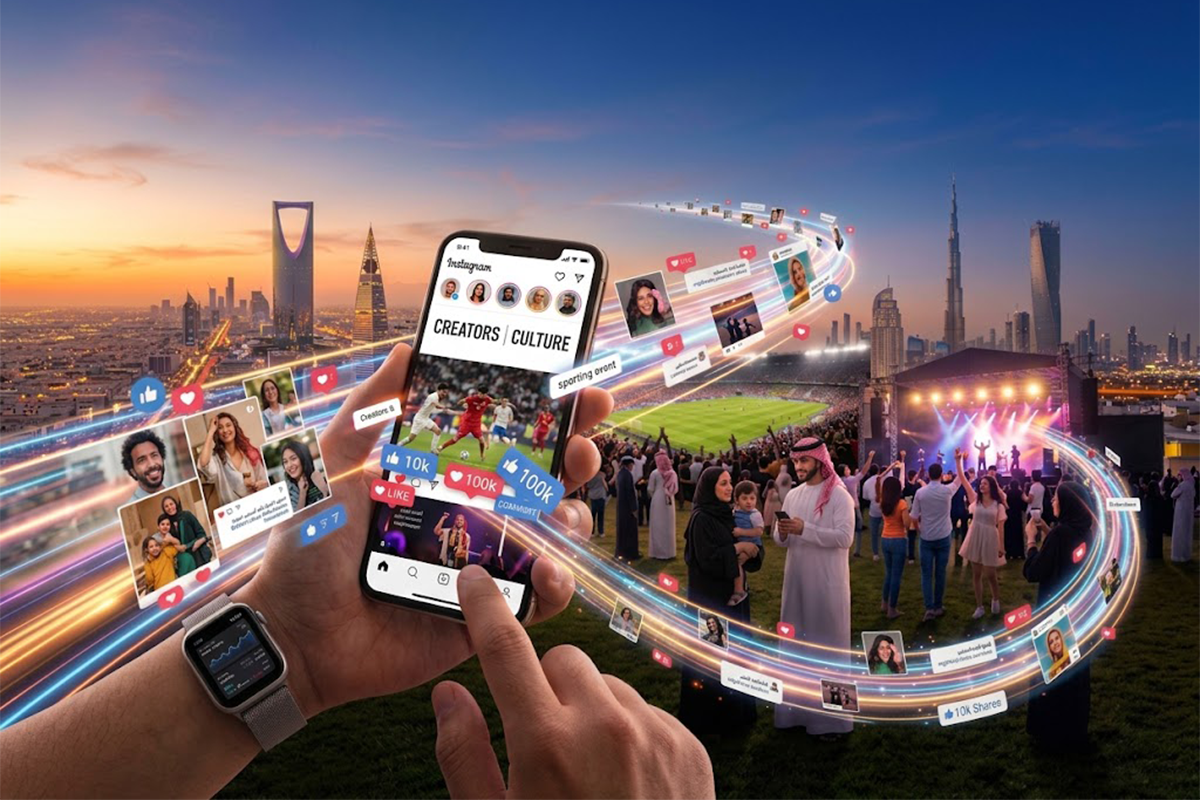
Social has become one of the fastest ways for brands to connect with audiences, creators, and culture across MENA. From creator partnerships and short-form video to real-time cultural conversations, social has changed how brands build relevance and how quickly they are expected to respond.
But as investment in social and creator marketing continues to grow, an important question is emerging: how much of that attention translates into lasting brand growth?
New research from WARC, The Pace Principle 2.0, explores this question through an analysis of 210 advertising case studies across Southeast Asia, Greater China and India. The research builds on WARC’s first Pace Principle study, which found that the most effective brands tend to operate at two speeds, combining short-term activity designed to drive immediate results with longer-term brand building.
The latest research applies that thinking to an increasingly social-first marketing environment. Its central argument is that social and emotional creative strategies play different roles in building growth. Targeted social campaigns are particularly effective at generating participation, conversation and interaction, while broader emotional campaigns are stronger at building brand memory and longer-term impact.
According to WARC, aligning the audience with the right creative strategy can improve campaign effectiveness by up to 70%. Its analysis also found that broad emotional campaigns delivered 2.1 times the brand and business impact of broad social campaigns, while targeted social campaigns were 2.4 times more effective than targeted emotional campaigns.
For marketers, the takeaway is less about choosing between social and brand building and more about understanding what each is designed to achieve.
WARC also identifies three “ceilings” that can limit the growth potential of social-first marketing.
The platform ceiling appears when brands become overly dependent on algorithmic feeds, with content losing momentum once paid support ends. The cultural ceiling comes when campaigns are built around moments that generate attention but quickly fade. The self-sustaining ceiling is the most difficult to reach, when creators and communities continue carrying an idea forward because the brand has earned enough credibility and relevance for them to do so.
These ideas offer a useful lens for MENA, where social platforms and creators have become deeply embedded in how brands participate in culture. The region also has a rich calendar of cultural, sporting and entertainment moments, creating plenty of opportunities for brands to generate rapid attention.
The question for MENA marketers is how much of that attention becomes lasting relevance.
Are brands building ideas that can travel beyond the feed? Are creators continuing the conversation once a campaign ends? And are marketers giving long-term brand building the same attention as the next social moment?
WARC’s research provides a starting point. The next question is what these principles look like on the ground in MENA.