The Guggenheim Brothers Media co-founder on sovereign capital, the “missing middle” in creator investment, and why AI won’t replace the human spark behind great IP.
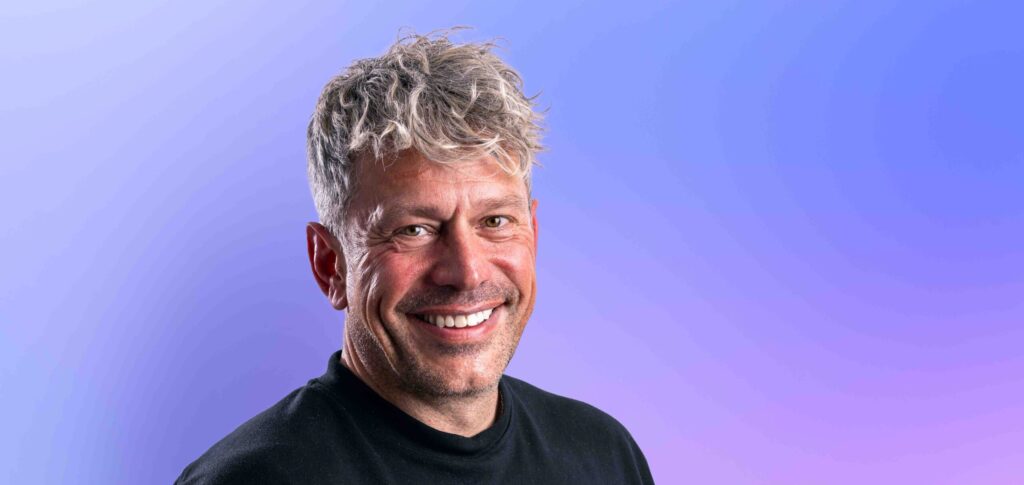
Dillon Lawson-Johnston is co-founder and managing partner of Guggenheim Brothers Media, a firm betting on the infrastructure behind the next generation of creators rather than the creators themselves. A member of the Guggenheim family, he moved into Abu Dhabi through the Guggenheim Museum before setting up his fund there, backed by Ethmar International Holding. He spoke to Communicate about sovereign capital, the “missing middle” in creator investment, and what CMOs still get wrong about creators. Interview excerpts below:
Why Abu Dhabi and why now?
The impetus behind Abu Dhabi stems from the museum. I’m a member of the Guggenheim family — my great-great-grandfather was Solomon Guggenheim, who founded the museum in New York City. We’re partnered with the Department of Culture and Tourism to bring the Guggenheim Museum to Abu Dhabi, and I started spending time there through that lens. The feedback was that media, entertainment and the creator economy are a huge priority for Abu Dhabi going forward. We ended up partnering with the royal family, a group called Ethmar International Holding, which has anchored our fund.
So much of the foundation has already been built, investment in culture, tourism, entertainment, technology and infrastructure. The next logical step is connecting all of that through a strong digital and creator strategy, so Abu Dhabi becomes a place where the future of media is being built.
Why is sovereign capital moving into creative economies now?
The creator economy is becoming more professionalized. A year ago, people mostly thought of creators as influencers who monetize through selling brands and products. Today, the best creators are building real businesses around themselves — teams, institutionalized IP, recurring revenue, sophisticated infrastructure. You become less focused on backing an individual creator and taking on the key-man risk that comes with that, and instead focus on the businesses helping creators scale. That’s where sovereign capital is getting interesting: the picks and shovels around this new industry.
When does a creator stop being a creator and start becoming a media company?
There’s a lot a creator can and should do to institutionalize themselves. Having millions of followers is valuable, but the real question is what you can build around that attention: recurring revenue, owned intellectual property, diversified distribution, a real team and systems so the business doesn’t depend entirely on one person. What makes creator-led companies more compelling is turning audience into community, and content into real intellectual property.
Does content at scale make the creator economy more investable, or harder to invest in?
It creates more opportunity, but you need to know where to look, and you need access. The entertainment industry is difficult to access — there are a lot of gatekeepers. My business partner and I grew up as operators in this industry, and the people building these next-generation businesses are our peers. Our deal flow is organic, through relationships. People come to us because they trust us and know we can add strategic value beyond just a check.
Where does the real value sit, the creator, the audience, the IP, the platform, or the business built around them?
We feel there’s great value in the infrastructure and the businesses around the creator. That’s not to say there’s no value in investing in the individual creator — many of our peers have started firms that back creators directly, and we support that. It’s just not our business model. Where we’re focused is the infrastructure play: talent management, the technology helping creators run their businesses better, and the intellectual property space and how that can be scaled.
Why has the market struggled to finance businesses in the “missing middle” between startup and traditional media company?
A lot of the firms doing this in the past grew to a point where they’d raised significant funds. When you have a $500 billion fund, you can’t write a $5 or $10 million check into a Series A business, and no one backfilled that stage. Traditional venture capital dipped its toe into the creator economy but wasn’t able to fully crack it, they weren’t operators in the space. It was a white space. I don’t think anyone is more uniquely positioned than us.
Is AI an amplifier rather than a replacement?
We believe AI is like the internet, and everyone should be using it to do their job better. But the real creativity and the special sauce that makes IP sticky, that makes a creator likable, will continue to be personally driven.
In five years, what will we say we misunderstood about the creator economy in the region today?
Anyone who was saying that’s a fad will be proven wrong. What we’ll see amplified is the value of building smaller, niche communities using the creator economy. That will continue to grow and become increasingly valuable to own, as people are always looking to find their tribe and be part of something.
Is Abu Dhabi’s push into culture about soft power, diversification, or future GDP?
It’s all of the above. Abu Dhabi is extremely forward-thinking — they always see where an industry is going and where value can be had, as they diversify the economy. As they think about the industries this next wave of technology will play the biggest role in — AI’s effects on healthcare, on real estate — they’re not overlooking that AI will also be instrumental in media, entertainment and the creator economy.
What’s your advice for CMOs working with creators and influencers?
Spend time thinking about the audience you’re trying to reach, then how to authentically reach them through the right creators, data-driven, but also understanding what that subculture is looking for. There are a lot of ways to just say, we’re trying to sell to teens aged 13 to 17, and this creator has a lot of followers in that space, I think that’s narrow thinking. Spend time learning the demographic, and which creators play a role in that ecosystem.