
Consumers are becoming more selective about what earns their money, attention and trust, forcing brands to rethink how they create value.
For years, understanding the consumer meant watching familiar indicators: disposable income, inflation, confidence and spending power. When conditions tightened, people were expected to cut back. When confidence returned, spending followed.
But today’s Middle Eastern consumer is making that equation considerably harder to read.
So, what changed? And what do consumers really feel is worth spending on?
Communicate spoke to consumer experts, technology platforms and some of the region’s biggest brands to find out.
Ugur Karci, APP Customer Success Director and Eastern Europe, Africa and Middle East Thought Leadership Leader at NielsenIQ (NIQ), describes today’s Middle Eastern consumer as “disrupted, recalibrated, and resilient.”
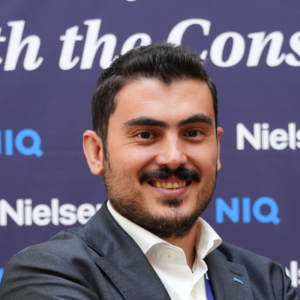
“Disrupted, because recent regional developments have impacted market dynamics, including pricing, availability, and distribution routes. Recalibrated, because consumers are reassessing their priorities and focusing more sharply on the attributes that matter most to them, such as value, quality, convenience, and trust. And resilient, because despite ongoing pressures across the region, consumers remain notably optimistic about the future and about their personal financial outlook.”
Consumers didn’t trade down.
Price is the number-one priority for Middle Eastern consumers, according to NIQ, but a contradiction remains.
“The most surprising shift has been that consumers have not simply ‘traded down.’ Instead, we are seeing a more sophisticated form of value-seeking,” Karci said to Communicate. “Shoppers in markets like the UAE and Saudi Arabia are saving in some categories, switching channels, buying on promotion, or choosing value brands, while still paying more for products that deliver quality, convenience, health, innovation, or a premium experience.”
A consumer who switches to a cheaper supermarket brand but pays more for faster delivery is not necessarily trading down, nor is someone who postpones one discretionary purchase to protect another. Price sensitivity and premiumization can coexist within the same household, and even the same shopping basket.
According to NIQ’s numbers, 46% of Middle Eastern consumers said last year, they would pay more for products or brands that made everyday tasks easier or less time-consuming. This year, that figure has risen to 64%, compared with 52% globally.
The proportion willing to pay more for environmentally friendly products also rose from 44% to 53%.
The emerging consumer is therefore not necessarily looking for the lowest price, but for a reason to justify it.
A friendly business chat.
Derya Matras, Vice President for Meta in Europe, Middle East and Africa, argues that people don’t think about “shopping” as an isolated activity anymore.
“Shopping is now woven into the way people connect, discover, and communicate. A person might see a creator they trust sharing a product in a reel, message the business directly on WhatsApp to ask a question, and complete a purchase – all within minutes, all on mobile, often without ever visiting a website,” Matras shared.

That way of interacting with products has changed what consumers expect.
“Across the Arabian Gulf, nine out of ten adults already spend most of their online time on messaging platforms. There, they do not expect a catalog of (random) options. They expect what’s relevant to their needs, and the ability to have a conversation with businesses the same way they’d message a friend.”
A BCG study found that 55% of UAE businesses plan to make rich messaging their primary customer channel within five years. More than one billion conversations between people and businesses take place every day across WhatsApp, Messenger and Instagram Direct, according to Meta.
Media creates discovery, a creator provides context and messaging becomes customer service. The same thread can become a transaction and potentially a loyalty channel. Matras describes that process:
“The path to purchase isn’t a funnel anymore, but a conversation. Take LuLu Hypermarket in the UAE, for example. They turned WhatsApp into their central engagement channel: digitizing promotions, integrating loyalty sign-ups, enabling real-time grocery ordering and delivery confirmations, all in a single thread. The result was 10x higher engagement than legacy channels like SMS and email, and over four million loyalty sign-ups directly through WhatsApp.”
The scroll on a roll.
Discovery itself is changing too. Matras sees behaviors once associated predominantly with younger consumers spreading across age groups.
“For years, we drew sharp lines between how Gen Z, Millennials, Gen X, and Boomers behave online. But what the data now shows is a massive convergence in digital behavior. Short-form video is the number one preferred content format across every generation (on social media). The scroll has replaced the search bar as the starting point for discovery.”
Meta reveals that 85% of Gen Z discover products on social media, compared with 58% who use search engines.
Search isn’t standing still.
The weakening of the linear purchase journey does not, however, reduce the importance of search.
“Five years ago, people typed specific keywords and followed a predictable path to purchase. Today, thanks to AI, people interact with Google the same way they interact with the real world. They ask complex questions out loud, snap photos with Lens to find products, and discover new brands while watching YouTube Shorts,” says Soheil Soueid, Head of Advertising Products and Solutions at Google MENA.

Google describes the modern journey through four increasingly interconnected behaviors: searching, streaming, scrolling and shopping. Consumers can move between social discovery, search, recommendation and comparison several times before making a decision.
Soueid told Communicate that even when discovery occurs on social media, 81% of the general population still turns to Google Search to learn more.
More choice and content do not necessarily mean consumers have lost the ability to pay attention. Soueid argues they have become better at deciding what deserves it.
“I believe that it’s more accurate to say that consumers are becoming highly selective rather than simply having shorter attention spans. In a world flooded with content, people have developed excellent filters and will instantly scroll past anything irrelevant. But when something actually captures their interest, they engage deeply.”
Long-form content provides a challenge to the shrinking-attention-span narrative.
“Just look at long-form video and podcasts. People are willing to listen to and watch their favorite creators for hours on a regular basis. The takeaway for brands is that the real challenge is not grabbing attention, but truly earning it.”
That selectivity applies to what consumers watch and who they listen to, as much as what they buy.
And AI could make those filters more powerful still.
“The goal of Search has always been simple: to help you ask anything on your mind,” Soueid says. “For shoppers, this means AI is now doing the heavy lifting. Instead of typing keywords and opening dozens of tabs to compare products, consumers can ask complex, highly specific questions just like they would to a friend.”

For brands, it introduces another layer between themselves and the person making the decision.
AI becomes the shopper.
NIQ data shows that 55% of consumers in the region are comfortable with a digital assistant making purchase decisions for them, compared with only 40% globally.
Karci believes the near future could move consumers from AI-assisted shopping towards AI-managed shopping:
“Looking ahead, the next five years could take us from AI-assisted shopping to AI-managed shopping, where digital agents make purchases independently based on a consumer’s lifestyle, preferences, and routines.”
Marketers have spent decades learning how to earn human attention and influence human consideration. Now, they may also have to understand the systems filtering those choices on the consumer’s behalf.
“For brands, this is a major change. They will not only need to influence consumers directly, but also understand how to remain visible, relevant, and recommended within AI-driven decision ecosystems,” Karci says.
Caution doesn’t eliminate indulgence.
Periods of uncertainty naturally affect discretionary spending, but consumers still protect what feels meaningful.
Victor Abou-Ghanem, CEO of STORY Hospitality, says: “Consumers may adjust frequency, shorten a trip or choose a different package, but they still protect spending that provides reassurance, connection or a sense of reward.”
That complicates the familiar “experiences over possessions” argument.
Tizian H.G. Raab, Vice President, Communications and Advisor to the Group CEO at Azizi Developments, argues that assets themselves can deliver experiential value:
“Environments resist decay because they deliver value through thousands of daily microexperiences: the quality of morning light, the walk to the waterfront, the friction removed from a commute.”
For younger consumers, shareability adds another dimension.
“Younger consumers are not asking ‘what do I own?’ but ‘what have I experienced, and can I share it?’” says Peter Mukanyima, Assistant Director of Marketing and E-Commerce at Grand Millennium Hotel Dubai.
A greater appetite for experiences does not mean lower expectations. Miguel Rojas, Marketing Director at Rove Hotels, says consumers are “more informed and more empowered,” with reviews, recommendations and price comparisons shaping expectations before a booking is made.
Is Gen Z really the new consumer?
Much of the industry’s discussion about changing consumer behavior centres on Gen Z.
NIQ finds significant generational differences in quick-commerce adoption. Some 79% of Baby Boomers say they do not use quick commerce, compared with 21% of Gen Z.
Around 65% of Gen Z consumers are also comfortable using AI tools to manage household shopping, compared with 38% of Baby Boomers. Millennials are even more receptive, at 69%.
Meta’s data shows Gen Z setting the pace in discovery, while creators are evolving within that environment too. According to Meta, 81% of people say expert knowledge is the quality they value most in a creator.
Among Gen Z, interest in niche creators has risen 9% year-on-year and now matches interest in mainstream creators.
But some of the largest differences in consumer behavior may have relatively little to do with generation.
“The biggest behavioral gaps aren’t between generations at all, they’re between life stages,” Meta says.
“Someone getting married or having a baby can show purchase intent up to 26 percentage points higher, regardless of whether they are 25 or 45.”
Gen Z may be accelerating behavioral change, but age alone may be a blunt instrument for understanding what someone needs, values or is ready to buy.
Loyalty has to work harder.
Abundance of choice creates another complication.
Representatives from VOSS Water put the change simply: “Consumers aren’t necessarily harder to satisfy, they’re quicker to compare and quicker to move on.”
But the data does not quite support declaring the death of brand loyalty.
According to the NIQ’s Consumer Outlook survey, switching to a cheaper brand when prices increase is the number-one saving strategy globally.
Some 31% of consumers globally say they do so, compared with 34% in the Middle East.
Crucially, that Middle Eastern figure was higher last year.
“We cannot conclude that brand loyalty is structurally eroding over time,” Karci says.
Consumers responding rationally to a price increase are not necessarily incapable of loyalty.
What appears to be declining may instead be ‘automatic’ loyalty, or the assumption that familiarity alone will keep consumers coming back when alternatives are easier to discover, compare and access.
Do you really know your clients?
Technology promises to make earning that repeat purchase easier. Yet, the industry’s confidence in its ability to understand consumers appears considerably higher than consumers’ own assessment.
According to the Braze 2026 Global Customer Engagement Review, 93% of marketers say AI helps them understand customer needs more accurately. Only 53% of consumers say brands accurately predict those needs.
“The new reality is not simply that AI is here, it’s that customer expectations now move faster than most marketing operating models,” says Sharif Kotb, Vice President, Middle East and North Africa at Braze.

In the GCC, according to Braze, 83% of brands use multiple channels, yet only 39% activate real-time engagement.
As consumers expect brands to know what they need, every inaccurate recommendation, disconnected interaction or badly timed message can expose the limits of that knowledge.
From local to global.
In the Middle East, trust is also changing the competitive relationship between local and global brands. Global businesses retain advantages such as scale, distribution, and recognition. But local brands possess advantages of their own.
“Local brands have two things global brands struggle to copy. We are from here, so we understand the customer better. And we are fast,” says Mazen Kanaan, CEO of House of Pops.
“We can change a recipe or launch something new in weeks. A global brand has to pass these decisions through many layers. There is also real pride now in supporting homegrown brands.”
Local companies may never match multinational marketing budgets, but they have other differentiators.
“We cannot outspend them. But we can out-care them,” Kanaan says. “And people notice the difference more and more.”
Where the money goes next.
If greater selectivity is changing where consumers spend, how they discover products and what earns their loyalty, growth itself may need to be measured differently.
“Growth now depends less on one-off acquisition spikes and more on turning interested customers into loyal ones. Ramadan, major events, product launches, and seasonal peaks might be huge sale moments, but they are also data-rich opportunities to better understand purchase behavior, engagement peaks, preferred channels, and loyalty triggers,” says Braze’s Sharif Kotb.
In the GCC, the opportunity for brands is what happens after those spikes in attention and spending.
Retention begins with giving consumers something they consider worth choosing in the first place, both online and offline, according to Karam Tawil, Red Bull Division Distribution Manager at Salam Studio.
“The future advantage will come from combining three elements: Strong brand connection. Deep understanding of consumer occasions. Excellent distribution and execution,” Tawil said.
For FMCG brands, Red Bull sees culture as a crucial part of building that relationship, through sports, athletes, gaming, events and content. Still, cultural relevance alone does not guarantee growth.
“In the GCC, where digital engagement is very high, brands need to create demand online but also convert it into sales through strong availability in stores, cafés, delivery platforms, and convenience channels. The role of sales is making sure that when consumers want the brand, it is available, accessible and visible to them.”
It is a useful reality check after much of the industry’s discussion around AI, creators, algorithms and personalization.
A brand can understand the consumer, reach them in the right environment and successfully create desire. None of it guarantees a transaction if the final experience introduces friction.
The brands competing for the GCC’s next wave of consumer spending face a consumer who is cautious in some categories and willing to premiumize in others. They’re digitally empowered and open to delegating decisions to AI. They’re surrounded by choice but still capable of loyalty.
For brands, the roadmap comes down to the right message, in the right place or platform, at the right time.
This article appeared in the October 2026 print issue of Communicate, which you can read in full here