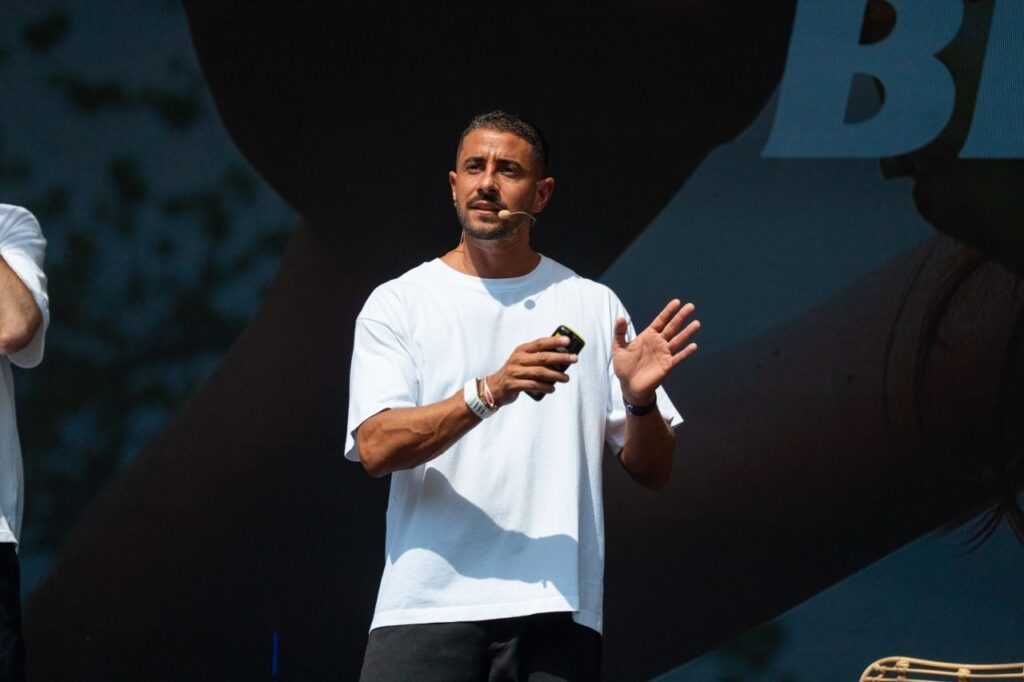
We spoke with Ricarda Ruecker, Chief Talent Officer at MCN MENAT, earlier while researching industry salaries for Communicate’s 2026 GCC Advertising and Marketing Salary Survey in the end of summer. She talked hiring freezes, the Saudi retention puzzle, reverse mentoring, and why “describe your culture” is now a standard interview question.
How has the regional situation hit the agency business?
When you look at the GCC markets and Lebanon, they of course have been mostly impacted by the geopolitical situation in the region. And I think it impacted the entire economy. For us as agencies, as we are working with our clients, we are successful but also suffering with our clients. Clients are reducing their spendings, they’ve cut their marketing budgets. So far, as MCN, we have been managing really well, but it means we are monitoring very closely the situation. So I think it really requires a very rigid approach to how we run our business with the main objective to protect our people because we have not had any big waves of redundancies or terminations.
It is tough. It is challenging. And it requires a lot of adjustments. But I think that’s one of the key skills you need in these days and in our times anyway is adaptability.
Has AI become a hiring story?
I believe it is not just about adapting AI, it’s about looking into the entire work process. How do we work with AI and how do we combine managing humans and managing technology side by side? So it’s not just about, okay, let’s all adapt some AI and do some courses about how to use AI. But it needs to be side by side, human-centric and technology-centric.
The young people you hire today are very well equipped and digitally extremely savvy. The level of savviness when it comes to AI and digital experience is amazing. We are teaching each other this, where we are learning from the young new joiners, the students as well. And I think it’s great to see how everything is also evolving, and more like a reverse mentoring when you look into that, from the younger generation into older generations.
Are you in a hiring freeze?
Currently, of course, I think everybody has more or less a hiring freeze. We still have some recruitments going on because business is moving and there are some positions which are required, either some replacements or some new positions. Also markets like Egypt, markets like Turkey, which are less affected and working in more or less normal conditions, they also move on as normal. But definitely on a much less scale. So we have put a lot of positions on hold. But I think this is part of managing costs, and it’s really about protecting also the people we have on board.
What’s harder right now, attracting talent or retaining it?
Attracting talent is right now not difficult at all because, to be honest, I haven’t seen for a while so many people looking for positions. Retention is always something which takes efforts from an organization’s perspective. When you provide a good culture where people feel, yes, performance is required, but performance is rewarded, where people feel motivated, where managers are getting equipped with the right skills to manage their teams properly, where there is feedback given, where there are clear KPIs and goals set, where they get supported and coached and mentored. These are organizations where people want to join, so it’s easier to retain people and it’s easier to attract people.
Have salary expectations become disconnected from market reality?
No, I wouldn’t say that the expectations are disconnected from the market. We are monitoring the market very closely. If you are able to not become complacent and when you are able to develop your skill sets with what is required in the market, you always will be able to achieve a higher income. Niche positions in technology, analytics, and data science areas, or very good creators, or extremely good copywriting skills, people who are very savvy in AI productions or social media, these positions are always sought after, and the better your skills are, the better are your chances to be able to expect a higher salary. So I think you define your destiny with how you actually skill yourself.
Where are the biggest recruitment challenges?
I think the biggest challenge remains Saudi Arabia. Because we are always looking for top Saudi national talents like everybody else. And I think we have made great progress over the last couple of years. Here, the retention is the biggest challenge because we have a lot of Saudi nationals now in our business. But to retain them for more than 2 years in our industry is challenging because if they’re really good, they get snapped from client side easily. And it’s fine, we support that as well. But it is for us a challenge. The media and advertising sector is not yet the most attractive for Saudi nationals.
Which skills are hardest to find?
What I always like to find is local talents because at the end it’s always the local and cultural relevance which makes a big difference. It’s great to bring in people from outside and it’s great to have the diversity of talent. But for instance, when you’re in Saudi, you are most successful if you have a Saudi national copywriter. That’s a position too hard to fill.
What matters most to employees after compensation?
Compensation will always play a big role, to be very honest. But there is a trend as well across the globe, I would say, that people are having more burnouts, having more stress-related, maybe performance issues. With all the pressure we’re having on efficiencies and productivity and AI and all of these aspects which are highly important, we are human beings. I don’t like to call it work-life balance, but it’s the employee well-being. And that can differ from person to person. Some might need flexibility, others might need a great motivational environment, a manager who listens, who gives feedback, where mistakes are also a way to learn and not to be punished.
Years ago, that was not necessarily one of the top questions, but today in every interview, you will find the young people asking, “Describe me the culture.” They want to know in what kind of environment I’m getting to. It’s not only the money.
What HR trends do you see for 2026–2027?
I think for HR, it’s a very interesting time because for me, I always believed in that HR has to be highly connected to the business objectives. HR is not a function just for policies and whatever. So, it’s a business function, it’s a strategic function, which is highly important. Now, the most important priorities here are not to forget the focus on the culture and the employee engagement, while at the same time focusing on supporting the business objectives on automation, providing efficiencies, and being very data-centric. Because HR, equally to everything else, has to be extremely data-centric and be the right advisor based on precise data, people data for the business.
What do you look for in young talent?
There are skills you can learn, technical skills, you attend courses, you learn by doing, et cetera. But I think remaining always curious, having a creative mindset, and most of all, critical thinking is something which is highly important for people working and succeeding today, while being resilient and adaptable. If I look for great talent, this is what I’m looking for. How curious are they? How much are they hungry to really succeed? How much are they open-minded and critically thinking, looking for solutions, and not wanting to be fed. In our business, I think you need the passion. It’s not just a job.
If you could change one thing about the industry tomorrow, what would it be?
It’s hard to say one thing I would change. I think there is change required because, to be honest, our industry requires quite a lot of change. Because some people might even say, okay, is our business model obsolete? We need to change and rethink our model entirely. How do we adapt to the very fast-changing environment? How do we adapt to what clients can do themselves? How relevant are we staying as an industry for our clients? So there are a lot of challenges ahead of us.
How does your pay stack up? Explore the full findings of Communicate’s 2026 GCC Advertising & Marketing Salary Survey HERE.