Marketers risk undermining long-term brand growth by continuing to favour familiar media channels over those that better reflect changing consumer behavior, according to discussions at The Trade Desk’s first Open Forum in Dubai.
The event brought together advertisers, agencies, media owners and technology partners to examine why media investment decisions often lag behind changes in how consumers spend their time and engage with content. Discussions covered connected TV (CTV), audio, digital out-of-home (DOOH) and artificial intelligence, with speakers highlighting the need for better education, measurement and experimentation to unlock the potential of premium media.
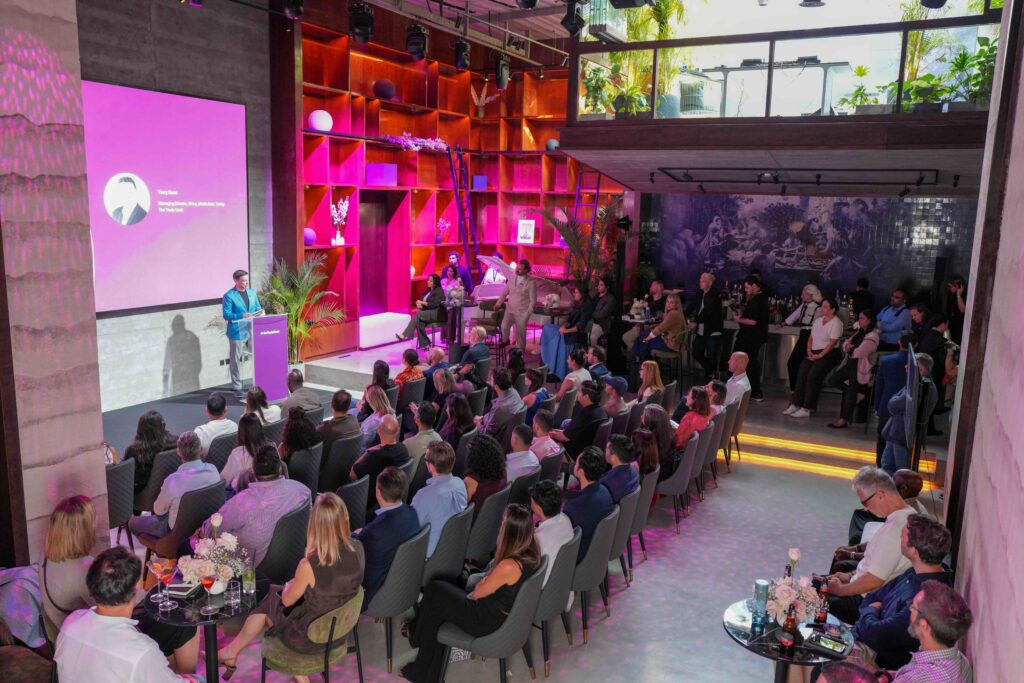
Opening the forum, Terry Kane, managing director for Africa, Middle East and Turkey at The Trade Desk, stressed the importance of collaboration in converting the region’s opportunities into commercial growth.
“This region gives us enormous reason to be ambitious, but it takes collaboration to make that opportunity work commercially. We have to connect creative and quality media with the technology and the measurement to help businesses grow. Bringing the perspectives of advertisers, agencies, media owners, tech partners into the same room is key to drive the industry forward.”
The gap between audiences and budgets
A central theme of the discussions was the mismatch between consumer media consumption and advertising investment. Consumers spend 61% of their media time on the open internet, while only 30% of media investment goes to it, according to figures presented at the forum.
“Consumers have moved on, but the budgets haven’t”, said Lukas Fassbender, senior vice president for EMEA at The Trade Desk.
Research cited during the event pointed to behavioural biases that influence media planning. Some 72% of respondents believed channels that are easier to buy and measure receive more credit because their results are simpler to quantify. Meanwhile, 75% felt more confident investing in social media because of their familiarity with the channel, while 68% of marketers surveyed considered it riskier to reduce social media investment despite the availability of alternatives.
These tendencies create a cycle in which familiar channels and readily measurable results reinforce existing budget allocations, potentially limiting investment in media that could contribute to long-term growth.
“We overinvest in short term success versus long term impact when making media planning decisions. This weakens our long-term strategy, and is actually hurting durable brand growth. We don’t create as much future demand because we focus on servicing what’s existing. Less brand activity weakens brand recall and the trust in the brand. Acquisition costs rise and sales flatten. I say advertising has never grown brands less.”
Figures presented at the event suggested premium media delivers 58% more attentive seconds per dollar spent and creates 12% higher market share. Fassbender argued that the objective should not be to favour one channel over another, but to assess each according to its contribution to business growth.
Premium content raises the stakes for CTV
A panel featuring representatives from Netflix, OSN+, MBC Shahid and Disney+ examined the role of premium content in the growth of connected TV in the region.
The discussion highlighted how audience engagement depends on both the quality of content and the environment in which it is delivered. Advertisers, speakers suggested, need to look beyond impression volumes to understand the value of reaching audiences who actively choose what they watch.
Premium content alone, however, does not guarantee effective advertising. Creative execution must be suited to the viewing environment and capable of earning the audience’s attention.
The panel also discussed the importance of cultural relevance, particularly in a region where language, dialects, identities and relatable characters can shape how audiences respond to storytelling. Locally grounded stories can also travel beyond their markets of origin, creating opportunities for brands to build lasting connections.
Measuring the contribution of premium CTV remains important as the medium develops. While reach and impressions are relatively straightforward to track, measuring attention and understanding its impact require a more considered approach.
Audio needs testing, not assumptions
Audio advertising faces similar challenges, with perceptions that the channel is niche, difficult to measure or expensive potentially limiting investment.
A discussion involving Anghami, Next Audio and Capital.com examined the gap between audio consumption and advertising budgets.
According to 2026 YouGov research cited at the forum, 81% of respondents in the UAE consumed audio or video podcasts daily, compared with 54% in the US. The UAE was also identified as the world’s leading podcast-consumption market.
Audio offers advertisers an opportunity to reach people when they are not looking at a screen. Its contribution across the customer journey, speakers argued, should be assessed on its own merits rather than through comparisons with channels designed to generate clicks.
A key barrier is the expectation that advertisers must see convincing evidence before testing a channel, even though building that evidence requires brands to invest in experimentation.
The discussion called for campaigns with clear objectives, appropriate measurement and a willingness to learn from results.
“Nobody wants to be the proof. Everyone is looking for proof points. We need to stop waiting for the proofpoint and start leaning into the channel and be the proof.”
DOOH faces a capability gap
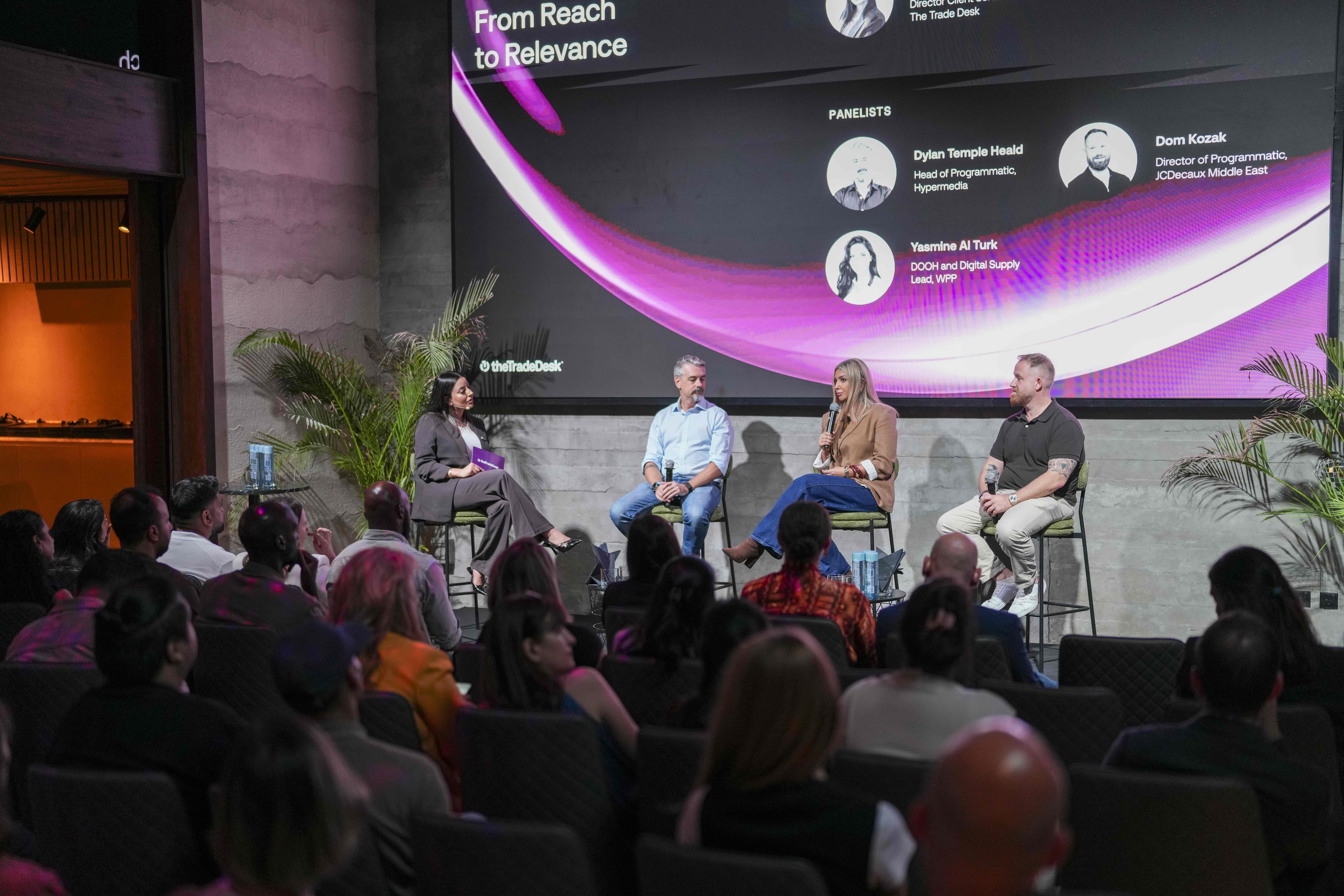
The digital out-of-home discussion, moderated by Ashnee Thacker of The Trade Desk and featuring panellists from Hypermedia, WPP Media and JCDecaux Middle East, focused on the gap between available technology and advertisers’ understanding of its capabilities.
Programmatic DOOH can support audience-informed planning, dynamic creative and measurement. However, established buying practices and limited awareness of these capabilities can prevent advertisers from making fuller use of the medium.
The panel emphasised the importance of integrating DOOH into campaign planning from the outset rather than treating it as a separate or later-stage addition. Earlier integration can help teams coordinate it with other channels and develop creative that aligns with campaign objectives.
Unlocking the medium’s potential will require stronger briefs, greater creative ambition and more technical understanding among brands, agencies and media partners. Advertisers also need to be willing to test new approaches rather than remain within familiar buying patterns.
AI brings human judgement into focus
In his closing keynote, Dr Noah Raford broadened the discussion to the relationship between artificial intelligence, creativity and culture.
His presentation complemented the wider message of the forum: technological advances alone will not deliver better marketing outcomes if the objectives guiding investment remain unchanged. As automation expands, human judgement will continue to matter in deciding how technology, creative work and media choices contribute to business goals.
Across the sessions, speakers returned to a common challenge. The industry has access to more data, sophisticated measurement tools and new ways of reaching audiences, but these capabilities must translate into different decisions about where and how advertising budgets are spent.
For marketers, closing the growth gap means aligning investment more closely with consumer behaviour, evaluating channels according to their contribution and building confidence through education and testing. The opportunity lies not simply in adopting new technology, but in being prepared to change established media strategies.