Retail media is becoming a more important advertising channel across the Gulf, but new research suggests brands may be underestimating one of its biggest weaknesses: creative quality.
That issue is becoming more significant as shopping itself starts moving into AI interfaces and retailers across the region build increasingly sophisticated media networks around their stores, websites and first-party customer data.
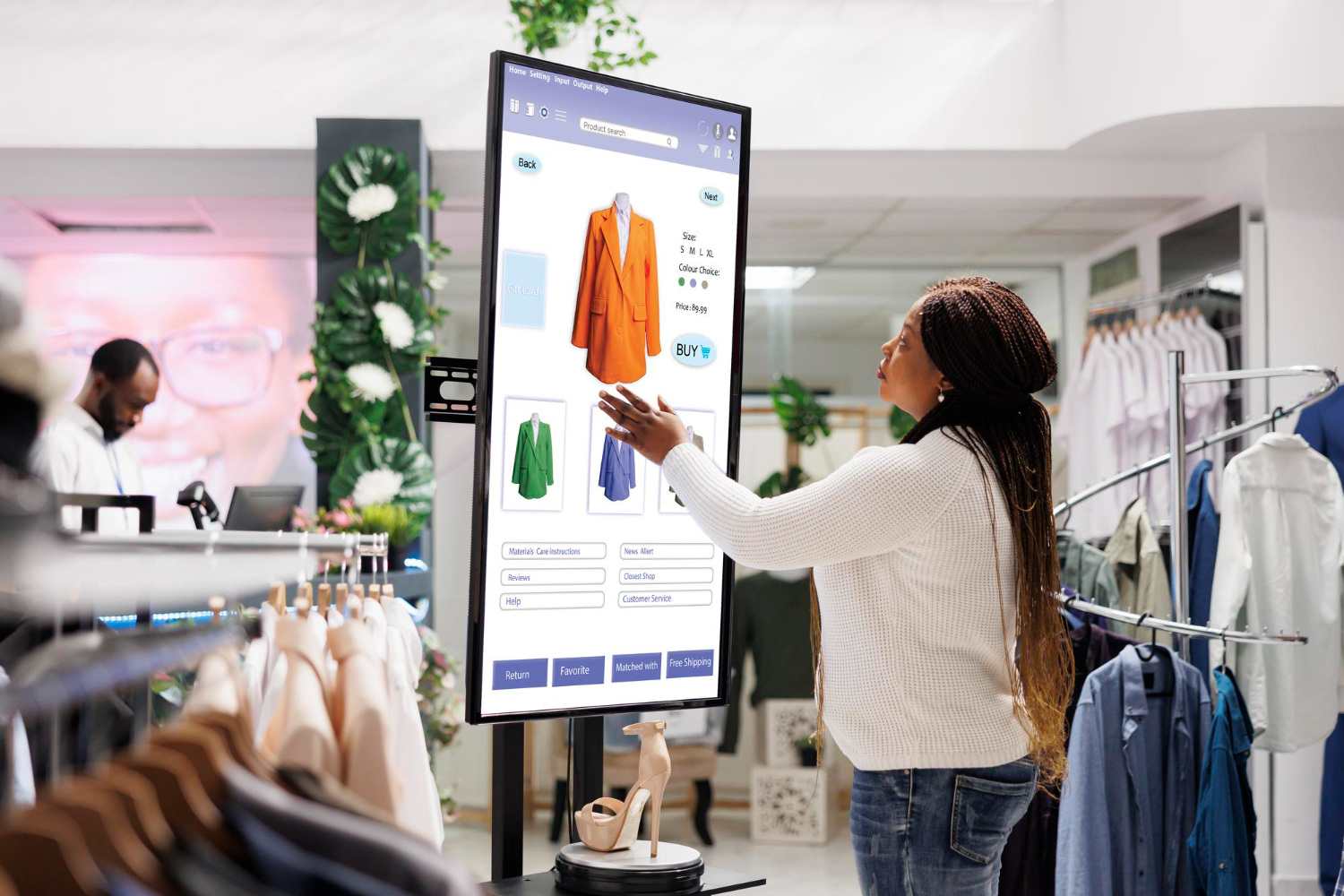
In the UAE, Majid Al Futtaim’s Precision Media has already begun using artificial intelligence to bring more targeted advertising into Carrefour stores. In May 2025, Precision Media partnered with Swiss AI company Advertima to deploy AI-powered audience intelligence across Carrefour UAE stores, using sensor technology to understand characteristics of shoppers and enable digital screens to deliver more relevant advertising in real time. The initiative is designed to connect physical-store behaviour with digital audience data.
Majid Al Futtaim has described Precision Media as a retail-media platform spanning its Carrefour and other retail assets, with AI-powered LED screens being deployed in selected UAE stores. The company has also partnered with Publicis Media Middle East to provide in-store and digital advertising solutions for brands.
The development matters because the Gulf is becoming an increasingly important testing ground for the convergence of commerce, data and advertising. Retailers are no longer simply selling brands access to shelf space or website search results. They are building media environments in which advertisers can potentially reach consumers before, during and after a purchase decision.
That makes the quality of the creative increasingly important.
From Carrefour to ChatGPT
The shift is also happening beyond retail websites.
In March, Carrefour became the first European retailer to offer grocery shopping through ChatGPT, allowing users in France to ask for recipes, check product availability, build a shopping basket and select delivery options without leaving the ChatGPT interface. Customers are redirected to Carrefour.fr to complete payment.
The development is relevant to Gulf retailers because Carrefour has a major regional footprint through Majid Al Futtaim, while the broader retail sector across the GCC is rapidly adopting digital commerce, AI and data-driven marketing.
Amazon is pushing the same convergence from another direction. The ecommerce giant has partnered with OpenAI to allow advertisers to buy ads within ChatGPT through Amazon’s demand-side platform. Amazon Ads says its advertising business already combines shopping, streaming and browsing signals and offers brands sponsored, display, video and programmatic advertising products.
Amazon’s advertising infrastructure is also well established in the Gulf. Its UAE operation offers Sponsored Products advertising, while Amazon.sa provides Sponsored Products and other advertising options to Saudi sellers. Amazon’s current Saudi seller programme includes advertising credits and incentives for brands, illustrating how advertising has become embedded in the ecommerce proposition.
The result is a new advertising environment in which consumers may discover products through a retailer, a physical store, a mobile app or increasingly an AI assistant.
That raises an important question for Gulf marketers: will creative designed for conventional retail advertising work when the shopping environment itself is changing?
A new Ipsos study suggests the answer may be no.
Ipsos tested 25 advertisements from 19 brands across eight categories, using 21,152 simulated shopping experiences in the US. The same creative assets were tested in simulated Amazon and Walmart shopping environments and in standard programmatic website placements, allowing researchers to examine how retail context affected advertising effectiveness.
The results show a significant creative challenge. Ads served on retailer sites recorded a 47% drop in memory encoding compared with off-site environments. Ipsos says shoppers on retail websites are often in a mission-oriented mindset, surrounded by competing products and advertising, making it harder for an ad to break through.
That finding has particular relevance as GCC retailers increase the number of digital advertising surfaces around the shopping journey.
Precision Media’s Carrefour UAE rollout, for example, puts AI-enabled screens directly into physical stores, where shoppers are already surrounded by products, promotions and competing messages. The technology may improve targeting, but targeting alone does not guarantee that an advertisement will be remembered.
Video, however, performed better than display on several brand measures.
Ipsos found that video advertising was significantly more likely to create a branded impression and drive brand outcomes in retail media environments. In the study, video produced a 47% stronger shift in brand choice, a 20% stronger shift in brand closeness and 14% higher memory encoding than display.
For GCC marketers, that distinction could become increasingly important as retail networks move beyond sponsored product listings towards richer in-store, mobile, video and connected-media formats.
Beyond immediate sales
The research also challenges the idea that retail media should be judged primarily by immediate sales.
Among shoppers who were undecided about which brand to buy, high-quality creative generated a 12% lift in short-term choice compared with lower-quality creative. Among consumers who were not currently in the market, high-quality creative delivered a 21% performance premium.
Ipsos also found that targeting consumers already looking to buy remains powerful: in-market shoppers showed a 14% advantage in memory encoding, 10% in brand linkage and 24% in immediate brand-choice shift compared with out-of-market shoppers. But the study found that this advantage disappears when looking at longer-term brand-building effects.
That creates a strategic problem for retailers and brands in the GCC.
Retail media’s appeal comes from first-party data, proximity to purchase and increasingly sophisticated measurement. But if advertisers optimise exclusively for clicks, conversions and return on ad spend, they risk favouring functional product advertising over creative that builds future demand.
The Gulf’s retail landscape makes that tension particularly visible. A retailer such as Carrefour can combine physical stores, ecommerce, loyalty data and digital advertising, while Amazon offers advertisers access to shopping and browsing signals. Precision Media’s AI-powered Carrefour screens show how the same principle is extending into physical stores.
The next challenge is therefore not simply finding the right consumer.
It is making sure the consumer remembers the brand.
A bigger Gulf opportunity
The GCC’s retail-media market is still developing, which gives retailers and advertisers an opportunity to avoid some of the mistakes seen in more mature markets.
Instead of treating retail media as a performance channel built around sponsored listings and last-click attribution, Gulf retailers can build it as a full-funnel medium — one that combines the precision of first-party data with the emotional and memorable qualities traditionally associated with brand advertising.
That could become particularly important as AI changes how consumers search.
In a conventional ecommerce journey, a shopper might browse a category, compare products and click on sponsored listings. In an AI-powered shopping journey, an assistant could instead interpret a consumer’s request, narrow the choices and present a much smaller number of recommendations.
The advertising opportunity therefore becomes less about occupying a prominent position on a page and more about influencing the consumer at a moment when the number of visible choices may be dramatically reduced.
For brands operating in the GCC, that raises the creative bar.
A product image and price may be sufficient to generate a click when a consumer is already searching for something. But when an AI assistant becomes part of the discovery process, brands may need distinctive assets, strong brand associations and creative that can survive being reduced to a recommendation, description or conversational prompt.
The stakes are growing globally. Ipsos’ research puts 2025 global retail-media spending at about $170 billion, making the channel larger than the combined TV and connected-TV ecosystem in its analysis.
The Gulf is building its own version of that ecosystem, with retailers combining stores, ecommerce, data, AI and advertising. Majid Al Futtaim’s Precision Media and Carrefour UAE provide an early example of where the model is heading: advertising that is not confined to a webpage but follows consumers into the physical shopping environment.
The message for GCC marketers is increasingly clear: retail media is no longer simply the digital equivalent of a shelf label.
As shopping moves into AI-powered conversations and retailers turn stores themselves into media environments, brands will need advertising that can do more than trigger an immediate purchase.
The winners may be those that combine retail-media precision with creative capable of being remembered, recognised and preferred.