Independent agencies across the Middle East are being encouraged to work together more systematically under a new Collaboration Code designed to help them combine specialist capabilities, compete for larger client opportunities and offer brands a more joined-up alternative to traditional agency networks.
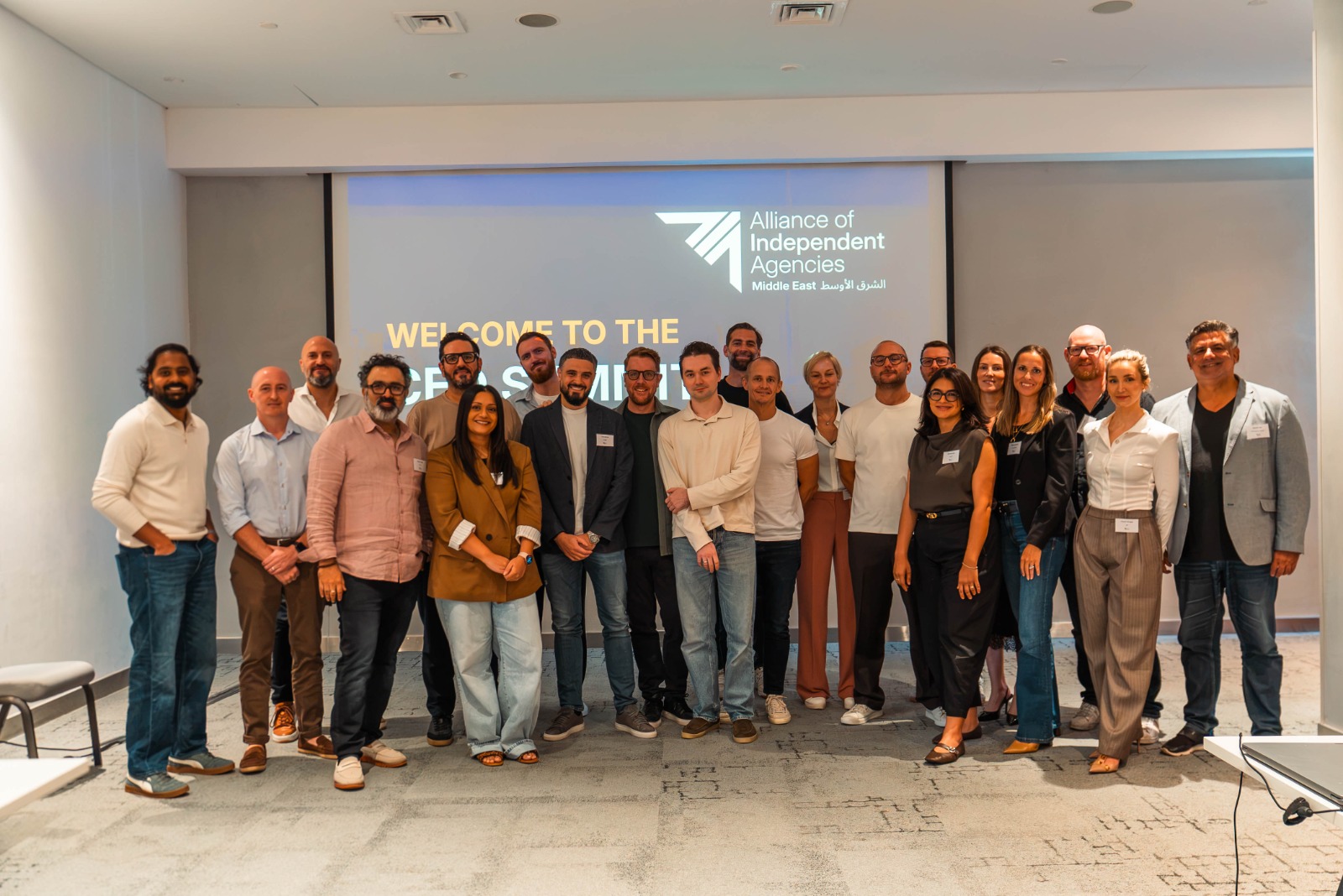
The code was unveiled at the second CEO Summit of the Alliance of Independent Agencies Middle East in Dubai, where around 25 agency leaders discussed how independents can collaborate without compromising their individual businesses or client relationships.
Nick Walsh, founder of Migrate and regional partner for the Alliance Middle East, said the initiative was rooted in a broader attempt to give structure to a fragmented independent agency market.
“It is still dominated by big holdcos, and that’s fine. I’ve worked for those holdcos my whole career,” Walsh told Communicate. “But what we want to acknowledge first of all is that after the holdcos, no one really knows what’s below the surface.”
According to Walsh, the Alliance sees an opportunity to turn that fragmentation into a collective strength. “We see the opportunity in where the industry goes as a collective rather than individually,” he said. “In a market that’s dominated by holdcos, if we’re able to bring the strength of the independent community together, we feel like that’s industry changing.”
The Collaboration Code follows the Alliance’s first CEO Summit, which focused on changing how agencies approach requests for proposals. Its first code established principles around responding to RFPs, including assessing whether an agency is the right fit for a brief and ensuring commercials and expectations are clear.
The latest initiative addresses what happens when a brief requires capabilities that a single agency does not possess.
Walsh said changing client needs, geopolitical pressures and the rapid emergence of AI are increasing demand for specialist expertise. “We believe that the agencies that sit in the alliance offer that specialist capability because they are very single-minded about what they do,” he said.
Rather than asking one agency to provide every service, the Alliance wants agencies to assemble teams around the business problem. Walsh cited possible combinations including experiential and retail agencies working on retail experiences, branding and activation specialists working together, or PR, creative and influencer agencies joining forces on a fame-building brief.
“The way it used to be was a client had a brief and they went to an agency with a problem,” Walsh said. “What we’re saying is now define the problem first and we’ll build the capabilities you need around that challenge.”
He added: “That solution doesn’t always fall out of one agency. It needs multiple experts to deliver that.”
The Collaboration Code sets out eight principles: Client First, Capability First, One Clear Lead, Clear Lanes, Commercials Before Work, No Surprises, Respect the Relationship, and Win & Reflect Together.
It also includes a decision tree intended to help agencies determine whether collaboration is necessary, identify the capabilities required and select potential partners from within the Alliance. Once agencies agree to collaborate, the framework establishes expectations around leadership, roles, scope, commercials, confidentiality, legal arrangements and decision-making.
Walsh said the framework is intended to address practical problems that can derail agency partnerships, including uncertainty over who leads, how work is divided and how fees are allocated.
“We always agreed that the lead agency takes the lead,” he said. “They lead from a commercial perspective. They lead from a project perspective. They lead from a final decision perspective.”
The agencies also agreed that budgets should be allocated according to the proportion of work each partner undertakes. “Sometimes you might be 90%, other times you might be 10%, but that’s okay if it’s for the good of the project, the good of the work, and to win,” Walsh said.
The need for such a framework was reinforced by a CEO survey conducted ahead of the summit. The Alliance said 95% of its agencies had collaborated with another agency during the previous year, with some doing so three to five times.
But the survey also identified several barriers to collaboration, including difficulty finding suitable partners, commercial arrangements, trust, competition between agencies and concerns about quality. None of the barriers significantly outweighed the others, according to Walsh.
“Rather than to just say, here’s how we do it, it allowed us to build the code around the barriers,” he said.
The Alliance believes the framework could also change the way brands work with independent agencies. Instead of separately briefing different specialists and then having to coordinate their work, clients could receive an integrated response from a group of independent agencies.
“It’s about quality,” Walsh said. “When they have a particular business challenge to solve, rather than thinking always, can an agency do it, they can work with their agency partner and be assured that that combination of capabilities will be there.”
He said the model could allow a CMO to brief one agency and receive a coordinated response covering disciplines such as PR, experiential and events, rather than having to manage separate RFPs and join the responses together.
“The orchestration can be done by the agency rather than by themselves,” Walsh said. “So it’s a significant amount of quality upgrade for them.”
The Collaboration Code itself will be published externally, while supporting tools such as the decision tree and scorecard will be available to Alliance agencies. Walsh said the external-facing proposition is that clients should know Alliance members have an agreed way of working when they collaborate.
“The conduct, the code, the COLLABORATE code is going to be published,” he said. “We want clients in the industry to understand that Alliance members know how to and follow a way to collaborate.”
The Collaboration Code is intended to become the second chapter of the wider Alliance Code. Walsh said further codes covering areas such as commercial practices, talent and AI are planned, with the commercial code expected to follow within three months.
For the Alliance, the longer-term aim is to give the independent sector greater structure without turning independent agencies into a network.
As Walsh put it: “If we’re able to bring the strength of the independent community together, we feel like that’s industry changing.”