Agency strategists are increasingly optimistic about their role in shaping client decisions, even as concerns grow that artificial intelligence (AI) could replace their jobs, according to a new report by global marketing intelligence firm WARC.
The report, The Future of Strategy 2026, is based on a survey of 489 strategists conducted in August 2026, most of them working at agencies. It examines how the strategy function is evolving amid AI adoption, changing client expectations and pressure to demonstrate business impact.
Client influence grows despite industry disruption
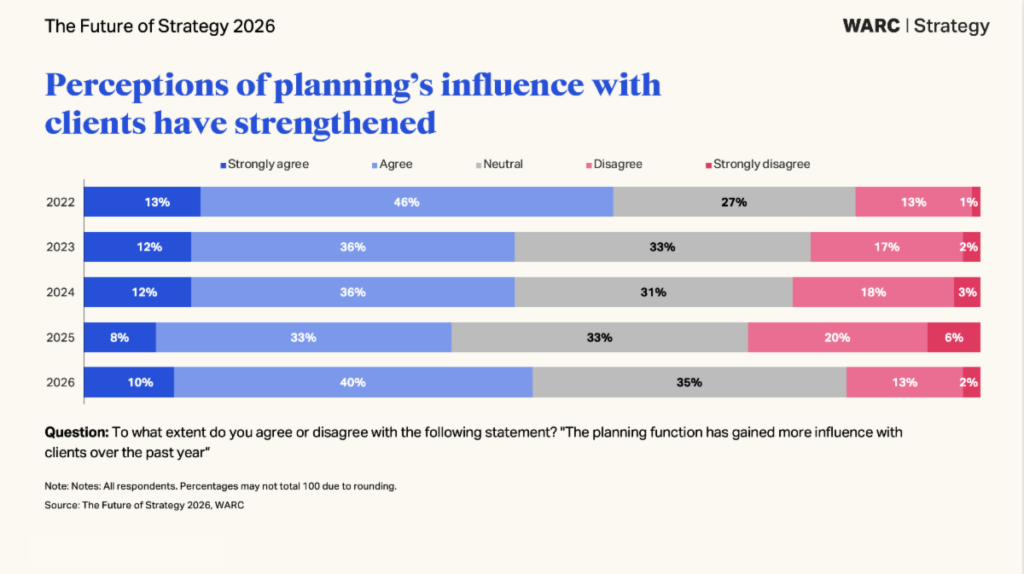
According to the report, 66% of agency-side strategists see clear reasons to be optimistic, while half said their influence with clients had increased, up from 41% in 2025. However, internal influence within their organisations remained largely unchanged at 46%.
Despite the improved outlook, concerns about AI are rising. Some 56% of strategists fear the technology could replace their roles, up from 41% in 2025, making job displacement their biggest anticipated threat.
Pressure to demonstrate business value
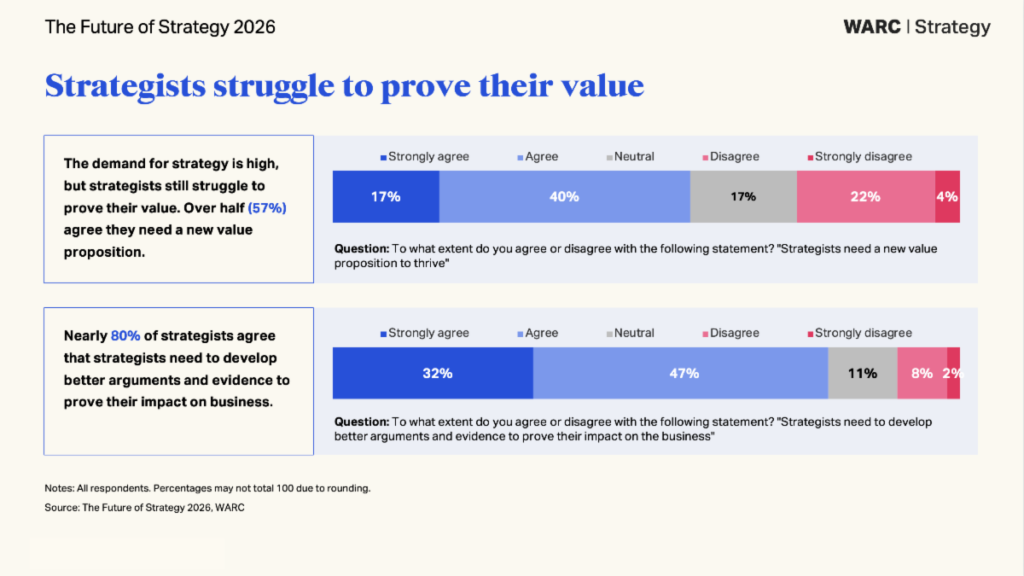
The report highlights pressure on strategists to demonstrate the commercial value of their work. While 57% said they needed a new value proposition as compensation models evolve, nearly 80% agreed that the profession must build stronger evidence of its impact on business outcomes.
Strategists are increasingly expected to move beyond developing advertising messages and campaign briefs to help shape broader business decisions. Some 83% of respondents expect their responsibilities to expand into business strategy.
AI frees up time, but human insight remains critical
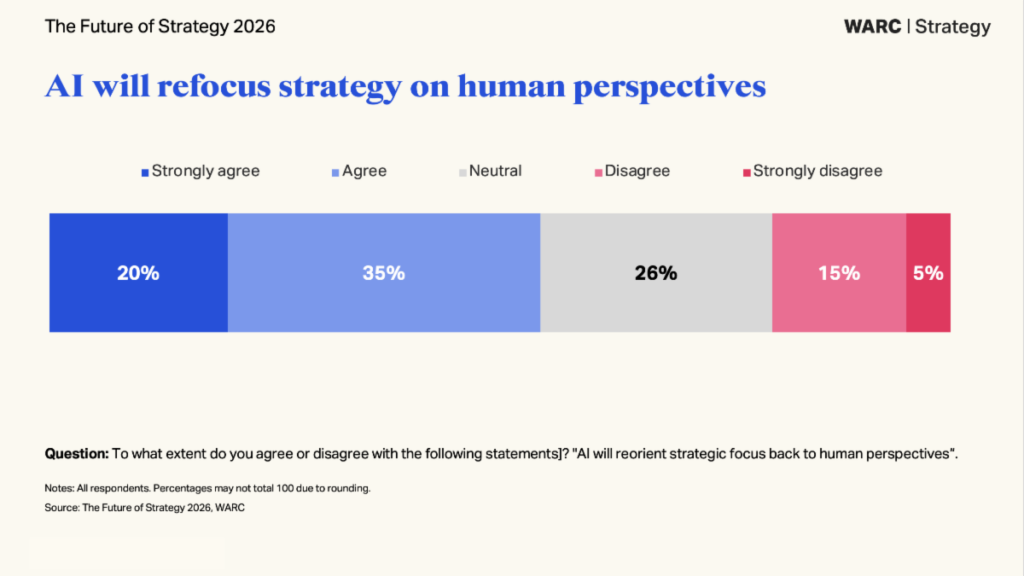
AI is also changing how strategists work. The survey found that 65% were redirecting time saved through automation towards more nuanced strategic work, while 55% believed AI would refocus the discipline on human perspectives.
However, the adoption of AI has coincided with a decline in in-person qualitative research. Only 23% of respondents said they conducted such research at least monthly, compared with 35% in 2025.
The report argues that human insight, cultural understanding and judgement remain important differentiators as AI-generated content becomes more widespread. It also identifies the need to address the “two audience problem”: creating strategies that appeal both to people and to machines, including AI-driven systems shaping discovery and commerce.
Strategists take on broader business responsibilities
WARC said strategists were increasingly moving beyond campaign briefs to address broader marketing and business challenges, including identifying new sources of consumer demand and adapting to changes in media and commerce.
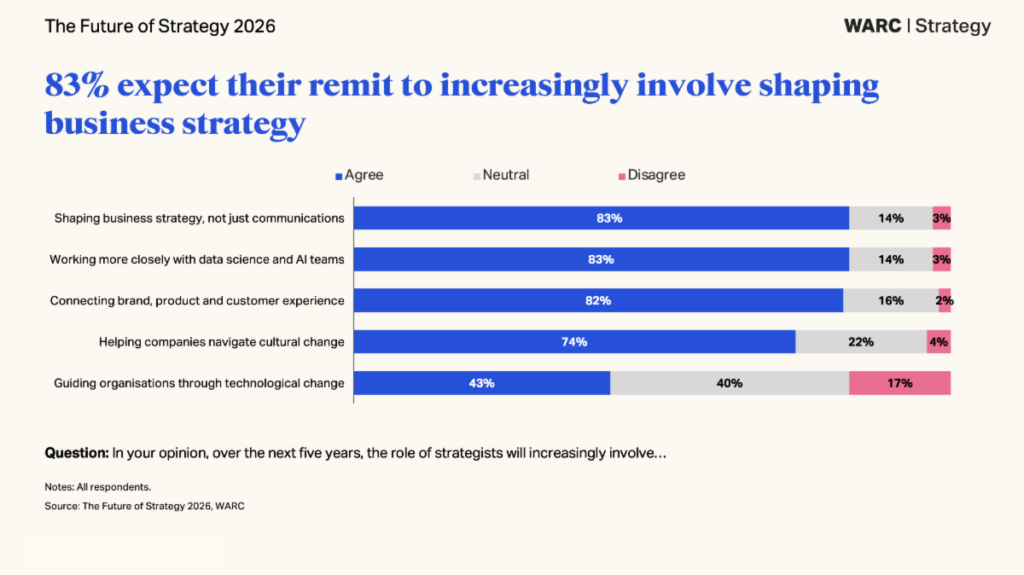
The findings point to a changing role for agency strategists, who face pressure to demonstrate measurable business value while using AI to improve efficiency without losing the human understanding needed to develop effective marketing strategies.
MENA agencies face similar AI and effectiveness challenges
The findings have particular relevance for the Middle East and North Africa (MENA), where advertising agencies and brands are expanding their use of AI while facing pressure to translate adoption into measurable business results.
A 2025 study by Ipsos and the Advertising Business Group, covering more than 100 marketing and advertising professionals in the UAE and Saudi Arabia, found that 96% had used AI tools, but only 26% used them regularly. The study also found that 70% were concerned about overreliance on AI without human oversight, highlighting the importance of human judgement as automation spreads.
The regional findings reinforce a central message of WARC’s report: adopting AI is not enough. Agencies must demonstrate how technology improves strategic decision-making, customer understanding and commercial performance. For MENA agencies operating across markets with different languages, cultures and consumer behaviours, local insight and cultural sensitivity may remain important sources of differentiation.