In July 2026, three of the world’s most storied luxury houses—Tiffany, Valentino, and Chanel—launched campaigns that abandon the language of aspiration in favor of emotional truth. A diamond ring becomes a mirror for self-love. A fragrance duo celebrates unvarnished passion. A beauty ambassador refuses to perform perfection. These moves signal a fundamental inversion in luxury marketing: authenticity is now the premium good. For GCC luxury marketers and agency strategists, the signal is urgent: heritage alone no longer justifies price. Narrative depth, emotional coherence, and quiet craft do.
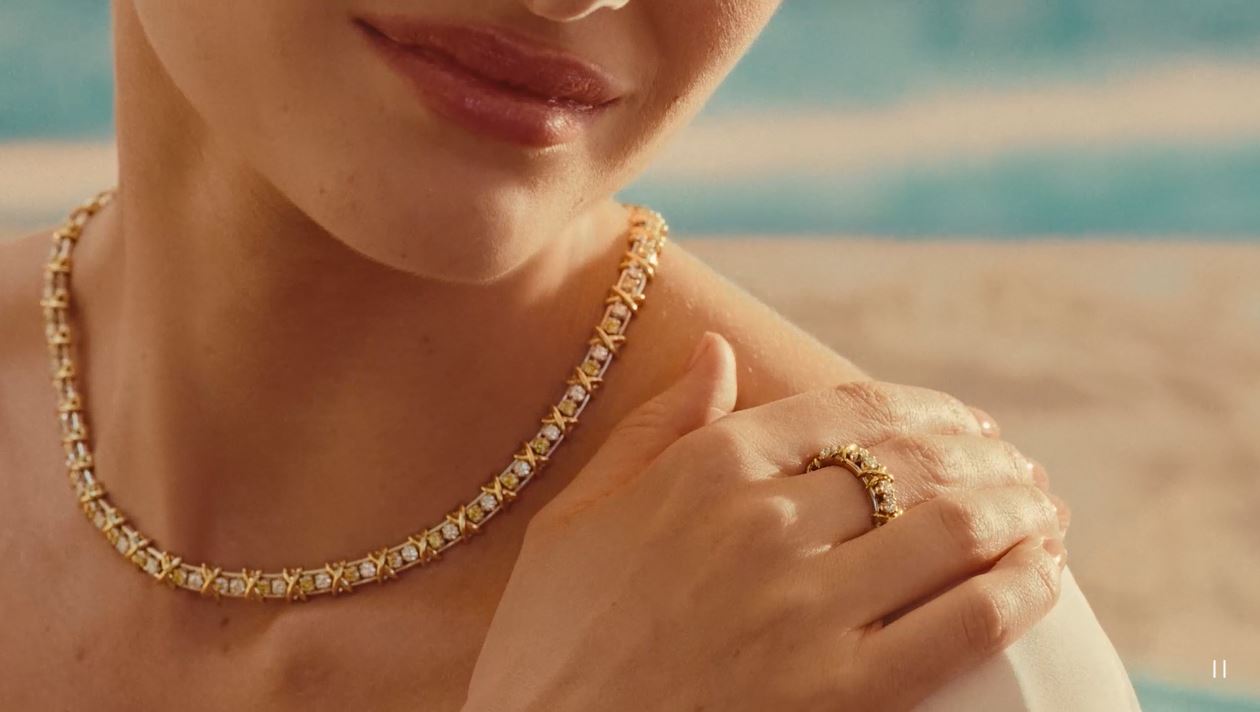
Tiffany & Co.’s new Sixteen Stone campaign, featuring actress Mikey Madison, broadens the house’s storytelling beyond traditional romance to celebrate love in its many forms, from self-love and family to chosen communities. This is not a marginal messaging tweak. The engagement ring—the highest-ticket luxury item for most consumers—is being repositioned from *destiny marker* (you are marrying someone) to *identity statement* (you are committing to yourself).
Romantic love remains at the heart of the house, but the Love & Celebration campaign makes room for self-love, family, chosen community, and the moments that matter regardless of who else is in the room. The strategic insight is precise: younger luxury buyers—particularly affluent women in their 20s and 30s—are rejecting narratives in which their personal milestone is mediated through another person’s choice. They want to author their own story.
Simultaneously, Valentino Beauty introduced Vendetta, its first prestige fragrance franchise launch in six years, introducing a powerful narrative rooted in emotion, intensity, and unapologetic connection, reclaiming passion as a conscious choice. The fragrance is not about lifestyle fantasy or seasonal freshness. It is about raw feeling. The campaign features Dakota Johnson and Alexander Skarsgård, not as idealized lovers, but as partners locked in genuine tension—heat, not romance.
These campaigns reveal a broader pattern: luxury brands are competing on *emotional authenticity*, not aesthetic aspiration. The implication for GCC luxury marketers is critical: if authenticity is now the premium positioning, how do you localize it within cultural contexts where discretion, family-first narratives, and understated wealth signaling are core values?
Emotional luxury wins
The GCC personal luxury market is uniquely positioned to absorb this shift. The GCC’s personal luxury market reached $12.8 billion in 2024, growing 6% in a year when the global luxury market contracted by 2%, demonstrating distinct regional opportunity for brands that invested deliberately in cultural fluency.
This growth is not driven by aspirational middle-class consumers chasing logo visibility. It is driven by HNWI and ultra-high-net-worth (UHNW) buyers prioritizing discretion, heritage, and personal relationships with sales advisors. In this context, quiet luxury becomes a *native language*.
The quiet luxury model is profitable because it is efficient: higher margin per item, lower production and marketing costs. For GCC brand directors, this creates a clear pathway: position premium pricing not through scarcity theater or celebrity endorsement, but through transparent craft narratives, heritage storytelling, and private access experiences.
The strongest houses never discount, and pricing power depends on it; build value through scarcity, service, and gifting rather than markdowns. GCC HNWI audiences understand this calculus intuitively. They value *discretion* over *visibility*. A Hermès bag that whispers craft to those who know is worth more than a Louis Vuitton that announces itself to every passerby.
Experience drives value
For GCC agency strategists and retail operators, authenticity cannot be a messaging layer. It must be embedded in operational experience. AI-powered personalization allows sales advisors to deliver VIP service at scale, transforming every interaction into an opportunity to build loyalty and lifetime value.
The challenge in GCC markets is acute. Retail infrastructure must support personalization without visible automation. 55% of luxury executives are concerned AI could dilute core luxury signals, while 63% of Gen Z in the US view brands using AI-generated models as inauthentic, so for luxury brands, the focus should be on using AI to enhance efficiency and discovery, while protecting storytelling, craft, and human connection.
GCC luxury retailers (Chalhoub Group, Al Tayer Group, Harvey Nichols ME) must invest in: one, CRM systems that track client preferences invisibly, enabling advisors to reference prior conversations without visibly accessing customer data; two, private appointment infrastructure that enables curated discovery before a boutique visit through AR or digital previews; and three, gifting and loyalty programmes that build deeper relationships beyond transactional purchases.
For GCC luxury marketers, this means creative briefs must shift from *”Tell me why this is aspirational”* to *”Show me the craft, the person, the story that makes this worth the premium.”*
The convergence is clear: authentic luxury, quiet craft, discrete premium positioning, and GCC HNWI psychology are aligned. Luxury brands need to place sensible pricing, supply-chain discipline, and design-led creativity back at the heart of the luxury experience. For GCC brand directors, agency strategists, and retail operators, the action is urgent. Shift creative briefs toward emotional depth and heritage transparency. Invest in boutique experiences that feel private, not commodified. Build loyalty through relationship, not discounting. The brands that win in 2026 are those that understand: in the GCC, quiet luxury is not a trend. It is home.