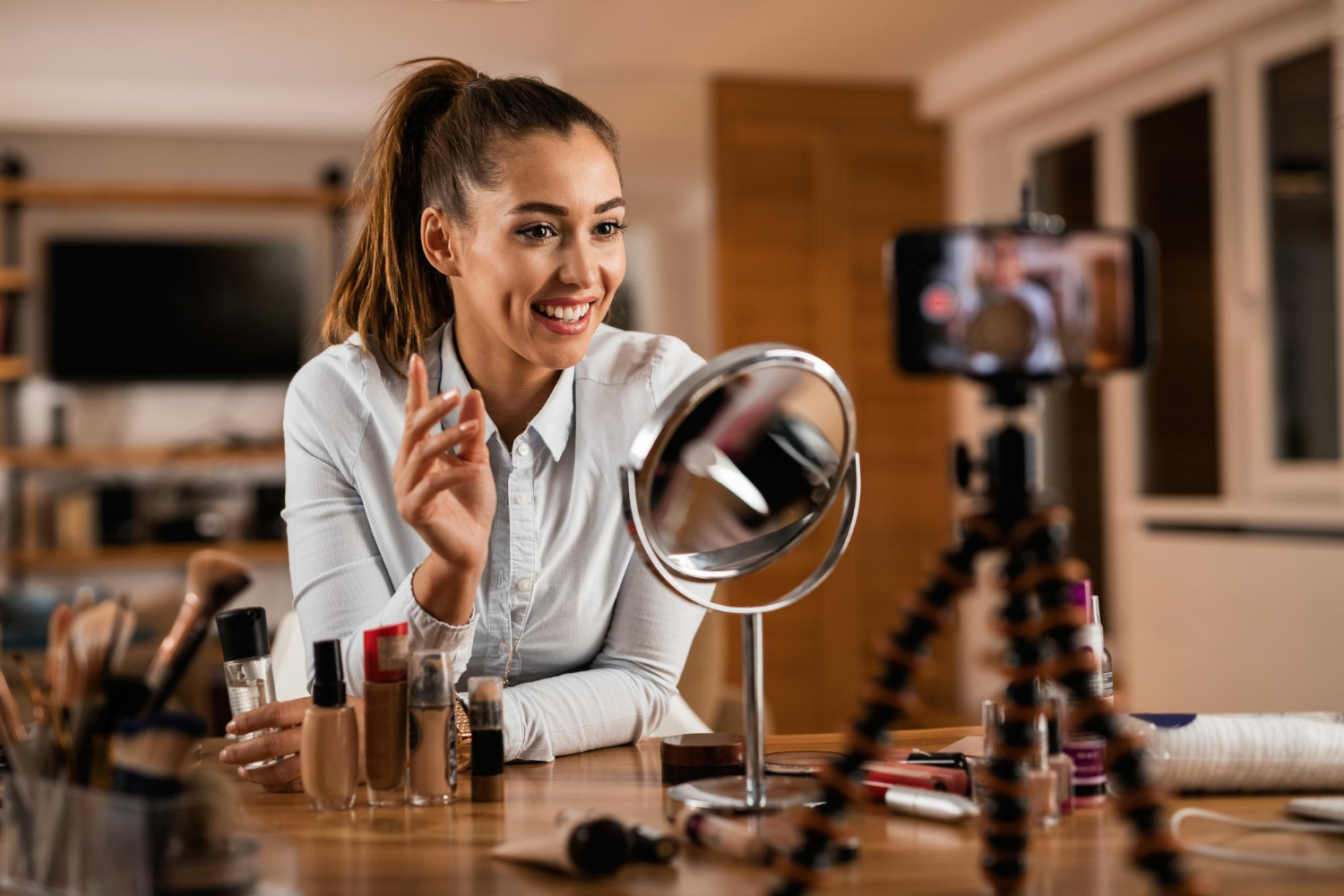
Influencer marketing is entering a more fragmented and culturally nuanced phase, with brands increasingly looking beyond follower counts and headline engagement rates to find creators who command trust, shape taste and have genuine influence within specific communities.
That is the central argument of a new analysis by Vogue Business, which says the influencer economy is shifting towards “snacky, messier, more niche formats” and away from massive followings as the primary measure of a creator’s value. The article, The Marketer’s Guide to Choosing the Right Influencer, was published on September 1 by Joe Bobowicz.
The shift has significant implications for brands in the Middle East and North Africa, particularly the GCC, where influencer marketing has become an increasingly important part of fashion, beauty, luxury, tourism, retail and consumer campaigns.
From reach to relevance
According to Vogue Business, the rise of micro-influencers reflects a broader change in consumer attitudes. Research conducted by Vogue Business and Archrival found that 75% of Gen Z respondents believe algorithms prioritise particular types of creators, while 70% feel influencers have become “basic”, with similar aesthetics and communication styles. Another 68% said influencers are more boring than before.
This growing scepticism means that simply putting a celebrity or creator with millions of followers at the centre of a campaign may no longer deliver the desired impact.
Vogue Business cites McKinsey senior partner Anita Balchandani, who says social media has become the leading source of fashion inspiration but still suffers from a “clear trust gap”. Consumers who discover brands through social platforms continue to rank them among their least trusted sources, particularly compared with friends and family.
The lesson for marketers is straightforward: audience size may create visibility, but credibility creates influence.
That is particularly relevant in the GCC. A 2025 academic study of social media influencers and consumers in the region, based on a survey of 600 participants and interviews with influencers and followers, found that followers have become increasingly selective about whom they trust. Nearly 59% of respondents said personal experiences were a reason for trusting influencers, while fewer than 2% attributed trust primarily to fame, follower numbers or nationality.
The GCC is ready for the micro-influencer era
The scale of the opportunity is considerable. Research from the University of Oregon and its partners estimates that the GCC’s creator economy grew by 75% over two years to 263,000 professional influencers. The report also estimates GCC influencer marketing was worth about $315.5 million in 2025 and projects it to reach $771.6 million by 2032.
Yet MENA has not completely followed the global shift towards smaller creators. One recent industry analysis found that macro and mega influencers still account for around 60% of influencer engagements in MENA, suggesting there is considerable room for brands to diversify their creator strategies.
That creates an opportunity for marketers to rethink what a “creator” means.
Vogue Business highlights the growing importance of individuals whose cultural influence extends beyond Instagram or TikTok — including editors, stylists, artists, photographers, cooks and creative directors. These people may have relatively small audiences but can exert disproportionate influence over taste and conversations.
This model has particular relevance to Gulf luxury marketing, where cultural credibility, exclusivity and community can be as important as mass awareness.
Luxury needs both scale and intimacy
The article points to Gucci’s FW26 teaser campaign as an example of how brands can combine different types of influence. Its “Gucci Famiglia” included figures ranging from meme rapper Lil Mariko and model Amelia Gray to photographer Nadia Lee Cohen and Paris Hilton.
The point is not that one creator is universally better than another. Rather, different creators can perform different strategic jobs.
Kantar’s Bia Bezamat makes the point directly: luxury needs both mega and micro influencers — the former to achieve broad visibility and the latter to make audiences feel selectively understood.
That principle could be particularly powerful in the GCC, where markets such as Saudi Arabia and the UAE have highly connected, young and digitally sophisticated audiences, but where cultural, linguistic and national differences mean that a single regional influencer strategy can easily become too generic.
AnyMind’s 2025 GCC Digital Landscape Report, based partly on research among consumers in Saudi Arabia and the UAE, similarly highlights the importance of Arabic-first content, influencer narratives, entertainment, community and commerce in the region’s increasingly integrated digital ecosystem.
From influencers to creative partners
Another major takeaway from Vogue Business is that brands are increasingly asking creators to contribute ideas rather than simply distribute advertising.
Adidas brand vice-president Steve Marks says the priority is finding people who can “genuinely contribute to an idea rather than simply distribute it”. Credibility, a distinctive point of view and the ability to create content that feels native to a community are becoming central to creator selection.
This is an important distinction for MENA marketers. The strongest local creator partnerships may not necessarily be those in which a creator simply posts a product. They could involve creators developing original concepts, hosting experiences, producing longer-form content, participating in community events or helping brands understand subcultures.
Vogue Business also points to the growing importance of metrics such as affiliate conversions, click-through rates, community retention, podcast downloads and user-generated content — alongside more traditional measures such as reach and engagement.
For GCC brands, that could mean moving from the question “How many people saw this?” to “What did this creator make people do, think or talk about?”
The importance of cultural proximity
Perhaps the most relevant lesson for MENA is Vogue Business’s warning against relying exclusively on data dashboards.
The article quotes Storm talent director Paula Karaiskos as saying that relying solely on data can limit opportunities. The strongest creators, she argues, have interesting communities and “intelligent real lives”.
That idea is especially pertinent in a region where cultural context can determine whether a campaign feels authentic or manufactured. Saudi audiences, for example, cannot necessarily be approached in the same way as audiences in the UAE, Qatar, Kuwait or Egypt. Language, dialect, cultural references, social norms and purchasing behaviour can all alter the effectiveness of a creator partnership.
The future of influencer marketing in MENA, therefore, may belong neither exclusively to celebrities nor to micro-influencers. It will belong to brands capable of assembling the right mix of reach, relevance, credibility and cultural intelligence for each campaign.
As Vogue Business concludes, creators are increasingly becoming creative partners rather than simply media channels. For MENA’s rapidly expanding creator economy, that may be the next — and potentially most important — stage of its evolution.