Across the GCC, marketing is entering a new operating system—one where confidence is fragile, consumers are sharper, and growth is no longer guaranteed by spend alone.
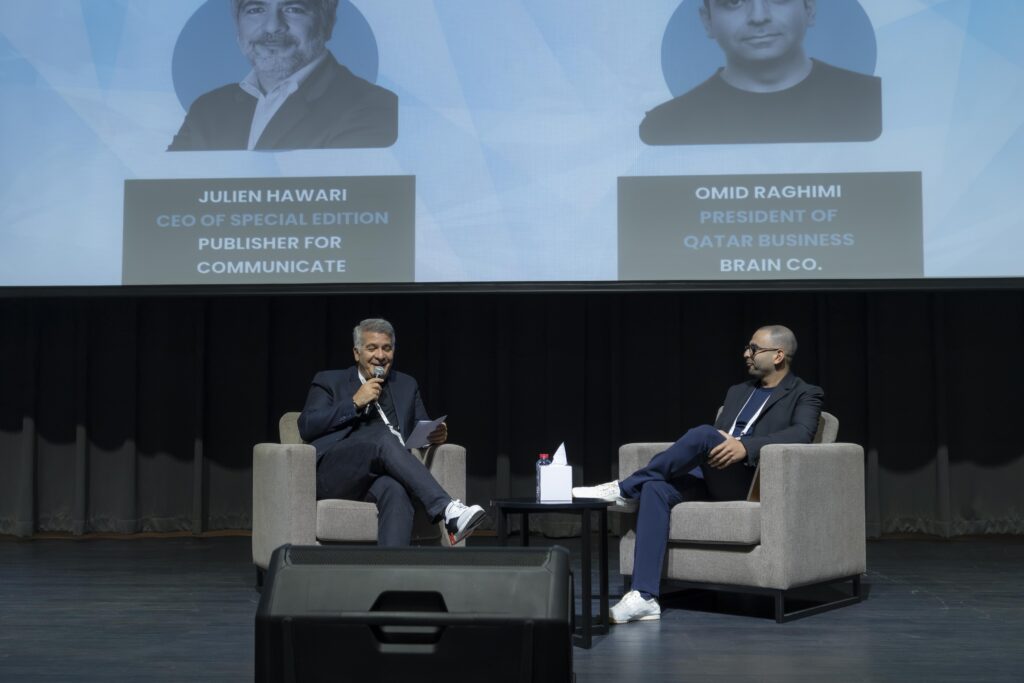
That was the underlying tension inside a recent Chatham House-style roundtable in Abu Dhabi, hosted by Communicate and INSEAD, where senior marketers and brand leaders gathered to decode what “growth” now actually means in a region rewriting its own rules in real time.
The questions on the table were deceptively simple: What do consumers actually value today? How do brands rebuild trust? And what does growth look like when attention is expensive, loyalty is conditional, and AI is quietly reshaping decisions in the background?
The answers were anything but simple.
A clear consensus emerged: the era of predictable brand building has fractured. Several leaders pointed to an immediate shift in budget behavior, longer planning cycles, tighter scrutiny, and a decisive swing toward short-term, performance-led outcomes. One recurring sentiment: brands are no longer just chasing growth, they are actively trying to protect what they already have.

But beneath the defensive posture, a more nuanced reality surfaced.
While a significant share of sales is now driven without direct advertising, brand equity still accounts for a meaningful portion of performance, reinforcing a tension marketers can’t ignore: performance may convert, but equity sustains.
“In uncertain times, the brands that stay consistent are the ones that bounce back,” was a sentiment echoed across the room, alongside a sharper truth: you can’t be everything to everyone anymore. Differentiation has become non-negotiable.
Consumer behaviour is also shifting in ways that demand recalibration. Today’s customer is not just price-sensitive, they are justification-driven. Value must now be explained, experienced, and felt. Competitive pricing alone is no longer enough; connection and experience are the new battlegrounds.
AI, unsurprisingly, loomed large. Not as a tool, but as an inflection point. Purchase decisions are increasingly mediated by technology, and marketers are now asking a harder question: how “AI-smart” is the customer becoming in this region, and how should brands respond when discovery itself is no longer fully human-led?
Yet amid the disruption, optimism remains. Many CMOs expressed confidence in a stronger 2027 outlook, driven by sharper businesses, more informed consumers, and a renewed focus on authenticity. But the path forward is clear: trust must be rebuilt, transparency must be operationalized, and marketing must shift from persuasion to reassurance.
The GCC, in this view, is not just adapting to a new normal, it is entering a renaissance of marketing maturity. One where localisation is no longer cosmetic, where AI is treated as infrastructure, and where growth is increasingly defined by something far less tangible, but far more powerful: credibility.
Because in the next cycle of growth, attention may still be bought—but trust will have to be earned.