The creator economy has a structural problem. Creators build audiences, generate engagement, and make advertising possible — yet they remain the most vulnerable party in the chain.
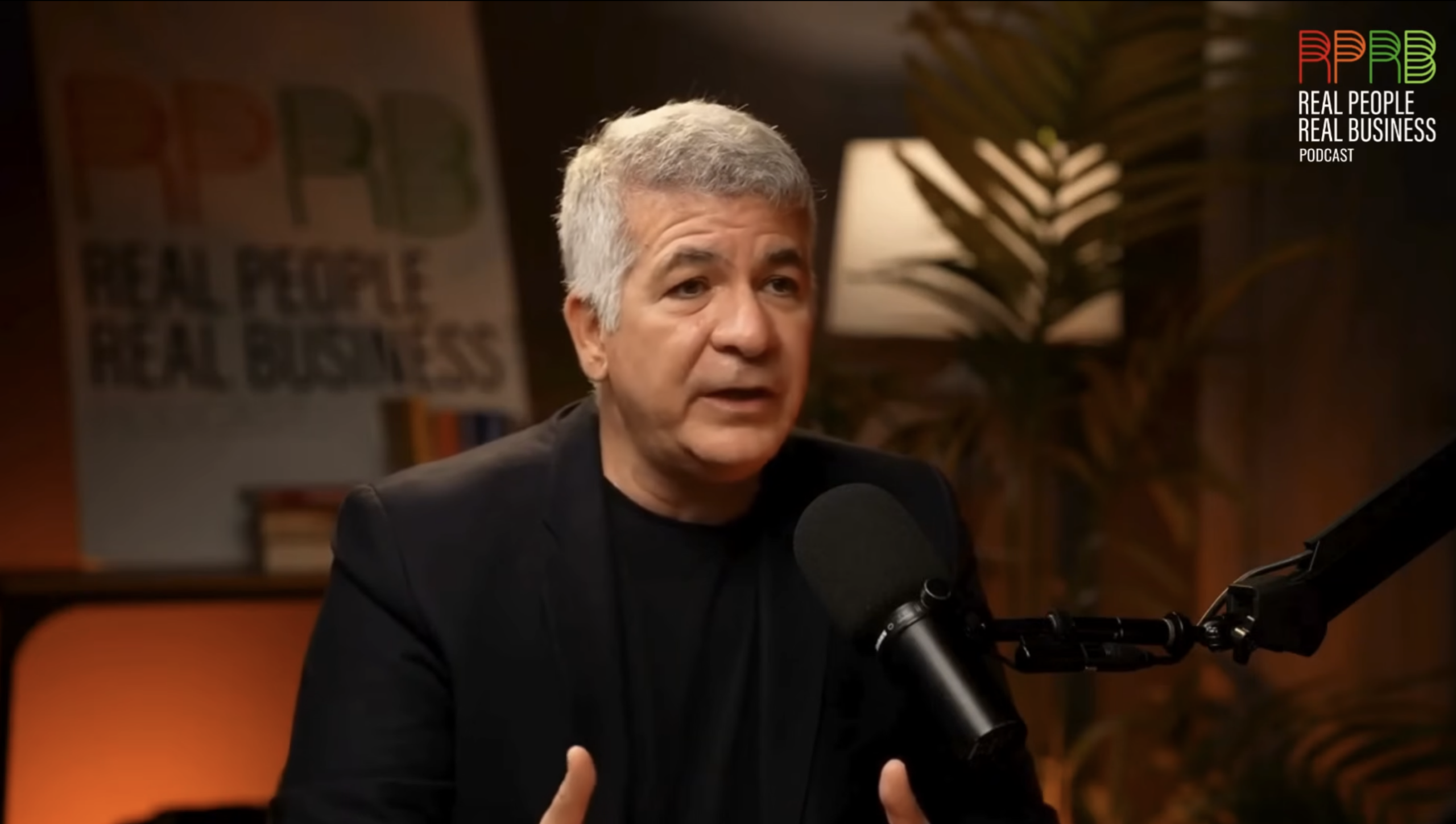
For Julien Hawari, founder of Media Quest and CEO of creator platform Million, that reality came into focus during a dinner conversation. Seated next to a content creator toward the end of the COVID period, he found himself repeatedly suggesting solutions to her frustrations — only to be told each time that it wasn’t that simple.
“It’s not easy, it’s complicated,” she told him. “I was like, why would that be so complicated?” he recalled on the podcast Real People Real Business, hosted by Izu Nwachukwu. “And that got me thinking — and the more I was thinking, the more I started like, it should not be.”
That conviction became Million, a creator monetization platform built on a deceptively simple premise: your image, your business, your rules.
You are a slave, Neo
Hawari doesn’t mince words when describing what major social platforms have done to creators. Reaching for a Matrix reference, he put it bluntly: “You are a slave, Neo. And that’s the reality today for many of the creators. They are slaves on many of those platforms. They don’t own their audience. Any day they can be shadow banned, blocked, demonetized, or de-platformed. So, they are scaling a business that they don’t own.”
Host Izu Nwachukwu framed the paradox well: creators are the ones who draw in the fans, generate the engagement, and make advertising possible — yet they’re the last to benefit. “You don’t necessarily have that security,” he said. “You’re being told what you’re going to earn despite how famous you are… you could be chopped off any time and the rug’s pulled from under your leg.”
Hawari sees this as a structural flaw baked into the DNA of existing platforms. “They need to polarize the population to create the maximum interaction, the maximum stickiness on their platform, and be able to monetize all those eyeballs,” he explained. “That’s not going to change. It’s the nature on which they’ve been built.”
What Million actually does
Million’s model is straightforward. Creators join the platform and decide entirely how they want to monetize — subscriptions, pay-per-view, content rental, podcasts, and more. “It’s your image, your business, your rules,” Hawari said. “They decide what they want to sell.”
But the platform goes a step further by cutting fans in on the deal. Through what Hawari calls “engagement to earn,” fans who spend time and interact on Million are financially rewarded. “We believe the moment we utilize data of the fan to monetize with advertisement, part of this money needs to be redistributed to the fan,” he said. “So the more time, the more engagement they have on Million, the more money they’re going to be making. It’s a much fairer way of looking at the business.”
Million takes a 30% cut on transactions. “Our interest is that you make money,” Hawari said, “because when you make money, I make money.” The model is designed so that creator success and platform success are the same thing — a deliberate break from platforms where those incentives are misaligned.
Million was founded amid rapid growth in the global creator economy, as brands increasingly shift marketing spending toward influencers and creator-led communities. Hawari argues that the sector is moving toward models that prioritize direct audience relationships, ownership and diversified revenue streams rather than dependence on advertising-driven social media platforms. Million has recorded more than 300,000 downloads since its launch.
AI: The great equalizer — and the great threat
No conversation about the creator economy in 2025 is complete without AI, and Hawari has a nuanced, if sobering, take. He sees the technology as both an existential threat to mid-tier creators and a powerful democratizing force for everyone else.
“Up till ChatGPT and all the different AI tools came, the future looked extremely bright for the creator economy,” he said. “However, I do feel that there has been a turning point — and the turning point has been the extremely fast rise of AI in content generation.”
For brands, AI solves a recurring problem: unreliable human creators. “Sometimes creators throw tantrums, they behave like divas, they’re not on time,” Hawari observed candidly. “When you are dealing with an AI creator, it is on time. It does what it’s supposed to be doing. If it has to reshoot and redo it, it will reshoot and redo it without any issue.”
But for the right kind of creator, AI is a gift. Nwachukwu described using AI to finally build a family crest he’d been picturing for three years — sketching it out, entering prompts, and having a finished version within minutes. Hawari agreed that this democratization is the real story: “Today anybody can be part of this creator economy. They can create and re-enter this world of abundance.”
The future belongs to emotion
If there is a single thesis running through Hawari’s thinking, it’s this: in a world of infinite AI-generated content, the only thing people will pay for is emotion.
“The value of content is going to go to zero,” he said plainly. “People are not going to buy content. People are going to be buying emotion and proximity.” He pointed to luxury watches as an analogy — nobody buys a Rolex for the time. “It’s the emotion that it brings. It’s what it triggers.”
This is why he believes fandom — real, devoted, emotionally connected fandom — is the foundation of the creator economy’s future. “You’re ready to pay for emotion,” he said. “The creator of tomorrow that is going to prevail — it’s not about the mass of what they produce. It’s about the emotion they are able to trigger with their audience.”
Creators who chase scale and brand deals, he warned, will fade. Those who build genuine proximity with a core audience — and eventually move into physical products, experiences, and merchandise — will thrive. “Some of the creators are going to get this,” he said, “and they’re going to be able to build brands that go beyond just the digital world.”
The lesson that cost the most
When asked what he had learned about himself through his career, Hawari told the story of Million’s painful early development — built on subcontractors, only to have an investor friend review the architecture, crumple the plans, and tell him to start from scratch.
“We have to restart from zero,” Hawari recalled. “We hired our own team and restarted everything. This is how you learn — by making mistakes. Some mistakes are costly, and that mistake at the start was a costly one. But we learned from it.”
The result, he said, is a platform of genuine technical complexity — one that, by the accounting of outside observers, “should not have been able to be achieved” with the investment that went into it. His explanation: “Maybe we didn’t know it was impossible to do, so we just did it.”
Resilience, he concluded, is non-negotiable — especially in this region, at this moment. “If you’re not resilient, it’s not going to get anywhere.”