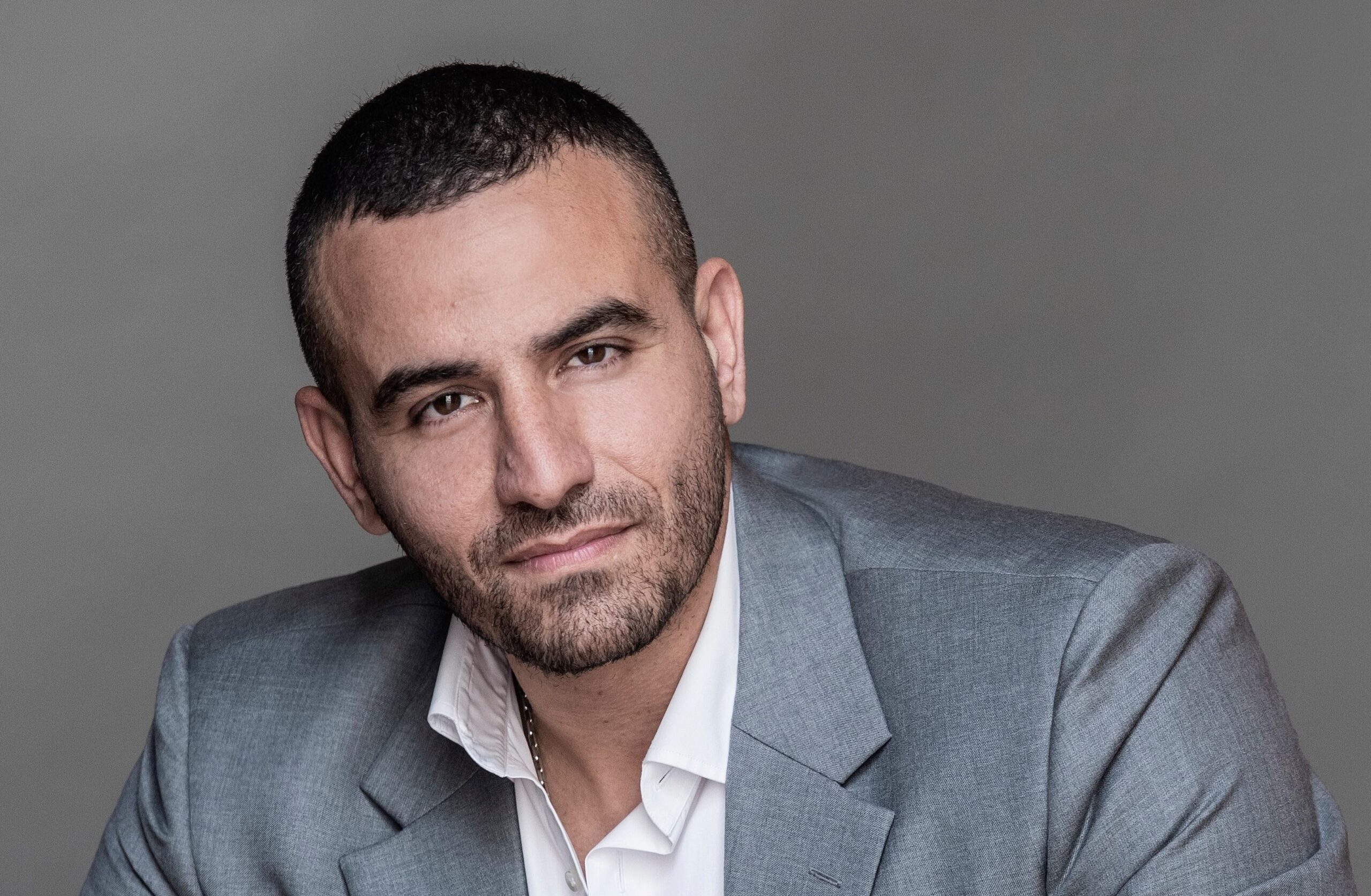
Tony Wazen, CEO Publicis Media Middle East, says that when disruption hit the region, he watched budgets move, not vanish. He watched the annual plan stop working, and bet on AI before the certainty was there to justify it.
When the disruption hit, it didn’t just test budgets; it tested assumptions. What’s one assumption about how this region operates that didn’t survive contact with reality?
I think one of the biggest assumptions that didn’t survive was that we could think about the region as one market with broadly predictable behaviors. MENA has always been diverse, but disruption made that impossible to ignore. Different markets moved at different speeds, clients responded differently and consumer behavior shifted in ways that weren’t necessarily consistent with historical patterns. What became clear is that resilience isn’t about having one regional playbook. It’s about having the agility to adapt the playbook, sometimes market by market, sometimes client by client.
And I think another assumption fell away too: that uncertainty automatically creates caution. Some of the most forward-looking clients actually used uncertainty as a reason to move faster, particularly around data, technology, AI and new ways of reaching consumers.
You can’t confuse volatility with paralysis. In a region that moves as quickly as this one, the ability to make a decision, learn from it and adapt is key. Moreover, disappearing when consumers expect presence is a risky decision. So the assumption that everything went quiet and brands would retreat was thankfully proven to be far from the reality.
Everyone talks about “resilience” until the money gets tight. Where did you actually see client budgets flow first once things stabilized, and did that tell you something different from what the brand decks were saying?
I don’t think what we saw was simply clients pulling back. It was clients getting much smarter about how they used what was available to them.
We looked at this closely across the region earlier this year through our Resilience Business Pulse survey, and the numbers were fairly clear. Only 8% of brands stopped marketing altogether, while 38% moved their investment around without reducing what they were spending overall. In FMCG, that figure was closer to 60%. The money was moving, but very little of it was actually leaving.
When the environment becomes more uncertain, every investment gets scrutinized. That accelerated a shift towards digital channels, data, performance, commerce and technology, areas where clients could be more precise, more measurable and more responsive. We saw a greater focus on targeting, optimization and using the signals available to make better decisions.
In some cases, that meant moving investment away from traditional approaches that were harder to measure or adapt quickly. But I don’t see that as digital simply replacing traditional. It’s more about being much more deliberate about what each channel is there to do and the value it creates.
The clients who navigated the period best weren’t necessarily those with the biggest budgets. They were the ones willing to challenge where their money was going and move investment towards what was working.
In many ways, the disruption simply accelerated behaviors that were already emerging. It made the case for smarter, more agile investment much harder to ignore.
If you erased everything Publicis assumed about regional planning a year ago and rebuilt it today, what’s the first thing that would look completely different?
Interestingly, I don’t think we’d start again from scratch.
A lot of the things that became essential during this period were already embedded in how we were working: integrated planning, data and technology-led decision-making, stronger connections between media, creativity, commerce and customer experience, and a much greater emphasis on agility.
Those things helped us, and, importantly, helped our clients, navigate the disruption.
What the last year has done is validate those choices and give us even more reason to double down on them.
If anything, we’d build even more adaptability into the system, because the reality is that the world can change on a dime. You need the signals, the structures and the talent to recognize that change quickly and move without having to rebuild the entire machine.
The lesson isn’t that everything we were doing was wrong. It’s that the direction of travel was right, and the speed at which we need to travel has increased.
Our clients have benefited from that too. The organizations that were already set up to be agile, connected and data-led were able to respond much faster when circumstances changed.
The real advantage of resilience is that you don’t try to become resilient in the moment of crisis. You build those capabilities beforehand, and they’re there when you need them.
What’s an idea the industry treated as untouchable for years—growth playbooks, agency models, client relationships—that this period just quietly buried?
I think it has quietly buried the idea that we can build the perfect calendar or roadmap and then organize the year around it.
We’ve historically been very good at planning, annual strategies, campaign calendars, quarterly roadmaps, long-term investment plans. And there is absolutely value in that discipline.
But the world doesn’t operate according to our calendars.
Consumer behavior can change overnight. A geopolitical event can change the context for a brand in a matter of hours. New technology can suddenly make something possible that wasn’t possible six months earlier.
So the idea that we can sit down in January, build the plan for the year and then simply execute against it is increasingly outdated.
We need to build organizations, teams and client relationships that can absorb change without losing direction. That means shorter feedback loops, more live data, closer collaboration between disciplines and, above all, the ability to make decisions quickly.
Agility can’t be an emergency response. It has to be built into the operating model.
Publicis made calls this year that it wouldn’t have made in calmer times. Give me the one that felt riskiest in the moment and the truth about how it’s playing out now.
Some of the riskiest decisions are the ones where you choose to invest ahead of certainty.
When conditions become difficult, the natural instinct is to protect the core, protect budgets, protect structures and wait for visibility before making the next move.
We chose to continue investing in capabilities we believe will define the next phase of our industry: data, technology, AI, connected experiences and, critically, our people.
That’s never completely comfortable when the market is uncertain because the return isn’t necessarily immediate.
But looking at the questions clients are asking now, I think it has validated the decision. They aren’t simply asking us to return to the old model. They’re asking fundamentally different questions about transformation, effectiveness, data, AI and how they can make their organizations more agile.
The bigger risk would have been to wait until the market was completely clear before acting.
There’s always a gap between what clients say they value and what they protect when the pressure’s on. What’s that gap looking like right now, and what does it say about the industry’s real priorities versus its stated ones?
Pressure has a useful way of revealing what is genuinely important.
What we’re seeing is that clients are becoming much more disciplined about outcomes. They want creativity, but they also want accountability. They want innovation, but they want it connected to a real business problem. They want technology, but they want to know what changes.
Outside of targeting, technology, etc., the greatest asset any company can have in changing times is its people. For me, resilience has to include investing in the people who will build the next chapter of the industry, developing talent, building new capabilities and giving people the confidence to operate in an environment where the rules are changing.
That’s also why our work with clients on resilience matters. Resilience isn’t simply about surviving a difficult period. It’s about building organizations that are better equipped to thrive through whatever comes next.
A shorter version of this interview appeared in the October 2026 print issue of Communicate, which has more insightful analyses, interviews and articles. Read the full issue here