When senior communications executives from across the Gulf gather at W Doha on September 10, they won’t be there to swap award-season conflict stories. They’ll be there to figure out who still trusts whom, and why that question has become existential for an industry built on shaping perception.
The Middle East Public Relations Association (MEPRA) is hosting its 2026 Qatar Leadership Majlis under the theme “The New Architecture of Influence,” pulling together leaders from government, business, media and communications to dissect how conflict, geopolitical realignment, economic uncertainty and AI are scrambling the old rules of who gets believed. It’s the kind of premise that would sound like conference-brochure boilerplate anywhere else. In the Gulf right now, it’s closer to an accurate job description.
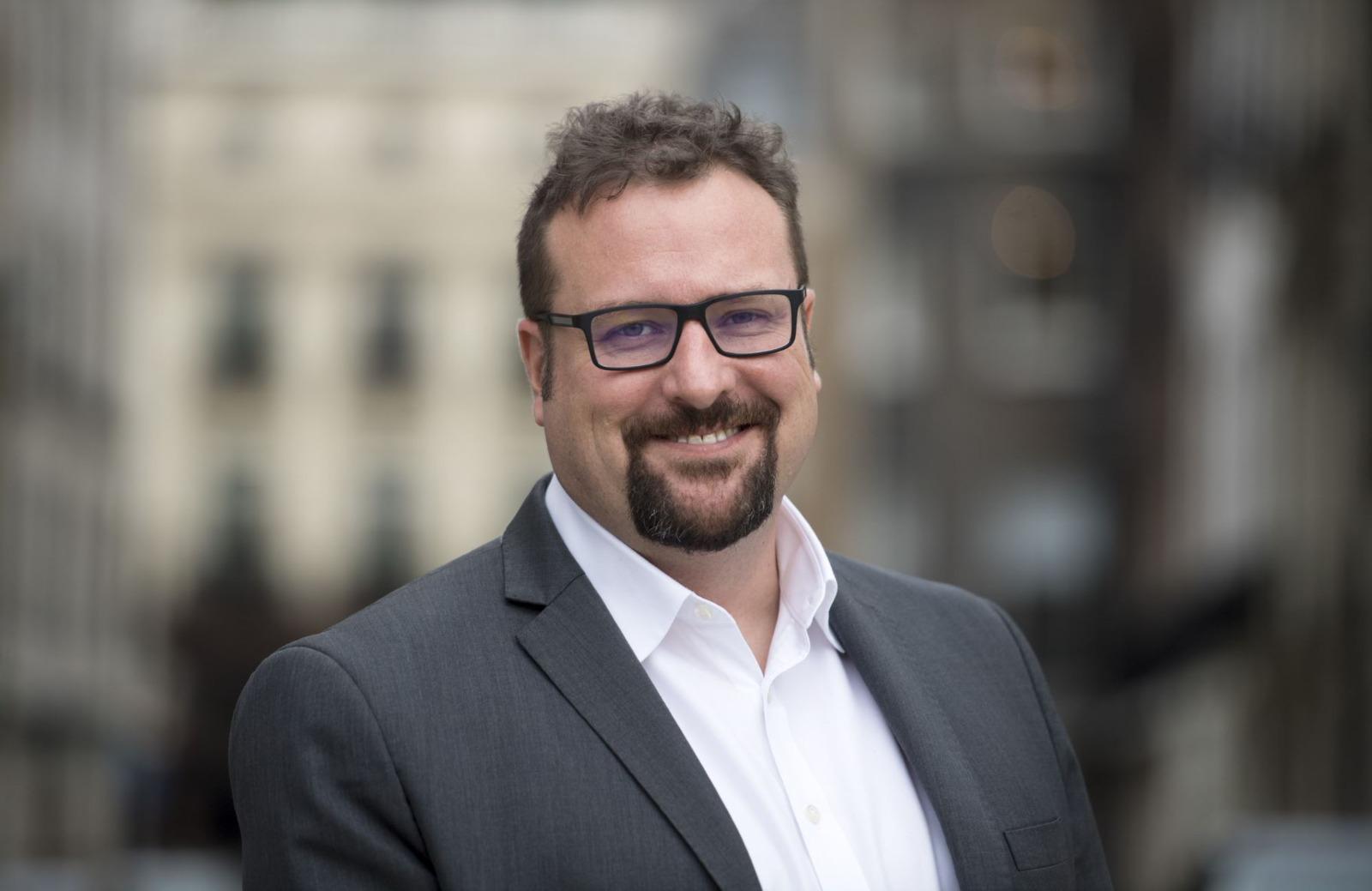
“The role of communications has changed,” MEPRA Chair Justin Kerr-Stevens said. “It’s no longer just about controlling the message. Increasingly, our role is to help organisations make better decisions, build trust before they need it, and navigate periods of uncertainty with confidence.”
That line isn’t abstract for Kerr-Stevens. He’s also founder and CEO of Northbourne Advisory, a Doha-based strategic communications firm barely nine months old, where reputation management, risk and geopolitical insight are the core business and not add-ons. Earlier this year, Northbourne ran an unusually granular tracking exercise on regional disruption, following roughly 275 events across four Gulf countries over 50 days to see what was actually happening to the events economy amid regional tensions, rather than what the international press assumed was happening. His findings cut directly against the prevailing narrative: most events weren’t being cancelled. They were being postponed and pushed into a now-crowded fourth quarter.
That distinction mattered. International coverage at the time was, in his words, suggesting the Gulf’s event and tourism ambitions were essentially over. The data told a different story, one where the ratio of postponements to outright cancellations ran better than 2-to-1 in the UAE alone, and where a UN-linked estimate put the events industry’s global GDP contribution above $340 billion, supporting more than 7.3 million jobs across the region. The report went semi-viral inside the industry, Kerr-Stevens said, turning up in inboxes as far away as Switzerland and South Africa from people who had no obvious reason to have seen it.
The reason it travelled, he argued, is the same reason the Doha Majlis exists: there’s currently no reliable single source of truth for what’s actually happening on the ground, and communications teams are being forced to fill that vacuum in real time, often without a playbook. Unlike crisis communications inside a government or an agency, where response protocols are well-rehearsed even if imperfect, the events industry itself is fragmented and largely without a shared crisis plan. Tourism authorities typically defer to government messaging focused on public safety rather than on the operational status of specific events — which is how attendees ended up parsing rumors on Reddit, in one case tracking Shakira’s tour postponements in India as an early-warning signal for whether her Middle East dates would survive.
It’s precisely that gap, between what officials say and what audiences actually believe, that MEPRA is positioning the Qatar Majlis to address. The event follows a similarly themed session in Abu Dhabi, where Sheikha Hind Al Otaiba spoke on communications as a driver of national resilience, and futurist Marzen Al Karma argued that a region long accustomed to conflict typically recovers faster than outsiders expect. Doha will build on that framing with sessions on how communications teams are deploying AI in event planning and execution, how event-led strategy diverges across B2B, B2C and B2G audiences, and how organisations are being pushed to measure impact beyond attendance figures and press clippings, a tacit admission that the industry’s traditional metrics haven’t kept pace with how trust is actually built or lost.
There’s also a governance story quietly running underneath the agenda. Kerr-Stevens, who previously led BLJ Worldwide and served as Middle East general manager at Portland Communications, is the first MEPRA chair appointed from outside the UAE during the association’s 25th-anniversary year — flanked by vice chairs Neda Shelton of Mubadala and Monther Tayeb, the first vice chair drawn from Saudi Arabia. For a body representing an industry MEPRA estimates is worth $1.5 to $2 billion annually across the GCC, that geographic spread is itself a signal of where influence, and the arguments over who gets to shape it, is heading next.
Kerr-Stevens’ own bar for success is modest on paper, ambitious in practice: “If attendees leave with one new idea they can take back into their organisation the very next day, we’ll have achieved our goal.”
The Majlis is open to senior professionals in reputation, stakeholder engagement, corporate affairs and organisational strategy, with registration open via MEPRA’s website.