UAE consumers are increasingly looking for products that combine value, convenience and affordability, while FMCG brands face growing pressure to respond to more diverse and rapidly changing needs, says Milana Boskovic, Chief Marketing & R&D Officer, Al Ain Farms Group. In an interview with Communicate, Boskovic discusses the shifts reshaping food and FMCG marketing, from omnichannel commerce and faster innovation to local production, reduced added sugar and the convergence of marketing and R&D. She also outlines how artificial intelligence, personalised shopping and greater automation could transform the way food brands are developed and marketed in the UAE by 2030.
How do you see consumer behavior changing?
I think three things really define how UAE consumers are behaving right now. First, value: not just a lower price, but a genuine added benefit for what they’re paying. Second, ease: seamless e-commerce and delivery that fits around their pace of life, not the other way around. And third, affordability, but a very specific kind: they want products made for them, locally, and priced in line with their budgets. It isn’t one or the other anymore; people expect all three at once.
What are the top trends in FMCG marketing that you identify today?
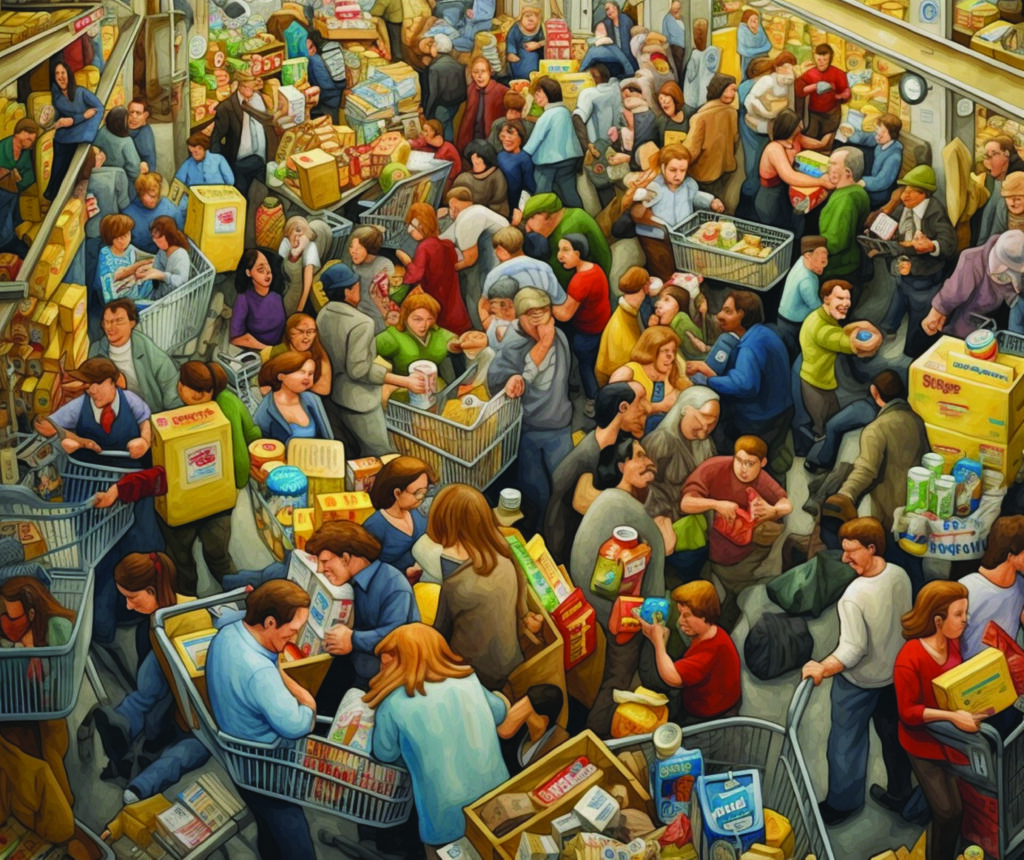
There is a lot happening in FMCG marketing right now. Omnichannel is table stakes: e-commerce and social media drive discovery, and in-store is a second battlefield where sales gets converted. E-commerce growth is genuinely reshaping the business model, not just adding a channel.
We are also seeing far more sub-segmentation, because the consumer base itself is diversifying and a single product can no longer serve everyone. Innovation speed has increased sharply; brands are delivering more value and more premium at the same time, which used to feel contradictory.
There is also a real appetite for artistic, unexpected marketing: distinctive design work, creator partnerships, flavor mashups like matcha and Dubai chocolate turning up in entirely unexpected different categories (for example mixed with salty flavors). And underneath all of it, there is a genuine push toward more ethical, sustainable practices; brands are being asked to matter beyond profit only.
You have marketing and R&D under the same roof. What does that change in practice? Are the best brand ideas increasingly coming from what you learn about consumers, rather than from the marketing team alone?
I think my perspective on FMCG is quite different because of my background. My mother’s a food technologist, my father’s an engineer, and I’m a sociologist, so I naturally balance science, process, numbers and human behaviour. I don’t believe in simply following trends; I look for the human need behind them and translate it into something meaningful.
My simplest test is: would I give this product to a child and feel completely confident about its safety and quality? From there, I step into the consumer’s shoes, understanding their needs, habits, emotions and usage occasions, to create a formulation and proposition that’s not only technically right and commercially viable, but genuinely relevant to people.
For me, great FMCG marketing is about translating science and data into a language humans understand and products they want, something I would also personally be proud of, because it’s coming from our family’s kitchen.
Al Ain Farms Group has brought together some very familiar UAE food brands. How do you create something bigger without losing what people already love about the individual brands?
There’s a different lens through which we look at the Group versus the individual food brands. We see the Group as the operating system behind it all: the food production, circular economy and resilience that underpins everything else. The brands are how that shows up on shelf, a house of brands offering a diverse portfolio across diverse consumer segments, so everyone has a choice that is genuinely theirs.
You announced the Al Ain Taaza joint venture with NRTC back in May, entering a crowded juice market. What did you see that made you think, “there’s room for another brand here”? And what will you be doing differently from the brands already on the shelf once it launches?
We announced our partnership with NRTC in May at Make it in the Emirates, and yes, we do believe there is room for another brand here. Al Ain Taaza itself is set to launch in September 2026, and what we’re bringing is authenticity and full transparency across the value chain: a new UAE-born brand built on local expertise in quality, taste, freshness and capability.
The fruit is sourced locally through NRTC, one of the region’s leading fresh produce companies with over 50 years of experience. That’s paired with Al Ain Farms Group’s own standing as the UAE’s largest integrated producer of locally made dairy, poultry, eggs, juices and camel milk. By sourcing and producing locally, we’re bringing a 100% UAE-made product that offers a different, authentic choice at an accessible price.
You’re reducing added sugar across selected products. That sounds straightforward on paper but changing a product people already know and love is a very different challenge. How do you make something healthier without making consumers feel they’re giving something up?
We used reverse engineering to naturally modulate the taste and reduce the amount of added sugar, while keeping the overall taste and drinking experience as close as possible to the original. Natural sugars, in milk and fruit, were never the target; the focus was strictly on added sugar. We validated this through sensory testing with consumers, including families with children, who couldn’t distinguish the new recipe from the old one. That’s the real test: if people don’t notice they’ve given anything up, you’ve done it right.
Is the traditional line between “product” and “marketing” starting to disappear? What happens when the person thinking about the consumer is also involved in deciding what actually gets made?
I don’t think marketing is only about products. Products are one expression of marketing, but marketing starts much earlier, with understanding people, culture, behaviour, needs and aspirations, and the role a brand plays in their lives. It’s also far more analytical and commercially driven than people assume -deciding pack sizes, formats, pricing and visual identity as market shifts demand, not just telling stories. And sometimes it’s a bit like fortune-telling: connecting trends to what might matter next, recognizing where society is going, and helping the organization get there before the trend becomes obvious, or before the biggest cultural impact has already happened elsewhere.
Looking back, what did that work change for you, and what has evolved in the brand since then?
It’s changed a lot for me, both personally and professionally. I’ve learned to see the future potential of a brand by identifying small gaps today, sometimes a product opportunity, sometimes a consumer need, sometimes simply as a matter of redirecting marketing investment based on what the data is telling us. That’s where marketing becomes more than communication; it becomes a way of shaping the future of the business. But it also comes with a strong responsibility of feeding the nation at all times. Through every crisis, from COVID to floods to geopolitical challenges, I’ve always seen us as a big group of people that feed the nation no matter what. Naturally, that also comes with real pressure, but our priority since inception has always been the same: protect the UAE consumer at all costs. That is the legacy our Founding Father, late Sheikh Zayed bin Sultan Al Nahyan (PBUH) left us, and our national duty. This is what our brands also stands for today – consistent freshness at best quality you can rely to always find on shelf, at affordable prices, whether in mass or in premium.
AAFG is investing in local production, food technology, supply chains and sustainability. Consumers don’t necessarily see any of that when they pick something up from a supermarket shelf. How do you turn what happens behind the scenes into something people actually care about?
Our brand equity index tells us that consumers notice and value these shifts. It isn’t only about communication; it’s built through consistent availability, accessibility across the portfolio, and continuously adding value without unnecessarily raising the burden on consumers through shelf prices. We are trying to make better products and deliver more value while staying conscious of affordability. At the same time, some of what we have consistently stood for, animal welfare, responsible farming, has become strongly associated with our brands. For me, that’s what brand equity really means: the cumulative effect of the choices a company makes every day, which consumers eventually recognize, trust and reward.
If we had this conversation in 2030, what would you hope has changed about the way food brands are built and marketed in the UAE? And what role do you think marketing will play in that change?
I strongly believe food will always remain deeply human. Artificial intelligence (AI) will take on a much greater role in integrated marketing, helping us understand, create and communicate in smarter and more effective ways. We’ll see much greater product diversification, with R&D playing an increasingly important role in developing meaningful concepts for ever more diverse consumer needs. But in my “fortune-telling” way of thinking, I also believe the way we shop will become increasingly electronic and AI-driven, with smart platforms understanding our choices at deeply personal levels, and those insights will then again feed directly into future innovation pipelines.
On the infrastructure side, we’ll see greater automation, more local integration, and alternative input materials that help us use energy and water more intelligently. The future is already here; ours is simply to recognize it, understand it and claim it.