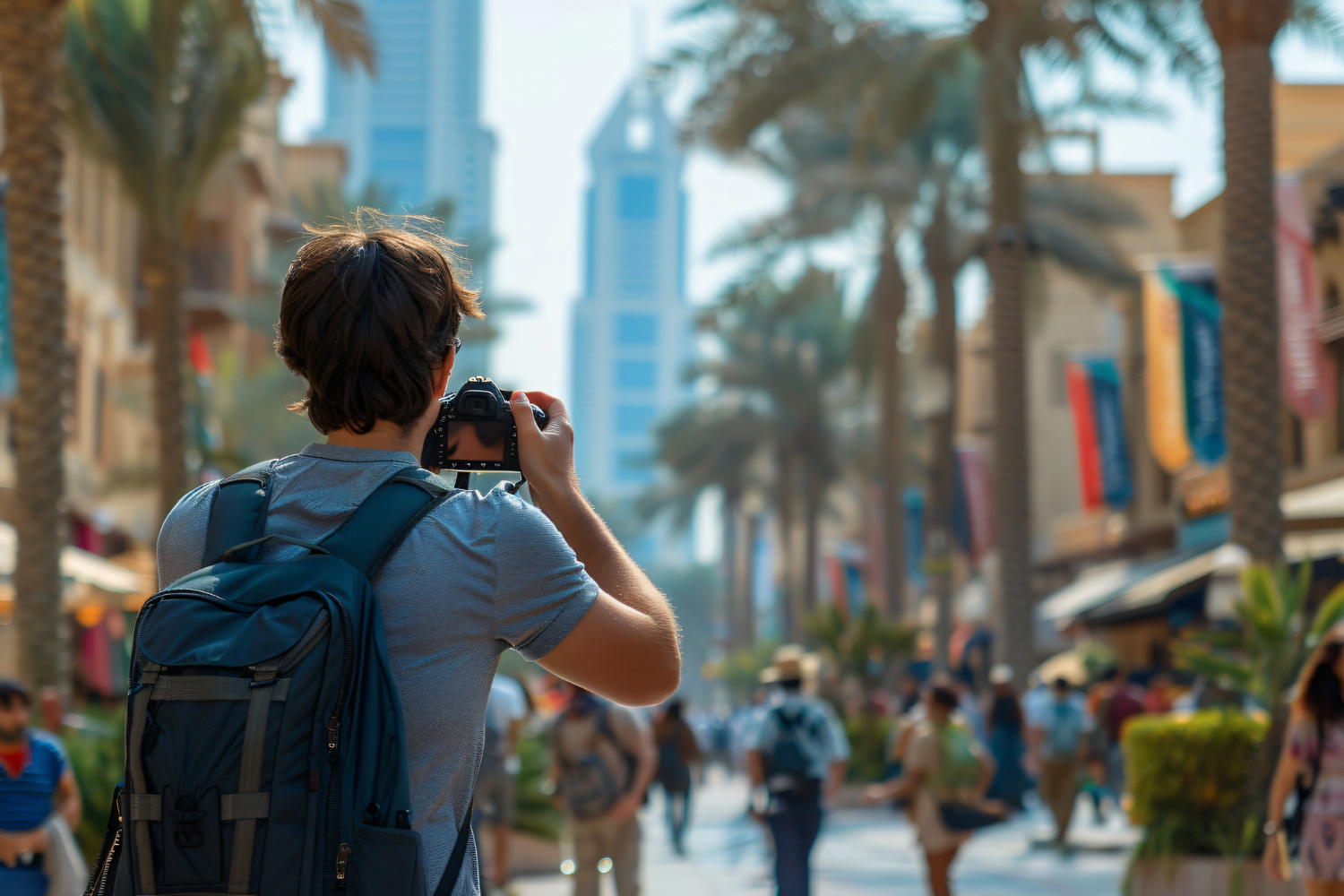
The GCC’s travel and tourism sector is entering a new phase. The story is no longer simply about recovering from the Iran war disruption Across the region, governments are investing heavily in aviation, hospitality, entertainment, events and destination infrastructure, while marketers are turning tourism into a broader consumer-engagement opportunity.
For CMOs and brand leaders, the question is increasingly less about whether travelers are returning and more about how the GCC can capture a larger share of their attention, spending and loyalty.
Dubai continues to set the pace
Dubai remains the region’s most mature international tourism market. The emirate welcomed 19.59 million international overnight visitors in 2025, up 5% from 18.72 million in 2024, according to the Dubai Department of Economy and Tourism’s 2025 Tourism Performance Report.
The city’s momentum extended into hospitality. Hotel occupancy averaged 80.7% in 2025, compared with 78.2% a year earlier. Occupied room nights increased 4% to 44.85 million, while average daily rates rose 8% to AED579. Revenue per available room increased 11% to AED467.
The source-market mix is also significant for marketers. Western Europe accounted for 21% of Dubai’s visitors in 2025, while the GCC and MENA proximity markets together represented 26%. South Asia contributed another 15%.
That diversity gives brands multiple opportunities to build campaigns around different traveler motivations rather than relying on one generic international tourism message.
The UAE’s tourism economy is getting bigger
The momentum extends beyond Dubai. Across the UAE, hotel establishments recorded more than 32 million guests in 2025, an increase of 5.1% over 2024, while hotel revenues reached AED49.21 billion, up 9.7%. The country had approximately 217,000 hotel rooms across more than 1,240 establishments, with national occupancy at 79.5%.
For consumer brands, this matters because tourism spending does not stop at hotel check-in. Visitors create demand across restaurants, retail, luxury, entertainment, mobility, attractions and experiences.
The result is a much larger addressable audience for brands seeking to connect with consumers when they are in an experience and discovery mindset.
Saudi Arabia is expanding the regional tourism proposition
Saudi Arabia is another critical part of the GCC’s tourism story. The country’s aviation infrastructure is expanding rapidly as Vision 2030 transforms the Kingdom into a major tourism and connectivity hub.
The General Authority of Civil Aviation’s 2024 aviation update reported that Saudi airports handled more than 128 million passengers in 2024, 15% more than the previous year and approximately 24% above pre-pandemic levels. The Kingdom was connected to 172 destinations, while flights exceeded 902,000.
That growing connectivity is important because Saudi Arabia’s tourism proposition is becoming increasingly diverse: religious tourism is being complemented by leisure, entertainment, culture, sport, luxury and business travel.
For international marketers, Saudi Arabia therefore represents not merely another destination market but a rapidly developing consumer ecosystem.
Qatar demonstrates the power of events
Qatar offers another lesson: tourism growth can be accelerated when destination marketing, events and hospitality work together.
Qatar welcomed 5.1 million international visitors in 2025, an increase of 3.7% year on year. The GCC remained its largest source market, accounting for 35% of visitors, followed by Europe at 25%.
Hospitality demand grew even faster. Room nights sold reached 10.84 million, up 8.6% from 2024, while accommodation-sector revenue reached QAR8.3 billion, a 12% increase.
Events were central to that performance. Qatar Tourism says the country delivered more than 600 events in 2025, supported by more than 95 integrated marketing campaigns across 19 international markets.
The lesson for CMOs is clear: events can be media platforms, tourism drivers and consumer-engagement engines at the same time.
What the rebound means for CMOs
The GCC’s tourism recovery changes the marketing opportunity.
First, segmentation becomes more important. A European luxury traveler, a GCC family taking a short break and a South Asian visitor traveling for shopping or entertainment have different motivations and spending patterns.
Second, brands need to think beyond destination advertising. The strongest campaigns can connect with consumers throughout the journey: inspiration, search, booking, arrival, accommodation, dining, shopping and post-trip sharing.
Third, the rise of events creates new opportunities for sponsorship and experiential marketing. Sports tournaments, music festivals, cultural events and business conferences can give brands a reason to become part of the travel experience rather than simply advertise around it.
Travelers are looking for experiences, not just destinations
For consumers, the GCC’s tourism investment is creating a broader choice of experiences. Dubai combines shopping, hospitality, entertainment and business tourism; Saudi Arabia is rapidly expanding its leisure and cultural offering; while Qatar is positioning itself around events, culture, sport and year-round travel.
This creates a competitive environment in which experience becomes the differentiator.
The implications extend to social media. Destination discovery increasingly happens through creators, short-form video, reviews and peer recommendations. Dubai, for example, launched the Beautiful Destinations Academy in 2025 as part of an effort to develop travel-content creation and strengthen the city’s global tourism storytelling.
From recovery to resilience
The bigger story, therefore, is not simply a GCC tourism rebound. It is the emergence of a more sophisticated regional tourism economy.
The UAE’s record visitor numbers, Saudi Arabia’s expanding aviation connectivity and Qatar’s event-led growth demonstrate the scale of the opportunity. At the same time, the region’s tourism authorities are investing in infrastructure, hospitality capacity, digital services and destination marketing.
For CMOs and brand leads, the priority should be to move from “selling the destination” to owning moments within the traveler journey.
For consumers and travelers, meanwhile, the GCC is becoming a region where a short break can combine luxury, retail, sport, culture, entertainment and hospitality within a single trip.
The next phase of GCC tourism will therefore be less about simply bringing more people through the airport and more about increasing the value of every visitor, every experience and every interaction.