TikTok says the future belongs to creators who think like entrepreneurs, while new RedSeer research reveals the platform is contributing AED 1.1 billion to the UAE economy and helping create thousands of jobs.
For years, TikTok has been synonymous with entertainment, trends and viral moments. Now, it wants to be recognized for something bigger: economic impact.
At the UAE Forward Forum, held at Dubai’s Museum of the Future yesterday, fresh insights were unveiled into the platform’s growing role in the UAE’s digital economy. Developed in partnership with RedSeer Strategy Consultants, The TikTok Effect: Enabling the UAE’s Dynamic Digital Economy estimates that TikTok-supported small and medium-sized businesses (SMBs) contributed over AED 1.1 billion in gross value added (GVA) to the UAE economy, supported approximately 7,000 jobs, and helped inspire more than 10,000 entrepreneurs to launch businesses, including 3,500 women entrepreneurs and around 1,400 Emiratis.
But beyond the headline numbers, executives speaking to Communicate argued that the creator economy is entering a new phase, one where creators are becoming entrepreneurs and platforms are becoming engines of economic growth.
From entertainment platform to economic engine
“I’ve been working with TikTok since 2019 and I’ve seen the platform evolve,” Sandeep Ganediwalla, Managing Partner at RedSeer Strategy Consultants, told Communicate. “Earlier it used to be an entertainment platform, then it became an empowerment platform, and now I think what the recent report shows is how it is becoming a part of the digital economy itself, how it is supporting the economy.”
According to the research, consumer behaviour is evolving alongside the platform. Sixty-five per cent of surveyed users said they no longer use TikTok purely for entertainment, instead turning to it to discover products, businesses and new skills.
“Brands now are going where consumers are,” Sandeep said. “Consumers don’t want to be bombarded with ads per se, but they want to explore products, discover products in a more natural way.”

For marketers, that’s a clear signal that discovery is replacing interruption, with content increasingly becoming commerce.
The report also found that more than 70,000 SMBs actively advertise on TikTok in the UAE, highlighting the platform’s growing role in helping businesses reach customers and scale.
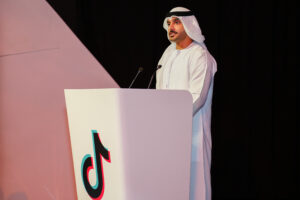
“For four centuries, selling to the world required the scale of an empire — fleets, warehouses, an army of employees. Today it requires a phone, courage, and a country that clears the way,” said H.E. Abdulaziz Al Nuaimi, Assistant Undersecretary of Economic Affairs at the Ministry of Economy and Tourism at the opening of the forum. “This report documents more than 10,000 UAE businesses that were not capitalized into existence — they were distributed into existence. That is not just a digital platform story. It is a story of how entrepreneurship is being reinvented, and the UAE intends to lead the economy of the future.”
What this means for brands
While many economic impact reports focus on enterprise organisations, RedSeer’s research deliberately examined the impact on SMBs and creators. “The first thing that we spoke about is the economic impact,” Sandeep told Communicate. “From economic impact perspective, 1.1 billion dirhams of economic impact from TikTok.”
He also pointed to a multiplier effect that should resonate with marketers and business leaders. “For every $1 that gets spent by SMEs, there is a multiplier of 3x,” he said, adding that the platform’s wider economic impact extends well beyond advertising spend.
The creator economy is proving equally significant.
According to the report, one in four creators earns through TikTok, while 75% of their earnings come from the platform. Meanwhile, 75% of consumers surveyed said they have learned a new skill through TikTok, reinforcing its role as both a discovery and learning platform.
For CMOs navigating fragmented attention, Sandeep believes this is simply the next evolution of marketing. “Historically, it’s not the first time that the CMOs are witnessing these kind of disruptions,” he said. “It came when newspapers were launched, then through television, then through apps. Consumers now want a fun way of discovering products and platforms like TikTok provide that kind of fun way of exploring products.”
The creator economy’s next chapter
For TikTok, the creator economy is becoming less about followers and more about entrepreneurship.
Speaking to Communicate, Kinda Ibrahim, Regional General Manager of Operations, TikTok Europe, the Middle East and Africa, said the UAE’s ecosystem has created the right conditions for creators to build sustainable businesses through collaboration between government, institutions and platforms. “We believe that a key component of a thriving creator or creative economy is this public-private partnership where everybody plays a role,” she said. “The government in the UAE has put together the processes and the regulations to attract and foster and nurture this creative economy.”
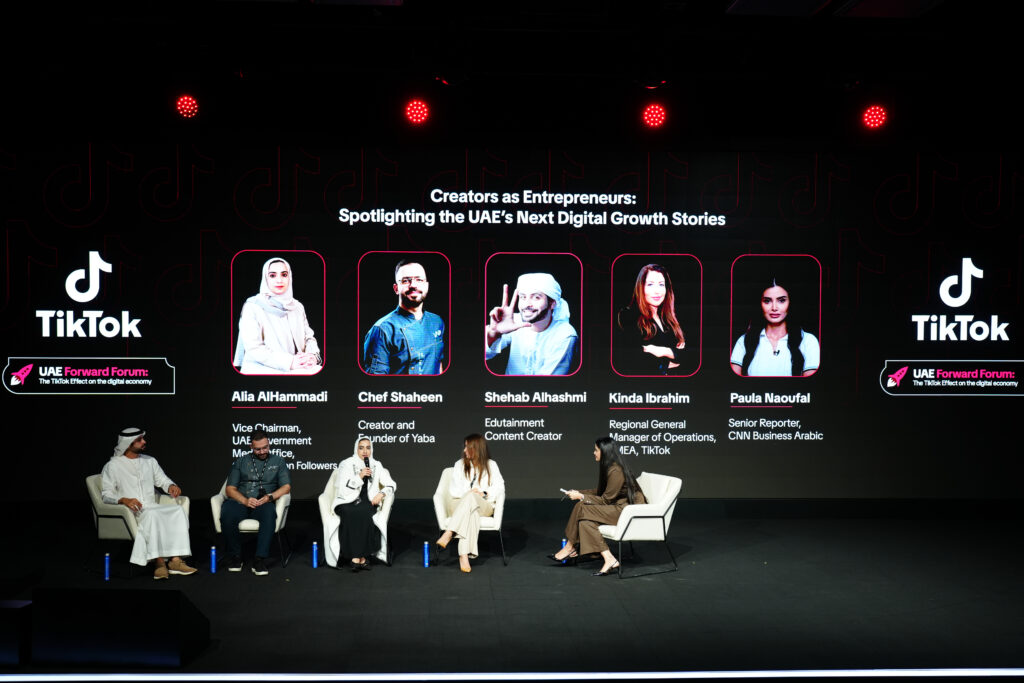
She also pointed to initiatives such as Creators HQ and the 1 Billion Followers Summit, which are helping creators develop business skills alongside creative ones.
For Ibrahim, content creation should be viewed as the starting point rather than the end goal. “We’re really focusing on content creation as the starting point of what might become a sustainable career either on or off the platform,” she told Communicate.
That shift also requires creators to think differently. “The creators themselves, they need to start thinking like entrepreneurs. They need to start thinking about P&L. They need to start thinking about how to set up a business. They need to start thinking about how to launch a product, how to test that product and use a platform like TikTok to test that product.”
AI may increase productivity, but authenticity still wins
The rise of AI is changing how creators work, but authenticity remains their greatest competitive advantage. “The creators now have a dilemma,” Sandeep told Communicate. “On one hand, they can be a lot more productive using AI, but at the same time, consumers want them to be authentic. So how do you balance the authenticity with increased productivity? I think that’s the challenge that creators would need to now slowly figure out.”
That balancing act is becoming just as relevant for brands as they look to integrate AI into creative production without losing the human connection consumers increasingly expect.
Growth depends on trust
While economic impact dominated the conversation, speakers repeatedly emphasised that the future of the digital economy depends on trust, safety and responsible innovation.
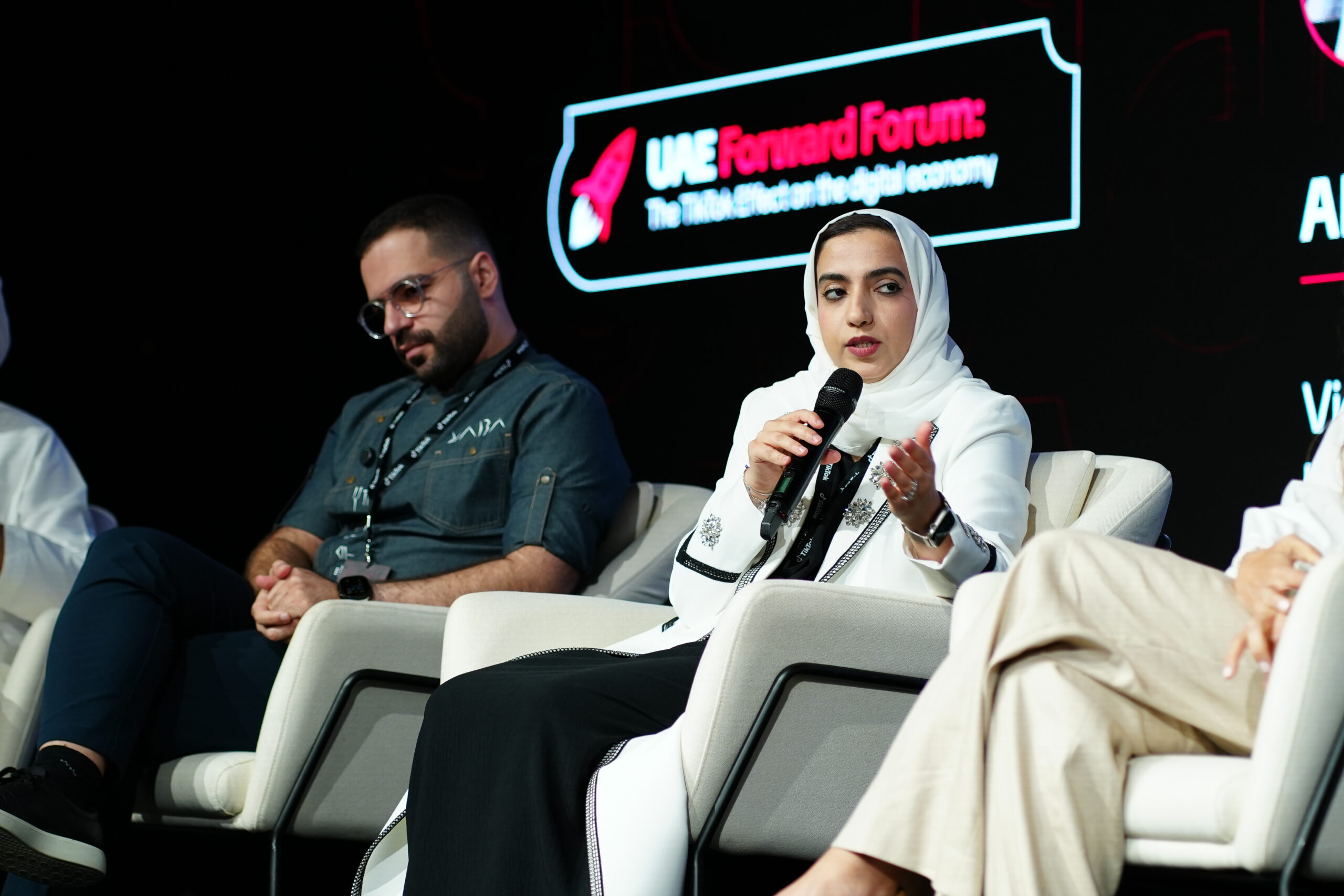
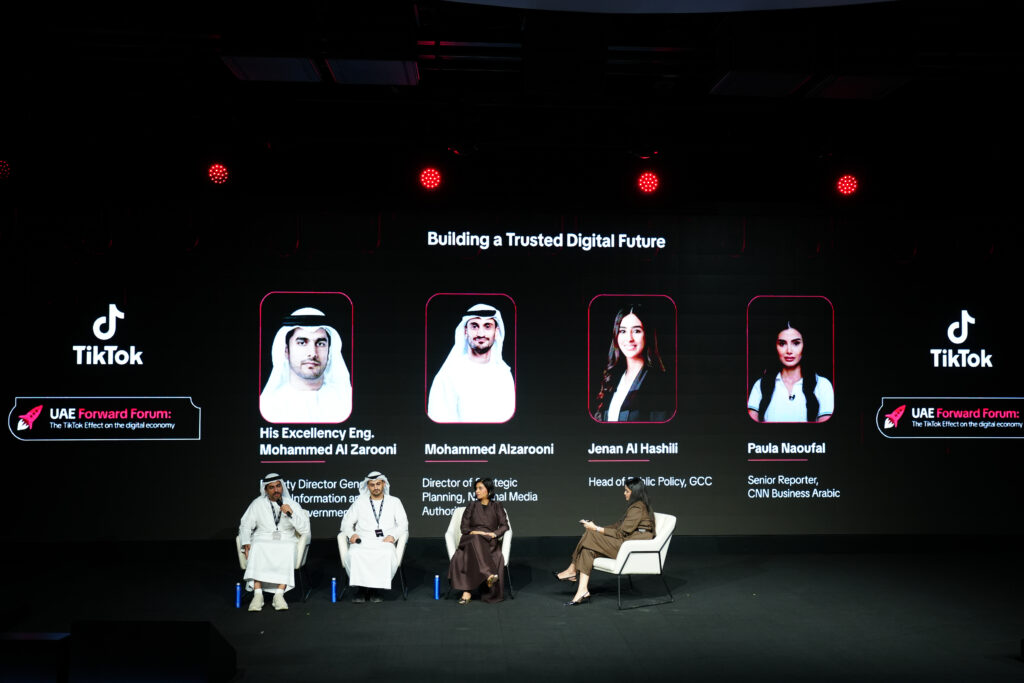
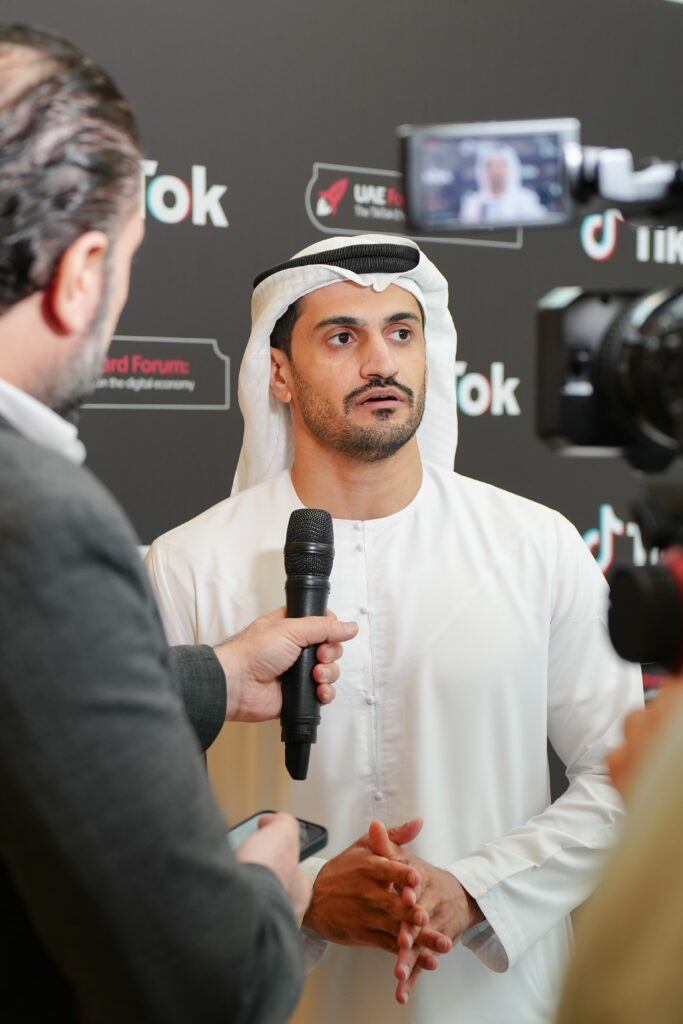
“The UAE has created an environment where creators, entrepreneurs and small businesses can thrive,” Jenan Mohamed Alhashili, Head of Public Policy, GCC, at TikTok said during a panel. “Today’s discussions reinforced that a successful digital economy is built not only on innovation and opportunity, but also on trust, safety and responsible collaboration.”
As part of that commitment, TikTok highlighted its investments in digital wellbeing, including more than 50 preset safety, privacy and security features designed specifically for young people. Family Pairing enables parents and guardians to customise privacy settings, manage daily screen time, schedule screen-free periods through Time Away and access additional supervision tools.
The platform also continues to work with organisations including the Telecommunications and Digital Government Regulatory Authority (TDRA) and the Abu Dhabi Early Childhood Authority’s UAE Children’s Digital Wellbeing Pact to promote digital literacy and responsible platform use.
“As the UAE continues to advance its ambitions around digital transformation and the knowledge economy, digital platforms are increasingly shaping how businesses grow, how destinations are discovered and how people engage with work and learning,” said H.E. Eng. Mohammed Al Zarooni, Deputy Director General of the Information and Digital Government Sector at the Telecommunications and Digital Government Regulatory Authority (TDRA). “Building a trusted digital ecosystem requires continued collaboration between government, industry and communities to ensure innovation is matched by strong digital safety and wellbeing.”
The forum, which brought together government leaders, industry experts, creators and entrepreneurs, aligned with the ambitions of We the UAE 2031 and UAE Centennial 2071, reinforcing the role of public-private collaboration in shaping the country’s digital future.
Asked to comment on her vision of the 2030 creator economy, Ibrahim believes the ultimate measure of success will be when the distinction between the creator economy and the wider economy disappears altogether. “Success is when we stop calling it a creative economy or creator economy and just call it economy,” she told Communicate. “This is what success looks like.”
If the conversations at the UAE Forward Forum are any indication, the creator economy is no longer a niche conversation. It’s becoming a business conversation. And for brands, marketers and creators alike, that may be the biggest shift of all.