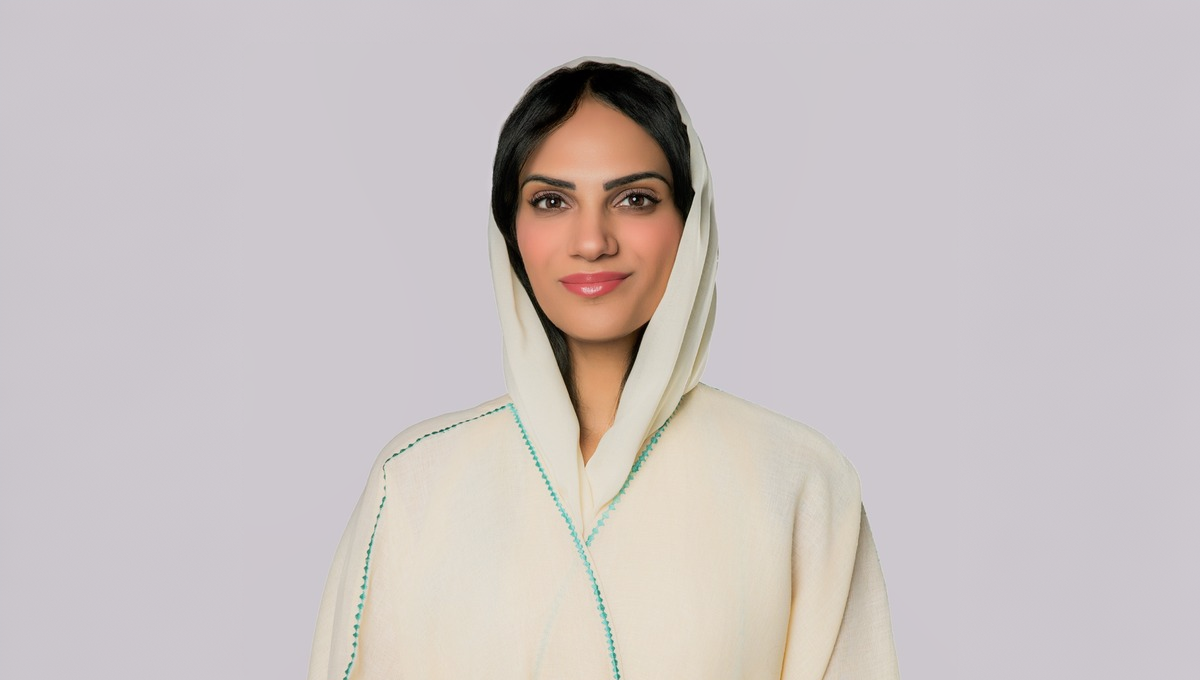
Saudi Arabia is emerging as a market that demands dedicated advertising strategies, with brands investing more deliberately in local content, creators, premium media and audience intelligence. As digital consumption grows and audience expectations rise, advertisers must look beyond reach and impressions to deliver cultural relevance, quality of attention and measurable business outcomes. In this interview with Communicate, Nedaa Al Mubarak, CEO of SRMG Media Solutions (SMS), discusses where advertising investment is heading, how first-party data is changing campaign planning, why creators are becoming integral to premium media strategies, and what brands must do to connect with audiences across Saudi Arabia and the wider MENA region.
Saudi Arabia’s advertising market is growing rapidly, but where is investment actually moving? Which categories, formats and business models are seeing the strongest growth, and what does that tell CMOs about where to place their next riyal?
We see the strongest demand in sectors closely linked to Saudi Arabia’s economic and consumer growth, including tourism, entertainment and sports, financial services, technology and telecommunications, retail and mobility. Video, creator-led content, live and sports environments, and branded content designed for digital distribution are attracting greater investment. Commercially, the market is also moving towards integrated propositions that bring together premium content, audience data, distribution and measurement.
For CMOs, the implication is clear: do not buy reach in isolation. Invest where there is a defined audience, a credible content environment, a clear role for the brand and an agreed measurement framework. The next riyal should go to the combination that can deliver attention and business impact, not simply the lowest cost per impression.
Saudi has rapidly become a market brands build for deliberately rather than as part of a regional buy. What is driving that shift, and what does it demand of the brands that want to succeed there?
Saudi Arabia is being planned as a priority market because it combines scale, purchasing power, high digital consumption and sustained investment in content, entertainment, sports and tourism. It also has distinct audience behaviors and a strong cultural identity. A regional campaign with a Saudi media allocation is not a Saudi strategy.
Brands need dedicated audience insight, local creative judgement and work developed for the market from the outset. The quality of Saudi content is also rising quickly, raising audience expectations and the standard brands must meet. Brands cannot rely on occasional flagship campaigns; they need to produce high-quality, locally relevant content consistently. That means involving Saudi talent and partners early, treating Arabic as an original creative language where relevant, and making decisions based on how people in the Kingdom consume content. Commitment is visible in the quality of the work, and audiences recognize the difference.
What has fundamentally changed in how brands, agencies and platforms approach Saudi audiences?
The approach has become more deliberate. Brands are allocating dedicated briefs and budgets to Saudi Arabia; agencies are strengthening local strategy and creative capability; and platforms are developing products and partnerships around the market’s specific behaviors.
The standard for relevance has also risen. Saudi audiences expect brands to understand differences in language, imagery, humor, values and context without relying on stereotypes. The strongest work is developed with that cultural understanding built in from the start. It is locally credible, commercially focused and strong enough to travel beyond the market.
Premium media is competing with platforms on scale, data and performance. What does “premium” need to deliver today to justify its value, beyond reach and brand safety?
Premium media must deliver quality of attention, not only volume. Brand safety is a minimum requirement. The value comes from a trusted environment, distinctive content, a clearly defined audience and evidence that the investment changed awareness, consideration or action.
It also requires content and distribution to work together. Strong creative without sufficient distribution has limited commercial value; broad distribution cannot compensate for weak creative. Whether the format is editorial, video, audio, branded content or a live experience, premium should mean that the audience has a reason to choose it and that the advertiser can measure the result.
First-party data is becoming one of media’s biggest competitive battlegrounds. What can SRMG Media Solutions now see about MENA audiences that brands and agencies couldn’t see a few years ago, and how is that changing targeting, measurement and campaign strategy?
A few years ago, much of the market relied on broad demographic assumptions and platform-level proxies. Consented first-party data across SRMG’s media ecosystem gives us a more direct view of content interests, format preferences, frequency and engagement across different audience groups. It shows not only whether someone was reached, but what they chose to spend time with.
That changes campaign strategy from the outset. We can define higher-value audience segments, place brands in more relevant contexts, manage frequency more intelligently and optimize against actual behavior. It also helps us develop stronger branded content and integrations, which are an increasing focus for SMS. When audience insight informs the idea, format and placement, advertising moves beyond a standalone message and becomes part of a more relevant content experience. It also creates a stronger measurement loop between content, exposure and response. The commercial benefit is greater relevance and less wastage, underpinned by clear privacy and data-governance standards.
The creator economy is exploding across Saudi and the wider GCC. How do you see creators fitting into the premium media ecosystem as an extension of publishers, a standalone media channel, or something entirely different?
Creators are a media channel in their own right, but their greatest commercial value often comes when they are integrated into a wider premium media strategy. They bring community trust, cultural relevance and speed. Established media brands bring editorial context, production capability, governance, distribution and scale.
The priority is to define the creator’s role before selecting the individual. Selection should be based on audience fit, credibility and the brand objective, not follower count alone. Creators should be briefed, distributed and measured with the same discipline as any other media investment. Used this way, they are not an add-on to a campaign; they are part of its core communications architecture.
Everyone talks about measurement, but advertisers still struggle to compare apples with apples across publishers, platforms and creators. What needs to change in MENA’s measurement ecosystem for CMOs to make genuinely smarter investment decisions?
The market needs greater consistency in definitions, methodology and reporting. Reach, views, engagement and attention are not interchangeable, yet they are often presented as though they are. CMOs need comparable measures, deduplicated reach and frequency where possible, transparent data sources and independent validation.
Publishers, platforms and creators do not need identical metrics, because they play different roles. They do need to be assessed against the same business objective and a common set of principles. Measurement should be agreed before a campaign begins, with a clear distinction between delivery metrics, attention signals and business outcomes. That would allow investment decisions to be based on evidence rather than whichever channel reports the largest number.
What is one assumption brands, agencies or media buyers still get wrong about the region’s audiences?
The assumption is that regional scale requires regional generalization. MENA is not one audience, and Saudi Arabia is not a single audience either. There are meaningful differences by market, generation, language, interest and behaviour.
Scale should come from connecting those audiences intelligently, not flattening them into one profile. With stronger audience data and the right media partnerships, brands can achieve broad reach while retaining cultural and contextual precision. The trade-off between scale and relevance is increasingly unnecessary.
Which industry trends do you expect to accelerate over the next six months?
AI will move further from experimentation into day-to-day planning, production, targeting and optimization, alongside greater scrutiny of governance, quality and intellectual property. First-party data and audience quality will carry more weight as advertisers seek clearer evidence of who they reached and what changed. Premium content and trusted environments will also become more valuable as the volume of undifferentiated and synthetic content increases.
Commercially, advertisers will expect fewer disconnected products and more integrated solutions. The strongest media proposition will connect content, distribution, audience intelligence and measurement in one accountable model. That is where we expect both advertiser demand and media investment to concentrate.