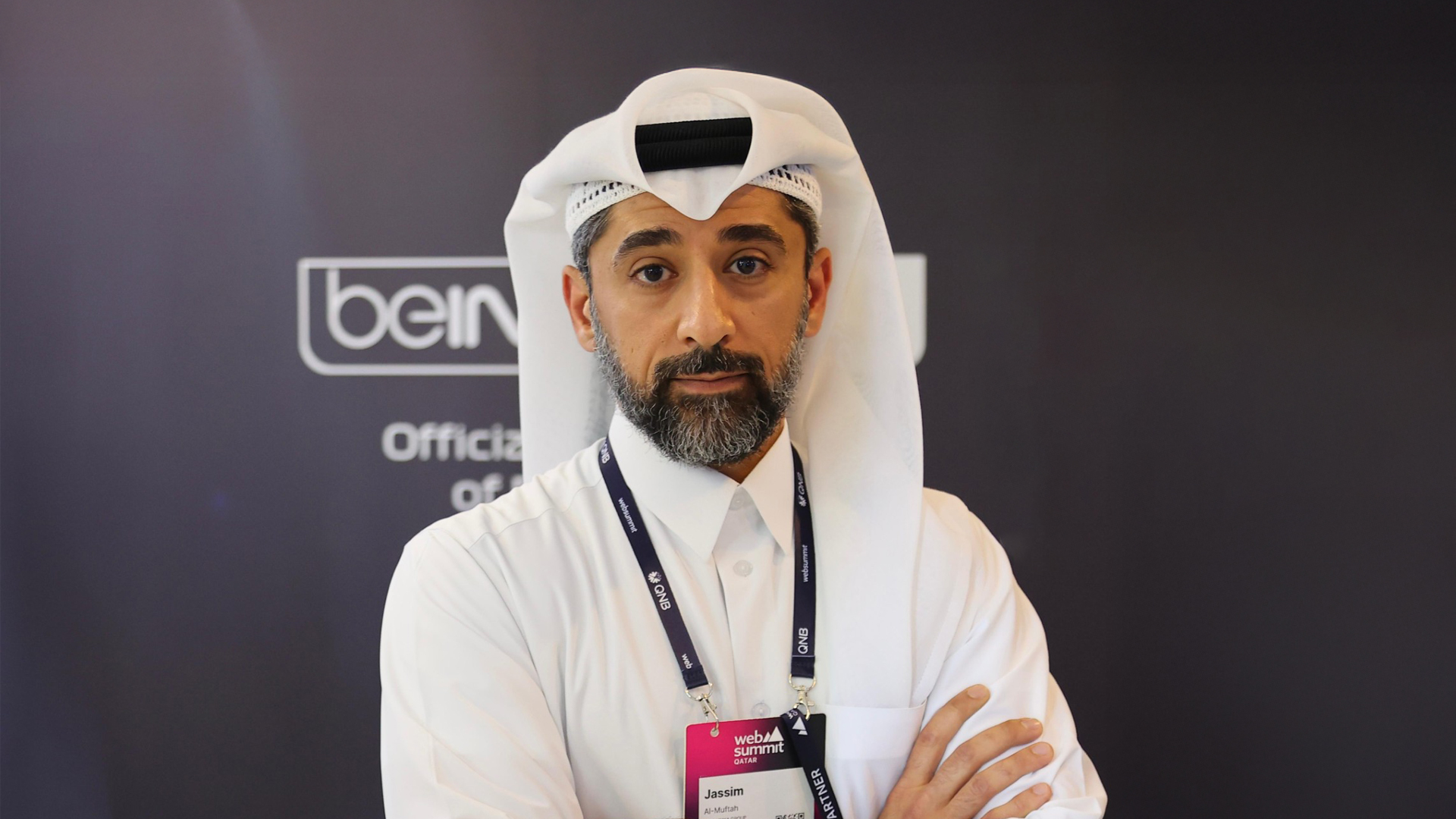
As media consumption rapidly shifts from traditional television to digital platforms, broadcasters across the Middle East and North Africa are racing to adapt. In an interview, Jassim Abdulrahman Al-Muftah, Director of Corporate Communications at beIN MENA, outlines how the network is investing in AI, cloud-based streaming and personalized viewing experiences to stay ahead. He also speaks candidly about piracy as the industry’s biggest challenge, the growing importance of original content, and why global football leagues continue to dominate audience demand across the region.
Excerpts from the interview
How do you see the media and entertainment landscape changing?
From a broadcaster’s perspective, we are well-established in the traditional way of broadcasting sports entertainment through satellite terrestrial on the TV screen, which is a one-way communication with the fan and the audience. But as the world undergoes digital transformation, we are moving more towards digital broadcasting.
It is important to stay competitive in the industry. It is no longer only about someone sitting and watching a football game in the traditional sense. The engagement with the audience is changing now. We are trying to personalize more. We are more of a technology-driven company right now — technology in terms of AI innovation, automation, and making our processes more effective and efficient.
People now want to engage with the content you are showcasing. They want interaction, not just passive viewing.
How is beIN responding to this shift?
As beIN Media Group, we are here at Web Summit representing beIN and our subsidiary companies, including TOD, our flagship OTT platform. It is a streaming platform via the internet, like Netflix or Shahid and others in the region.
Right now, we are trying to transform the way audiences engage with content and sports entertainment. We invest in technology externally through partners, but we are also building our own in-house technology.
For example, some viewers want content in Spanish or in a certain dialect. We are in the process of building an in-house AI subtitling engine, which will take our content and translate subtitles into any language the viewer wants. That is proprietary technology we built ourselves. We do not need an API or outside widget. It also helps us maintain control of our content for security purposes.
What innovations are you introducing on the viewing side?
TOD is state-of-the-art. There is no other platform where you can watch multiple games at the same time in the same way. We have fan features and multi-viewing features where you can go back on the timeline of the game and watch specifically something you missed, whether it is a goal, a red card, or another key moment.
We are continuously looking at how to personalize the experience further.
How competitive is the sports broadcasting business in the region?
To be quite frank with you, I do not see anyone that can compete with us in terms of the content that we have. We have the biggest sports rights portfolio in the region.
Who can compete if they do not have the rights to the major championships and competitions?
So what is the biggest threat to the business?
Piracy. Piracy is our biggest threat. That is what we are fighting against.
A big portion of our core business is investing in technology to combat piracy — whether it is watermarking or other solutions. We also work closely with governing bodies across the Middle East and North Africa because it is a multi-territory market.
We are also working with rights owners like the Premier League and La Liga. The more piracy there is, the more the whole ecosystem suffers. If content is heavily pirated, rights values are affected.
Saudi Arabia is the biggest market in the region. How important is local content there?
In terms of the data and research that we have, local sports tournaments are not at the top. It is the Champions League, the Premier League, La Liga, the big teams people want to watch.
We have been in this business for more than 20 years. We know how to create the content, package the content, and serve a very complex region of more than 20 countries with different tones and audiences. We have mastered that.
How crowded is the streaming entertainment market now?
It is a saturated market between Netflix, OSN, Disney and others coming into the region.
We are obviously more established on the sports side, but on entertainment we have acquisitions with major partners such as Sony Entertainment and Warner Brothers.
But the main differentiator these days is original content. Original content is king right now. You need to create your own content. That is something we are heavily working towards.
Are you collaborating with Qatar’s growing film ecosystem?
Yes. We are exploring different collaborations and partnerships. We are working with local partners such as the Film Committee of Qatar, which has made several announcements recently after the Doha Film Festival.
We are also engaging with Qatar Studios and others in the ecosystem. Nothing is set in stone right now, but we are active in that space.
What consumer trends are you seeing in the region?
One thing I can speak to is that with the new generation of fans and audiences, short-form content is very important. That is something we are trying to adapt on the sports side and something we will also look at on the entertainment side.
Short-form content is key.
How does personalization fit into your future plans?
We are trying to invest in the best technology to enhance the experience. We want people to come onto the platform, stay on the platform, find everything there, and engage there.
We do not want them to go to YouTube for highlights. We are investing in quick highlights and short-form content because some people do not want to watch the full game — they just want goals and highlights.
We are also looking into dialect personalization. For example, if someone is Khaliji and wants to hear the match in a Qatari dialect, that is something we are exploring for the future.
Tell us about beIN Stream.
One of our latest products is beIN Stream. It is a small device, pocket-sized, that connects to Wi-Fi and allows users to watch selected channels associated with the service.
It is cloud-based. Unlike traditional hardware receiver boxes, which are harder to update, this can be enhanced quickly through the cloud.
We are testing new technologies, and there is a roadmap for this product.
Could streaming become more interactive in the future?
Absolutely. Later down the line, a viewer might log in to watch a game and simultaneously connect with a football streamer or influencer providing commentary.
People already watch sports through streamers and their commentary. We are looking at how users could watch both at the same time.
Based on usage habits, recommendations would then come through. That is how you keep people on your platform.
Which markets are especially important for beIN?
Egypt is a very important market for us. It is one of the biggest markets after Saudi Arabia. We work through a partner there, CNE Sports Network, which controls television broadcasting, and through that partnership we operate in the country.
Iraq is also a big market, but we have faced some of the biggest piracy challenges there, as well as in parts of North Africa.
How do you deal with piracy in markets such as Iraq, Morocco and Algeria?
It is a big issue for us, but we are working with our partners. It is all about being consistent and persistent because piracy remains the biggest threat to the industry.