Ian Akerman
Creativity is one of those words that is simultaneously meaningless and indispensable. Endlessly invoked, vaguely defined, yet still treated as the industry’s highest currency.
With that in mind, assessing the current state of creativity across the region is fraught with danger, and yet most will agree this is by no means a golden age. If anything, it is an era of adolescence, defined as much by algorithmic sameness as it is by meaningful stories and cultural relevance.
“We’re in an interesting teenage phase,” says Nayaab Rais, executive creative director at FP7 McCann Dubai. “The region has talent, ambition, culture, money, chaos, drama, all the ingredients for world-class creativity. When we fully own what makes this region weird, emotional, layered, and specific, our work makes sense and looks sharp.”
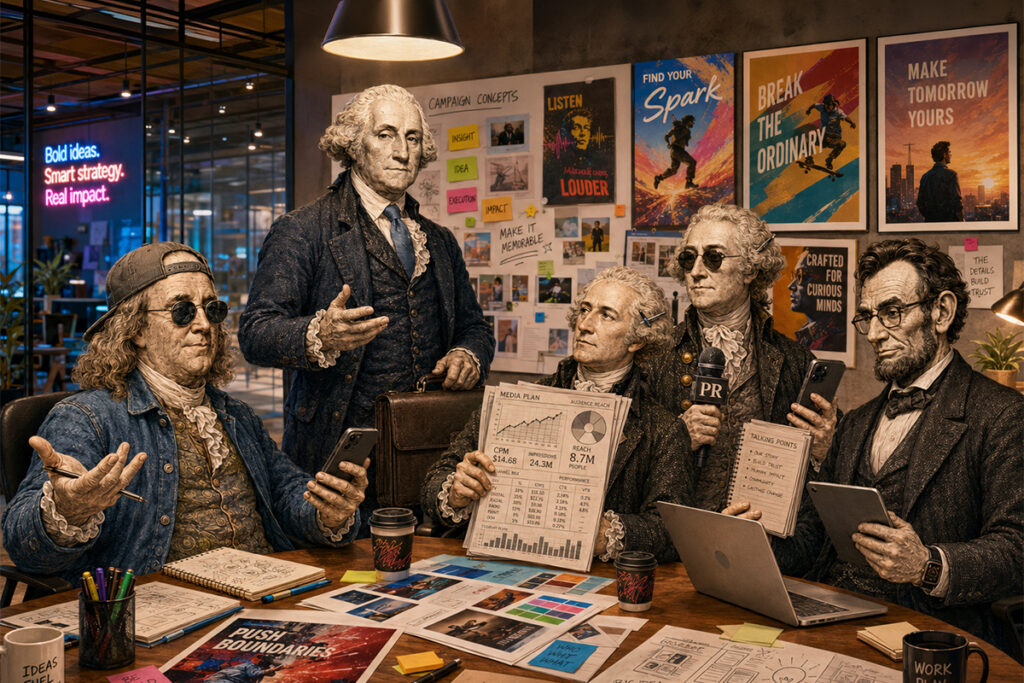
Unfortunately, that ownership, for the most part, is not being meaningfully embraced. Instead, the industry’s creative output is characterized by a combination of work designed solely to win awards, high-volume churn devoid of strategic thinking, and slop. “And it’s not just AI slop,” says Karim Yusuf, founder and creative partner at Reference. “It’s every kind of slop. Same-idea slop. Trend-jumping slop. Safe-work slop. Marketing designed by committee. Endless content made to satisfy algorithms instead of actual people. The truth is, this existed long before AI. AI just multiplied it. Made it faster. Gave everyone the keys.”
According to Firas Medrows, co-founder and chief operating officer of Vibe, the majority of good work is still concentrated around award season. And while such competitions push agencies to raise their game, “we need to treat every brief as an opportunity throughout the year, doing our best to push ourselves, our peers, and our clients toward better, bolder, and more effective work that actually sells,” he states. “If we do that, the awards will follow, and we’ll see great work all year long, not just during award season.”
How has the industry found itself in this position? Economics is part of the answer. Marketing budgets have been cut, and agencies and clients are playing it safe. Risk aversion has led to shorter-term, performance-driven briefs, while in-housing has reduced the volume of work. There is also a lack of quality young talent. “This isn’t a new issue, but the gap is growing,” he says. “Young people today are not as interested in advertising as my generation or the one before. Many see it as just a nine-to-five job, and it’s becoming very rare to find young talent that truly cares about earning a place on the stage.”
To this must be added industry consolidation and the constant pressure on agencies to reinvent themselves. “A few years ago, the rise of social platforms forced agencies to rethink team structures and operating models,” says Gautam Wadher, chief creative officer at Memac Ogilvy. “Today, AI is creating another pivotal shift, and those restructures are necessary again.” As agencies build new capabilities around AI, data, and technology, he argues, creativity itself must be treated “as a product, not simply as a service layer”.
That said, Wadher believes memorable campaigns still exist; they’re just not getting the exposure they deserve. “Agencies jump from project to project so quickly that sometimes truly distinctive work doesn’t get the spotlight or longevity it deserves,” he states. “We’ve become very good at appreciating work through the lens of a case film, but I’d love to see more celebration around the actual launch of the work itself when it enters culture and connects with people in real time.”
From around 2019, when Impact BBDO won the region’s first-ever grand prix at Cannes, there was a feeling that the region had stopped being an occasional outsider and would, from then on, be viewed as a consistent creative force.
“The industry as a whole is probably at B. Which is annoying because every agency and individual absolutely has A+ potential,” says Rais. “We have creative gold. But we need to protect craft, train people properly, give them time to think, and not treat creativity like content farming. Also, we need more bravery. More truths told well.”
The solution? For Medrows, the answer is simple: return to the industry’s roots, invest more in talent and less in awards, demonstrate clearer value to clients, and stop pitching for free. Wadher argues that agencies able to strike the right balance between talent and tools will ultimately thrive. Great work, he asserts, will come “from building strong client partnerships, trust, and long-term ambition together”.
“In a world drowning in slop, the differentiator will be who you choose to work with,” believes Yusuf. “People with taste. With experience. Still hands-on. Still curious. And most importantly, people who can prove the impact of creativity on the business. The real flex isn’t just giving a damn about the work. It’s giving a damn about the outcome for the brand.”