At a festival obsessed with the future, TikTok invited marketers to revisit something much older: the fundamentals. While Cannes Lions 2026 was dominated by AI announcements, creator tools and endless conversations about the future of the industry, the loudest message from TikTok at Cannes wasn’t about AI. It was about advertising.
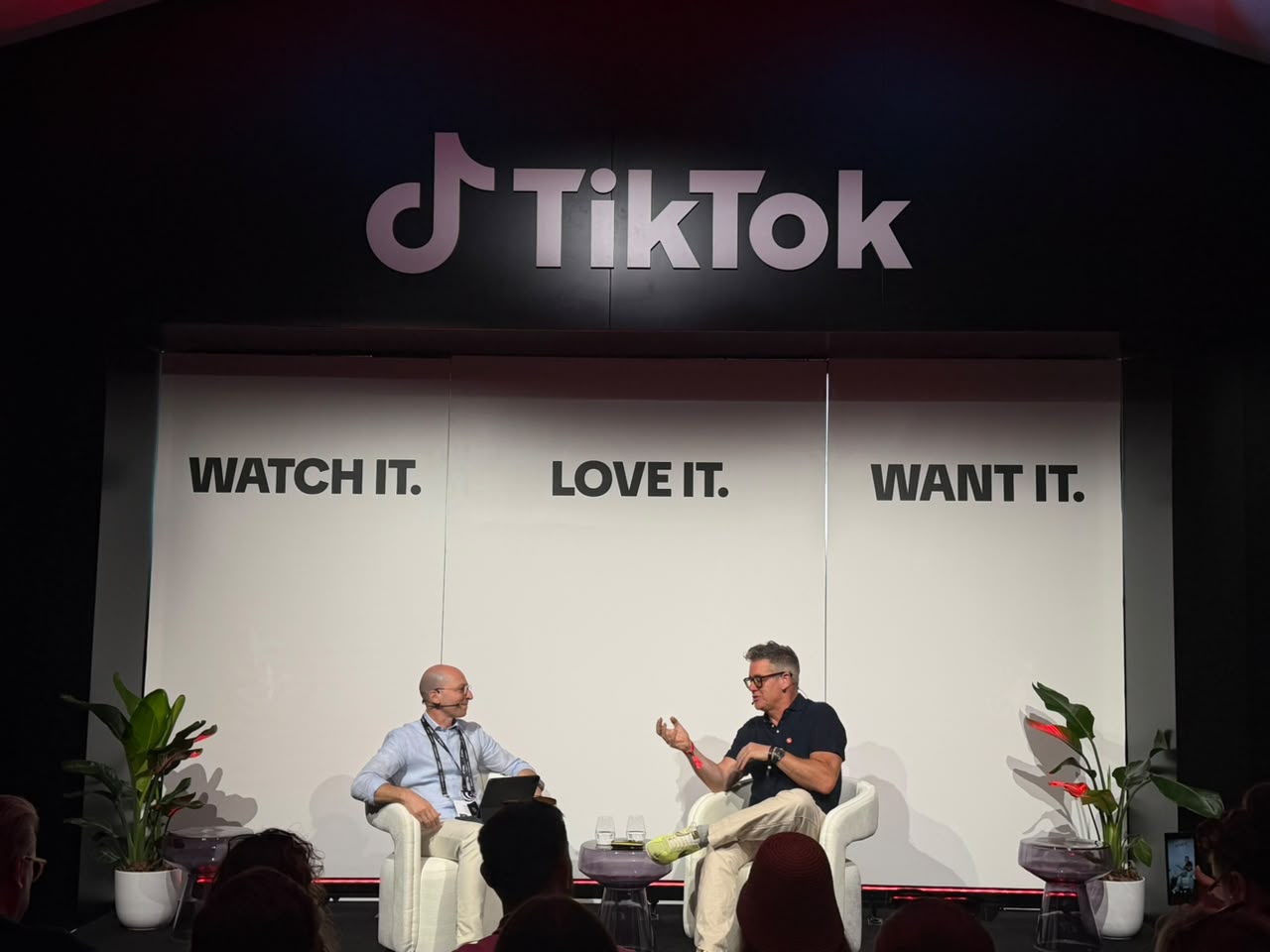
Hosted by TikTok, “Short Form is Not Short of Impact” brought marketing professor, consultant and Mini MBA founder Mark Ritson to remind brands that despite new platforms and technologies, the principles behind effective marketing remain consistent.
Rather than debating whether AI or algorithms will redefine advertising, Ritson focused on something far less fashionable, and arguably far more valuable: evidence.
Over more than two decades, Ritson has taught marketing at leading business schools while advising global brands across sectors. Through his Mini MBA, he has become one of the industry’s most influential voices by translating decades of academic research into practical marketing decisions.
His framework isn’t built around trends or shortcuts. It revolves around three disciplines:
- Diagnosis
- Strategy
- Tactics
“The channels evolve,” he argued throughout the session. “The fundamentals don’t.”
Marketing’s identity crisis
Today’s marketers face more complexity than ever. AI can generate creative ideas in seconds. Consumers move fluidly across platforms. Short-form video dominates attention. Meanwhile, pressure for immediate ROI continues to push investment towards performance marketing. It’s easy to assume marketing itself has fundamentally changed.
Ritson’s argument was almost the opposite: Technology changes execution and not the science behind effectiveness. His argument was backed by one of the largest evidence bases presented during Cannes, combining System1 testing, TikTok Brand Lift studies and years of advertising effectiveness research.
Why TikTok became the stage
Rather than arguing that short-form rewrites the rules of marketing, TikTok used the session to show how its platform helps marketers apply those rules more effectively.
For years, one of marketing’s biggest debates has been whether short-form content can build brands as effectively as it drives immediate engagement. Drawing on TikTok Brand Lift studies, System1 testing and decades of advertising effectiveness research presented throughout the session, the findings showed that creative combining emotion, early brand recognition and consistency over time generated stronger Brand Lift and commercial outcomes, reinforcing that short-form isn’t the enemy of effectiveness. When built on sound diagnosis, strategy and execution, it can build both long-term brand memory and short-term business results.
This became the foundation of the session, which centred around four ideas:
- Emotion
- Fluency
- Time
- Integration
Together, they formed Ritson’s central thesis: Short form is not short of impact.
Stop optimising the emotion out of advertising
For Ritson, the industry’s obsession with optimisation often overlooks the most powerful driver of advertising effectiveness: emotion. “We can scare, we can intimidate, we can inspire, we can make the consumer laugh. And these things make your ad work better.”
He further argued that marketers often mistake serious categories for serious advertising. “If it’s not emotional, even in the short-form world, it’s not going to work as well. Emotion makes a consumer care.”
One of the presentation’s strongest findings was that emotionally engaging TikTok ads generated stronger Brand Lift, reinforcing Ritson’s argument that emotion remains advertising’s most powerful growth driver.
Emotion may be advertising’s engine, Ritson argued, but it only works if consumers remember who’s speaking. That’s where fluency, the immediate recognition of a brand, comes in.
“You know your ad because you spent nine months working on it. The consumer’s not paying attention and doesn’t care.” His advice was direct: “You must insert more distinctive brand assets into the work early.”
Using TikTok Brand Lift and System1 research, Ritson showed that brand recognition consistently attracted greater attention and stronger memory, making distinctiveness one of the clearest predictors of effectiveness
Great advertising needs time
In an industry increasingly driven by quarterly results, Ritson argued that marketers consistently underestimate the importance of campaign longevity. “We’re all baking our cakes not long enough in the oven.”
His advice was straightforward. “Run a campaign longer. Let it stretch out. Let it play out in the consumer world.”
The research suggested he was right: emotionally engaging campaigns delivered substantially stronger business outcomes when sustained over time rather than replaced prematurely.
Integration still wins
Perhaps the session’s biggest reminder was that marketing effectiveness has never been about choosing one channel over another. It’s about making channels work together.
Ritson summed up decades of integrated marketing research in one equation. “A × B is always greater than 2A or 2B.”
Whether those channels are television and TikTok, search and creators, or outdoor and social, combining media consistently outperforms relying on a single platform.
“If I take 10% of my TV budget and put it into TikTok, it’s going to work better than keeping 100% in TV. Synergy works.”
He closed with perhaps the session’s simplest takeaway: “TikTok is an amazing medium, but it should be blended and integrated with other forms to create amazing campaigns.”
What transpired? Individually, each principle improves effectiveness. Combined, they dramatically increase the likelihood of long-term commercial success, a pattern consistently reflected throughout the research presented.
The bigger marketing debate
The discussion continued beyond the presentation during a fireside conversation with TikTok’s Shadi Kandil, General Manager TikTok’s Global Business Solutions, METAP & LATAM, where the focus shifted from creative execution to marketing leadership.
Asked how marketers should balance disciplined strategy with growing pressure for speed and performance metrics, Ritson encouraged marketers to avoid becoming paralysed by the pursuit of perfect research. “Embrace the dirtiness and approximation of research.”
Instead, he urged marketers to reconnect with consumers directly. “You will learn nothing about the consumers who pay for everything (when) sitting in your office.” Taking the point further he stressed that getting into a store where they sell your product is one of the most vital things you can do.”
Ritson also challenged marketers to rethink how they justify brand investment internally. Referencing marketing scientist John Dawes’ 95/5 rule, he argued that most potential buyers aren’t in-market at any given moment.
“The 95/5 rule is golden,” he said, explaining that while performance marketing captures the small percentage of consumers ready to buy today, brand building ensures a company is remembered by the much larger audience that will enter the category later.
While acknowledging the value of performance metrics, Ritson argued they tell only part of the story. Explaining the 95/5 rule, he reminded marketers that most category buyers simply aren’t in-market today. “That’s why it can’t all be last click,” he said, making the case that brand investment exists to influence tomorrow’s buyers, not just today’s conversions.
“At the end of the day, we have much bigger questions to answer. They start with: who is my consumer?”
Returning to strategy, Ritson argued that today’s explosion of formats, AI tools and content options has made focus more valuable than ever. “Strategy is about choice. Strategy is about sacrifice. Strategy is deciding what you’re not going to do.”
He warned that marketers trying to be everywhere often dilute their effectiveness. “When you do everything, you do nothing.”
As Cannes continues to celebrate the industry’s newest technologies, TikTok’s session with Mark Ritson served as a reminder that innovation doesn’t replace marketing fundamentals, it amplifies them.
The fireside also underscored that the collaboration extends beyond Cannes. TikTok and Ritson are continuing the conversation through a broader thought leadership partnership focused on helping marketers apply evidence-based principles to today’s fast-changing media landscape.
The tools may evolve. Formats may shrink. AI may accelerate production. But the formula for effectiveness remains remarkably familiar:
- Create work that moves people.
- Make sure they know who it’s from.
- Give it time to work.
- And build campaigns that work together, not in isolation.
If Cannes Lions 2026 celebrated what AI can make, TikTok’s conversation with Ritson quietly reminded marketers what still makes advertising work. The platforms will keep changing. Consumer psychology probably won’t.