WPP Media’s third NextM sent Dubai’s marketers into the unknown of AI, data and Generation Alpha. The lessons they brought back were about people.
In 1969, it took a rocket to reach the moon, but it was a person who took the step. At WPP Media’s NextM: Uncharted, where agentic AI and machine consciousness filled the agenda, speaker after speaker landed on the same point: technology can plot the course, but people still make the leap.
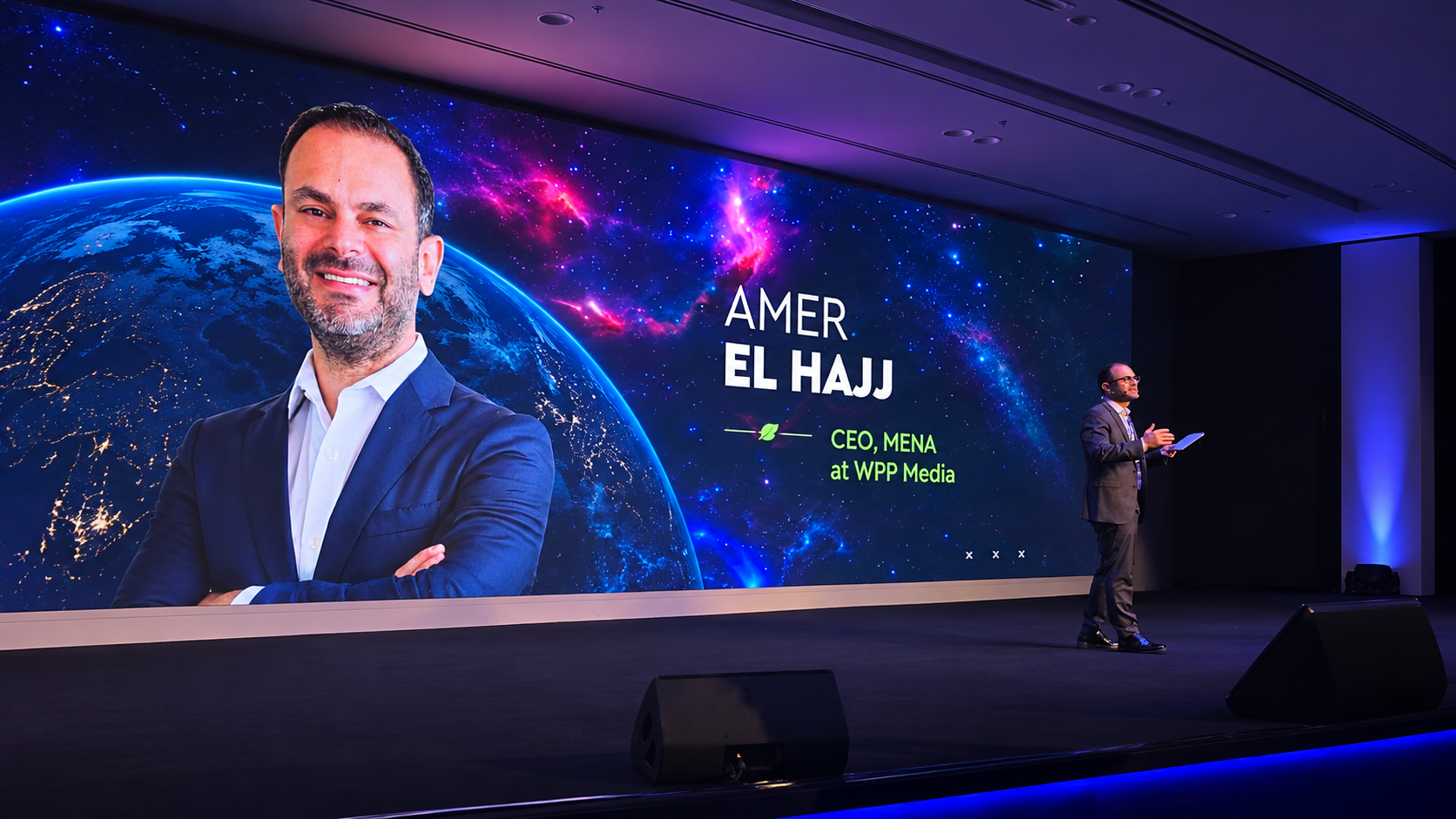
The pressure behind that point is real. “The future sometimes, with our industry, it’s even tomorrow, not in the coming 10 years,” Amer El Hajj, CEO MENA at WPP Media, told Communicate after opening the event on November 12. For marketers heading into 2027 planning, the half-day briefing at Dubai’s SEE Institute pointed to four places where human judgment, not more technology, will decide who wins.
Your next customer is already here
The oldest members of Generation Alpha turn 18 in 2028. Social researcher and futurist Mark McCrindle, who coined the term, described them as the largest, most connected and most educated generation in history. They will meet brands through AI recommendations rather than ads they choose to watch, and they will expect interactivity and immersion, not just a message.
That changes the brief. Being recommended by an algorithm becomes as important as being seen, and a brand built for Millennials has about two planning cycles to adapt. McCrindle put it plainly: every brand is “just one generation away from extinction.”
Fix your measurement before you automate it
The data panel, hosted by Terry Kane, Managing Director for MEA at The Trade Desk, went after the metric many plans still run on. “The last click is worse than nothing,” Kane said, and former META marketing science director Tony Evans agreed that “bad measurement is worse than no measurement.” Automating a campaign around the wrong signal only scales the mistake.
The alternatives on the table were causality testing, more transparency from walled gardens and retail media. Taha Benazoun, Acting VP, Retail Media of Majid Al Futtaim Retail argued that retail networks win because they see what customers actually buy, and that the contest is about “who gives the best value to customers,” not who has the best algorithm. WPP Media’s Kim Mascarenhas, AVP, Insights & Analytics, MENA said channel choices should start with the business objective, not the platform.
Test your AI like a new hire
Dr. Daniel Hulme, WPP’s Chief AI Officer, warned that companies are about to “unleash an army of intoxicated graduates” across their supply chains in the form of untested AI agents. His test for marketers was practical: if an agent optimizes your media plan, “if I give it a million dollars, will it do something stupid?”
He was equally clear on accountability. AI doesn’t have intent yet, he said, so the ethics sit with the people deploying it, not with a separate AI committee. For a CMO, that means the decision to automate is still a leadership decision.
Imperfection is now a premium
If AI lets every brand produce polished content, polish stops standing out. Podcaster Hikmat Wehbi told Communicate the opportunity is to go back to handcraft and “this imperfection that is special,” and to invest in smaller creators and communities who already love the brand.
Richard Nockles, Sky EMEA’s Creative Director, Sports Innovation showed the same shift in sport. He watches matches sitting back. His 14-year-old son wants to lean forward, interact and share. Sky doesn’t have a product to sell yet. It’s inviting brands to experiment with live data and 3D digital twins now, while the space is still open.
The human leap
The last lesson was for the people running the teams. McCrindle’s research showed people value approachable and empathetic leaders far more than charismatic or authoritative ones. Headliner Sara Sabry, the first Arab and African woman in space, got her call to fly on July 20, 2022, the anniversary of Armstrong’s step. Her message to a room of leaders facing the unknown was that limits “only exist in your own mind.”
NextM: Unchartered promised a launchpad into the unknown. It landed on a practical truth for 2027: the tools will keep changing, but the giant leaps will still be made by people.