KFC Middle East CMO Ahmed Arafa and CHUCK Studios’ Olaf van Gerwen make the case for a culinary identity: a set of ownable food codes built to cut through a category where everyone now wants a piece of the chicken.
Every food and drink brand wants its product to look delicious. For Olaf van Gerwen, founder and creative director of CHUCK Studios, that is exactly where the problem starts.
Most briefs he receives focus on appetite appeal, he says, and getting there is the fun part of the job. But once a product looks tasty, it tends to look a lot like the competitor’s. “Without distinctiveness, you’re at risk of promoting the category you’re in and not your brand,” he warns.
It is a problem KFC Middle East knows well. Speaking to Communicate, Ahmed Arafa, CMO of KFC Middle East, said fried chicken has turned into one of the most crowded territories in the region, with established rivals and young challenger brands all piling in. “Everyone wants to play in chicken now,” he says.
From campaigns to codes
Arafa traces the shift back around four years. Like most marketers, his team loved disruptive, attention-grabbing ideas. But a run of clever campaigns, he realised, doesn’t add up to a consistent brand. Marketers love talking about consistency, he admits, but “claim it more than we actually do it.”
KFC has long owned strong visual cues: the bucket, the drumstick, chicken on the bone. As consumers shifted towards boneless products, those codes needed rewriting. That is when Arafa and van Gerwen sat down with a simple question: if all chicken looks the same, what can KFC own? The ambition was for people to recognise a KFC ad within seconds, without needing the logo to do the work.
The answer became KFC’s culinary identity, a set of food codes that must appear in any creative concept, whatever the market or the idea. It marks a move away from one-off campaigns towards long-term platforms.
One framework, 22 markets
Arafa oversees 22 countries, each, as he puts it, a different world with its own consumers and advertising maturity. Being part of Yum! Brands gives the team room to adapt locally within a global framework.
The culinary identity is what holds that together. The codes stay fixed so the work always looks and feels like KFC, while the idea and cultural insight behind each piece can be entirely local. For Arafa, that balance between creativity and consistency is the whole point.
Not just a fast-food problem
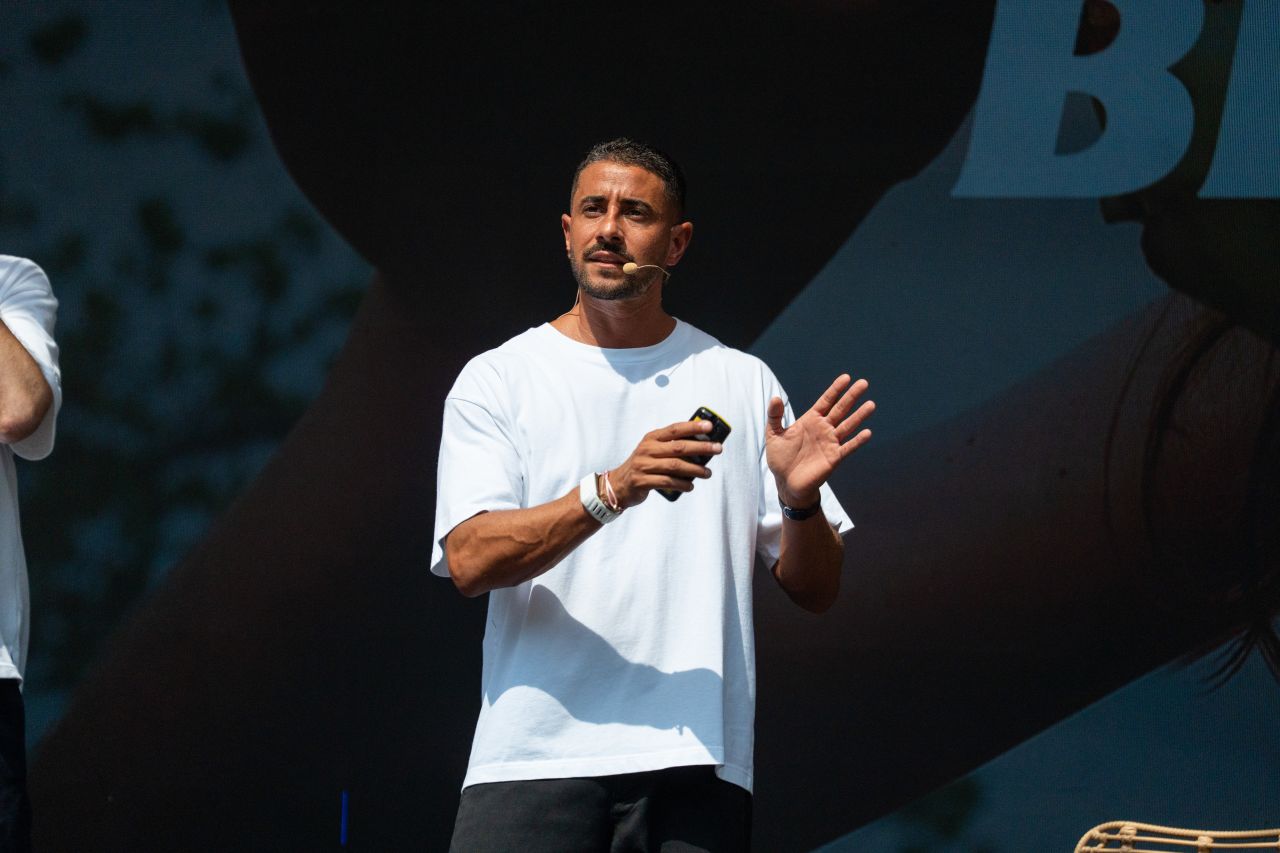
Arafa and van Gerwen, who shared a stage at Dubai Lynx earlier this month, argue the thinking travels well beyond quick-service restaurants. In fact, Arafa says the approach was inspired by categories outside QSR in the first place. Strip the packaging away and a slab of milk chocolate looks much like any other; most drinks do too. Brands in cluttered categories, he says, need product cues that are instantly recognisable and genuinely ownable.
Van Gerwen’s work at CHUCK Studios, which specialises in intricate food and drink close-ups, sits right in that space: making products look irresistible, then making sure they could only belong to one brand.
The proof is in the growth
Asked how distinctiveness translates into sales beyond the strategy deck, Arafa points to the business. KFC is growing at double digits across its 22 markets, he says, and he credits the brand’s distinctiveness for that, in a category where competition has never been fiercer.
Being the original in fried chicken, he adds, can easily become a trap. A heritage brand approaching its 75th year can get stuck in the past. KFC’s answer has been to keep evolving, most recently with a new brand identity and an updated bucket launched a few months ago, as it defines what Arafa calls the next chicken chapter.
“We don’t stand still,” he says. “We’re on a journey of modernising the brand always.”