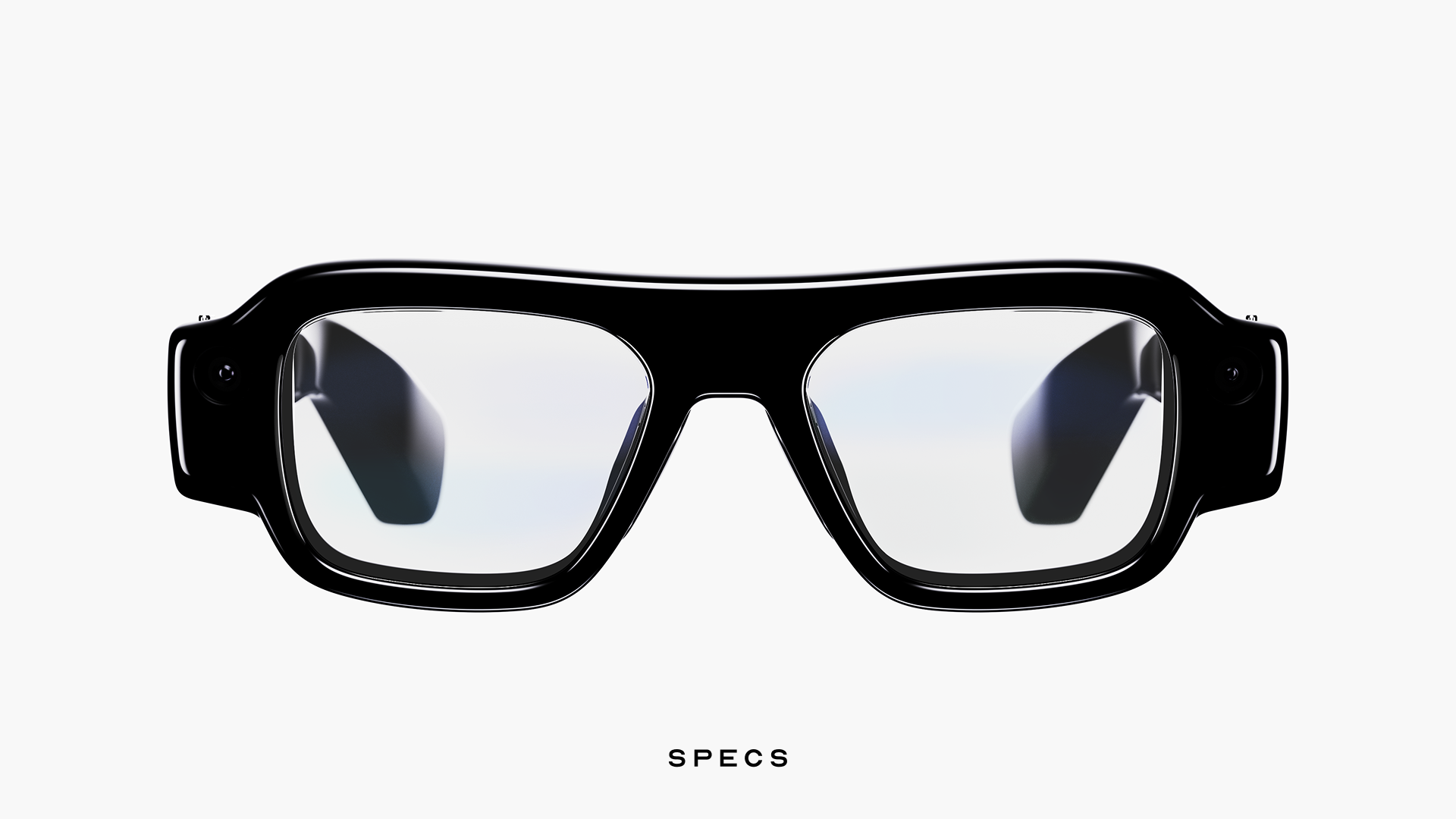
Snap Inc. has unveiled SPECS, a new pair of standalone augmented reality (AR) glasses that the company says represents its next step in wearable computing, as it seeks to move beyond smartphone-based experiences.
The glasses, announced on Tuesday, are available for pre-order at $2,195 with a refundable $200 deposit and are expected to begin shipping in the United States, United Kingdom and France later this year.
“SPECS are the beginning of a new era in computing,” said Evan Spiegel, co-founder and CEO of Snap Inc. “For decades, computers have asked us to look down, sit still, or step out of the moment. SPECS bring computing into the world around us where we live, work, learn, create, and connect.”
The launch follows more than a decade of investment by Snap in augmented reality technologies, including developer tools, operating systems, optics and computer vision. The company said it has filed more than 7,000 patents related to these technologies.
“The smartphone put our lives in our pockets,” Spiegel said. “SPECS put computing into the world, where life actually happens.”
Snap is positioning SPECS between lightweight AI-enabled glasses and bulkier mixed-reality headsets. Unlike many existing AR devices, the glasses are fully standalone and do not require an external computing unit or wired connection.
The device is available in two sizes and weighs between 132 and 136 grams. It supports prescription lens inserts and is built using Swiss TR90 polymer.
According to Snap, SPECS feature a proprietary liquid crystal on silicon display with a 51-degree field of view and support for 16 million colours. The company said the viewing area is comparable to a 24-inch desktop monitor for productivity tasks or a large home cinema screen for entertainment.
“SPECS are not designed to replace the world,” Spiegel said. “They’re designed to bring computing into it.”
The glasses are powered by two Qualcomm Snapdragon processors, one dedicated to computer vision and another for running AR experiences known as Lenses. Snap said the system delivers a motion-to-photon latency of seven milliseconds, aimed at making digital content appear more naturally integrated with the physical environment.
The company highlighted several use cases for the device, including navigation, spatial measurements, AI-powered assistance, content streaming, virtual workspaces and educational applications. Developers have also created interactive experiences for activities such as music learning and sports.
Battery life is rated at up to four hours of mixed use, while the accompanying charging case can provide four additional charges, extending total usage to up to 20 hours.
“SPECS are the most capable and most wearable AR glasses ever built,” Spiegel said.
Alongside the hardware launch, Snap announced a range of new developer tools for its Snap OS ecosystem. The company said it has released 10 software updates over the past 18 months, adding more than 40 new features and application programming interfaces (APIs).
New tools include agentic development capabilities within Lens Studio, support for AI coding platforms such as Claude Code, Codex and Cursor, a Spatial Benchmark for evaluating AI performance in spatial computing tasks, a Migration Agent for porting projects to SPECS, and a Native Development Kit that allows developers to integrate external code libraries.
“With SPECS, AI is not intelligence trapped in a chat box,” Spiegel said. “It is intelligence that can see what you see, understand what you’re trying to do, and help you in the moment.”
Snap said privacy features include user consent controls for sensitive information, an LED recording indicator, on-device data processing and options to manage stored and shared content.
“SPECS only work if people trust them,” Spiegel said. “Privacy has to be built in from the very beginning.”
The company also announced a global marketing campaign photographed by Steven Meisel featuring personalities including Jimmy Butler, Imogen Heap, Hoyeon, Jack Harlow and Kaia Gerber. Snap said the group has collaborated on new SPECS experiences scheduled to launch later this year.
“Together, we will create something truly special,” Spiegel said. “A future where computing empowers us, brings us closer together, and reconnects us with the world around us.”