Insurgent brands are those generating more than $35 million in annual revenue in NielsenIQ-tracked channels, growing more than 10 times their category’s average growth rate over five years, and maintaining positive growth over the past two years.
Bain & Company said insurgent brands are accounting for a growing share of expansion in the fast-moving consumer goods (FMCG) sector, as it published its 10th annual Insurgent Brands list.
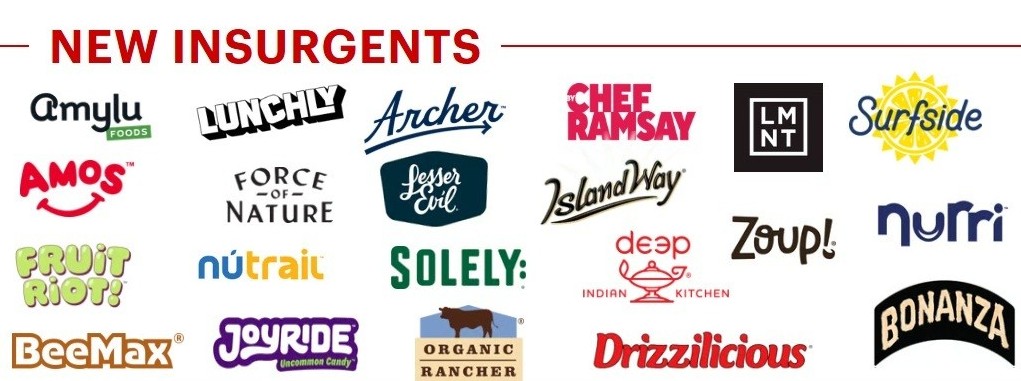
The 2026 list identifies 113 insurgent brands, including 31 newcomers, across categories such as food, beverages and beauty and personal care.
Insurgent brands captured nearly 36 percent of growth in NielsenIQ-tracked FMCG channels in 2025, up from about 23 percent in 2024, despite representing less than 2 percent of total market share, Bain said.
These companies grew volumes by approximately 55 percent year-on-year, even as overall market volumes remained flat, reflecting demand-driven growth rather than price inflation.
Bain said insurgents — both past and present — could capture as much as 50 percent of industry growth over the next five years.
Bain defines insurgent brands as those generating more than $35 million in annual revenue in NielsenIQ-tracked channels, growing more than 10 times their category’s average growth rate over five years, and maintaining positive growth over the past two years.
The Middle East and North Africa region reflects this momentum, with shifting consumer behaviour and expanding consumer products markets, according to Bain’s Middle East Consumer Products Report 2025.
The UAE recorded approximately 6 percent volume growth in the consumer packaged goods sector, compared with a global average of 1.7 percent, while Saudi Arabia followed at around 4 percent.
More than half of consumers in the region have boycotted brands over value misalignment, three times the rate of their U.S. or European counterparts, making value alignment a key factor alongside price and quality, Bain said.
“We’ve now seen a decade of sustained momentum from insurgent brands driving exceptional growth and disruptive innovation in the consumer products sector, and this year is no exception,” said Charlotte Apps, executive vice president of Bain’s Consumer Products practice.
Across categories, insurgents continued to gain share where consumer demand is accelerating.
In food, insurgents drove 25 percent of category growth in 2025, with 44 percent of brands featuring natural or organic claims. Nearly 40 percent highlighted high-protein offerings, while about one in four emphasised elevated or global flavours.
In non-alcoholic beverages, insurgents captured 13 percent of category growth in 2025, while in beauty and personal care they accounted for nearly all sector growth.
Since 2017, nearly 400 insurgent companies identified by Bain have generated approximately $60 billion in incremental U.S. retail sales across tracked channels, around 50 percent more than the top three consumer products companies combined.
While representing less than 10 percent of the $1 trillion U.S. consumer products market, these brands have driven nearly one-fifth of total market growth over the past decade.
A growing number of insurgents have scaled into larger businesses. Fifteen current and former insurgent brands have surpassed $1 billion in revenue, nearly one-quarter generate more than $250 million annually, and one in eight ranks among the top five brands in its category.
Bain said insurgents are also playing a growing role in investment and portfolio strategy. Over the past 10 years, approximately 25 percent have been acquired by leading consumer products companies, with 11 major transactions recorded in 2025. Several have also accessed public markets through initial public offerings.