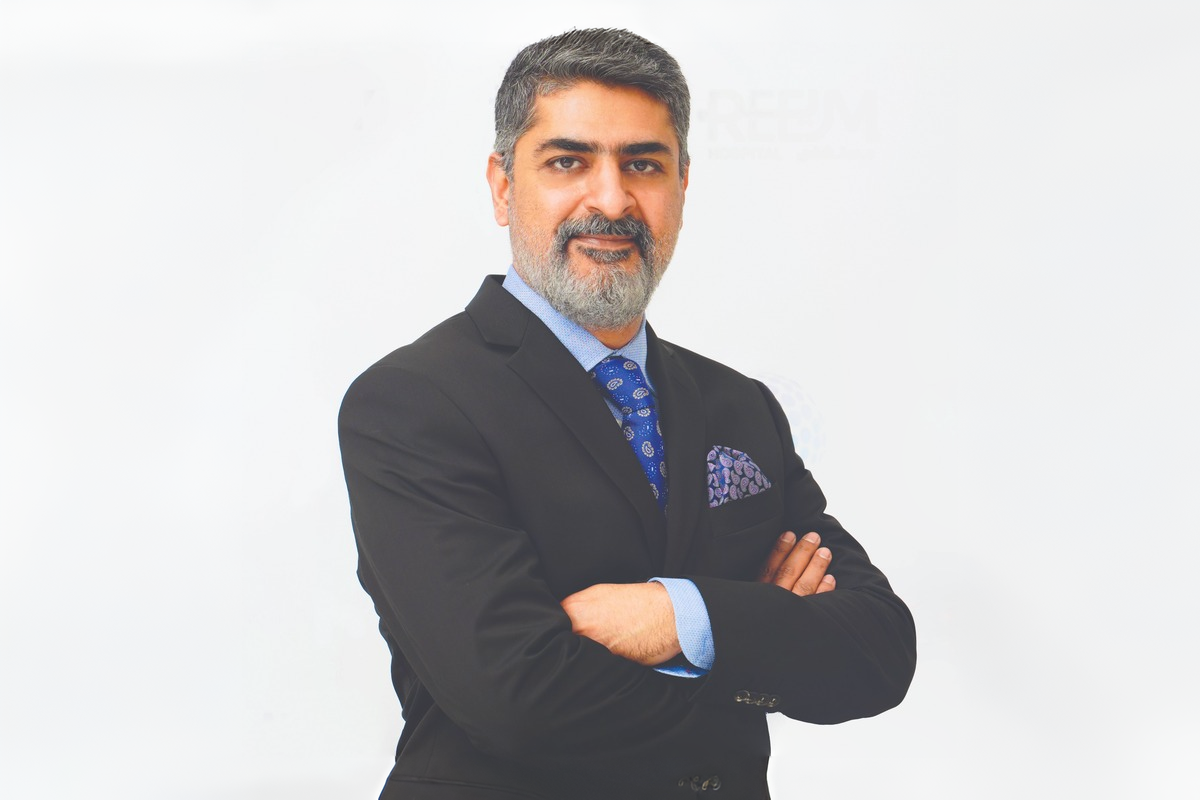
Outdoor advertising is growing, digital screens are transforming how campaigns are bought, and artificial intelligence is reshaping everything from media planning to pricing. Yet brands risk missing the channel’s full potential if they continue to treat out-of-home (OOH) advertising primarily as a tool for visibility. In this interview, Jawad Hassan, Head of the Media and Communications Vertical at 2PointZero Group and Chairman and Managing Director of Multiply Media Group, explains why measurement, programmatic buying and retail media will shape OOH’s next phase of growth, and why marketers need to bring the medium into their strategies much earlier.
OOH grew 15% globally last year, faster than most channels. Is that a structural shift in how brands allocate budget? What would you tell a CMO who still treats OOH as a brand-awareness line item?
Yes, the shift is structural, and the evidence goes beyond one year’s growth. WOO’s latest figures put global OOH expenditure at $54.2 billion in 2025, up 15%, with digital accounting for 47% of that spend. Digital is changing what OOH can do: campaigns can increasingly be planned around audiences and context, adapted quickly and evaluated against business outcomes. Budgets follow media that can be planned intelligently and held accountable.
There is substantial headroom. OOH still accounts for only about 5% of global advertising expenditure. And it offers something especially valuable in a fragmented media environment: an always-on presence in real life, reaching people throughout their daily journeys and complementing the increasingly personalised world of online media. Through my involvement in international industry bodies, I see that opportunity across markets.
To a CMO who still files OOH under awareness, I would say: you’re under-using it. Brand building is one of its greatest strengths, but OOH can also influence search, store visits and sales. Start with the business objective, agree the right measurement period, and where possible test incremental impact against a credible comparison group. Judge it on the outcome it was designed to deliver, not just the number of impressions purchased.
The UAE now has more than 5,000 programmatically available screens. How mature is programmatic DOOH in this region compared with the UK and US, and what still stops brands and agencies from buying it at scale?
The UAE has the screens. As your figure shows, much of the technical infrastructure is in place. What the market has yet to establish at scale is the buying habit.
The UK and US are further ahead because programmatic sits within more mature measurement, technology and trading ecosystems. Route provides an established audience currency in the UK, while Geopath supports audience measurement in the US.
Three changes could have a significant impact: an independently governed audience measurement framework that buyers trust; common standards that make inventory across multiple owners easier to plan and transact; and credible effectiveness studies that demonstrate incremental results, rather than just delivered impressions.
Buying DOOH should be as simple as buying other digital media, without losing what makes OOH distinctive: presence in the physical world. If it needs a specialist to book it, it will remain a specialist channel.
Attribution has long been OOH’s weak point. Which measurement approaches are actually convincing CFOs and performance marketers today, and which are still more promise than proof?
An attributed store visit is not the same as an incremental visit. That distinction separates measurement that can inform a CFO’s decision from measurement that merely looks impressive.
The most convincing approaches are designed to establish incrementality, not simply correlation. Properly constructed geographic experiments, sales-lift studies and marketing mix models can all help determine what additional commercial value OOH generated. They need good data, sound assumptions and an evaluation period suited to the campaign objective.
What remains more promise than proof is footfall attribution based on mobile location data without a credible comparison. It may show that someone who passed a screen later visited a store; it does not establish that the screen caused the visit. The same caution applies to AI attribution models. Their conclusions are only as reliable as the inputs, methodology and validation behind them. An estimated impression is not a verified individual exposure.
As an industry, we need to be candid about the distinction. Overclaiming may win the first renewal and lose the second. But performance marketers should not judge OOH solely on next week’s conversions either. Some of its most valuable effects build over months. Good measurement needs to recognise both immediate response and long-term brand contribution.
Retail media is one of the fastest-growing areas in DOOH. Where does OOH fit in a retail media strategy, and who should own that budget: the brand, the retailer or the media owner?
OOH is a natural extension of retail media because it can influence shoppers before they reach the shelf. Retail media networks are particularly powerful at the point of purchase; OOH adds the journey there, from the road and transit corridor to the shopping destination and its surrounding environment. That is where a brand can still influence consideration and what goes onto the shopping list.
But putting screens in a mall does not, by itself, create a retail media proposition. You need the right inventory, a meaningful connection to shopper insights and credible ways to assess commercial impact. Without those elements, it is simply advertising in a retail location.
That is what we are building in Saudi Arabia through our partnership with Cenomi Centers, where BackLite KSA is developing a premium digital OOH network planned to comprise more than 80 screens across four destinations in Riyadh and Jeddah.
On budget ownership, the brand should be accountable for the marketing investment and its objectives. The retailer contributes the shopping environment and appropriately governed customer insights; the media owner brings reach, technology and execution. Those roles may overlap in practice, and that is not inherently a problem. The non-negotiable is transparency: advertisers need clear data rights, independently credible measurement and confidence that no one is marking their own homework.
Beyond the buzzword, where is AI changing OOH in practice today, whether in planning, pricing, dynamic creative or audience forecasting? What should marketers be testing now?
The useful AI in OOH today is often unglamorous. It is in forecasting, pricing and planning, and that is exactly why it matters.
Forecasting helps estimate likely audiences by site and time of day. Pricing can respond more intelligently to demand, much as it does in travel and hospitality. Planning tools can shortlist relevant locations in minutes, freeing people to focus on strategy and creative. Dynamic creative is not new, but AI can make relevant variations quicker and more economical to produce.
At Multiply Media Group, we are bringing these capabilities together through MINDx, our developing intelligence-led operating platform spanning commercial and operational workflows. We have initial applications in use and a broader pipeline of opportunities across the business. The next step is linking capabilities through agentic workflows, so intelligence moves between functions instead of sitting in isolated tools. We are measuring progress against practical outcomes, including the quality of pricing recommendations, fit between sites and briefs, and speed of response to agency and brand partners, not claiming benefits before they are demonstrated.
For marketers, I would test an AI-assisted plan against a conventional one on the same budget; test dynamic creative triggered by a relevant real-world signal; and compare audience forecasts with observed delivery. Keep what demonstrably improves results. Drop what does not.
How is OOH intersecting with the creator economy, from creator campaigns on screens to billboards designed to be filmed and shared? Is OOH becoming an amplification layer for social?
Not simply. The relationship runs both ways. A creator’s video on a landmark city screen acquires a public presence it cannot get from a personal feed alone. A billboard worth filming can then reach a second audience of people who were never at that location.
TikTok’s Out of Phone initiative is a useful illustration. It takes content associated with a mobile-first platform into digital billboards and other public environments, showing that even digital-native platforms recognise the value of physical presence in extending reach and cultural relevance.
We see the opposite direction on our own sites. Special builds on Sheikh Zayed Road, including Branded by BackLite executions, are designed to create physical impact and give people a reason to capture and share the experience.
The best brands brief the creator and the OOH environment together. The physical moment and the social story should be one idea, designed for the strengths of each medium. A vertical video stretched across a landscape screen is not a strategy.
And the measure of success cannot stop at views. Did the idea increase search, visits, consideration or sales? Did people engage with the brand or just the stunt? Social reach can multiply the effect. Business value remains the point.
MMG operates across the UAE, Saudi Arabia and the UK. How do brands buy and use OOH differently across those markets, and what’s one thing CMOs in this region should do differently with OOH in their 2027 plans?
If I were to characterise the three markets in simple terms, I would say the UK is more audience-led, the UAE remains strongly location-led, and Saudi Arabia offers especially compelling occasion-led opportunities. Of course, all three approaches exist in every market; the difference is their relative emphasis.
In the UK, Route gives planners a common basis for evaluating OOH audiences, supporting a well-established measurement and buying discipline. BackLite UK’s network and the premium Wildstone sites we operate compete within that environment.
In the UAE, landmark locations carry significant brand value, particularly on corridors such as Sheikh Zayed Road. Our seven-screen Helix network reflects the appeal of connected, high-impact locations. Increasingly, advertisers also expect richer audience data and more flexible, digitally enabled activation alongside that visibility.
Saudi Arabia brings a different energy, with new destinations, seasons and major events creating powerful opportunities to connect with consumers. It demands local judgement: Riyadh and Jeddah should not be treated as interchangeable. Our Cenomi Centers partnership is an important step in developing our presence there.
My advice to CMOs for 2027 is to bring OOH into the strategy at the beginning, not at the end. Start with the business goal and the customer’s real-world journey. Identify where physical presence can influence a decision, then design the media mix around it. The next advantage will not come from buying more sites. It will come from planning them better.