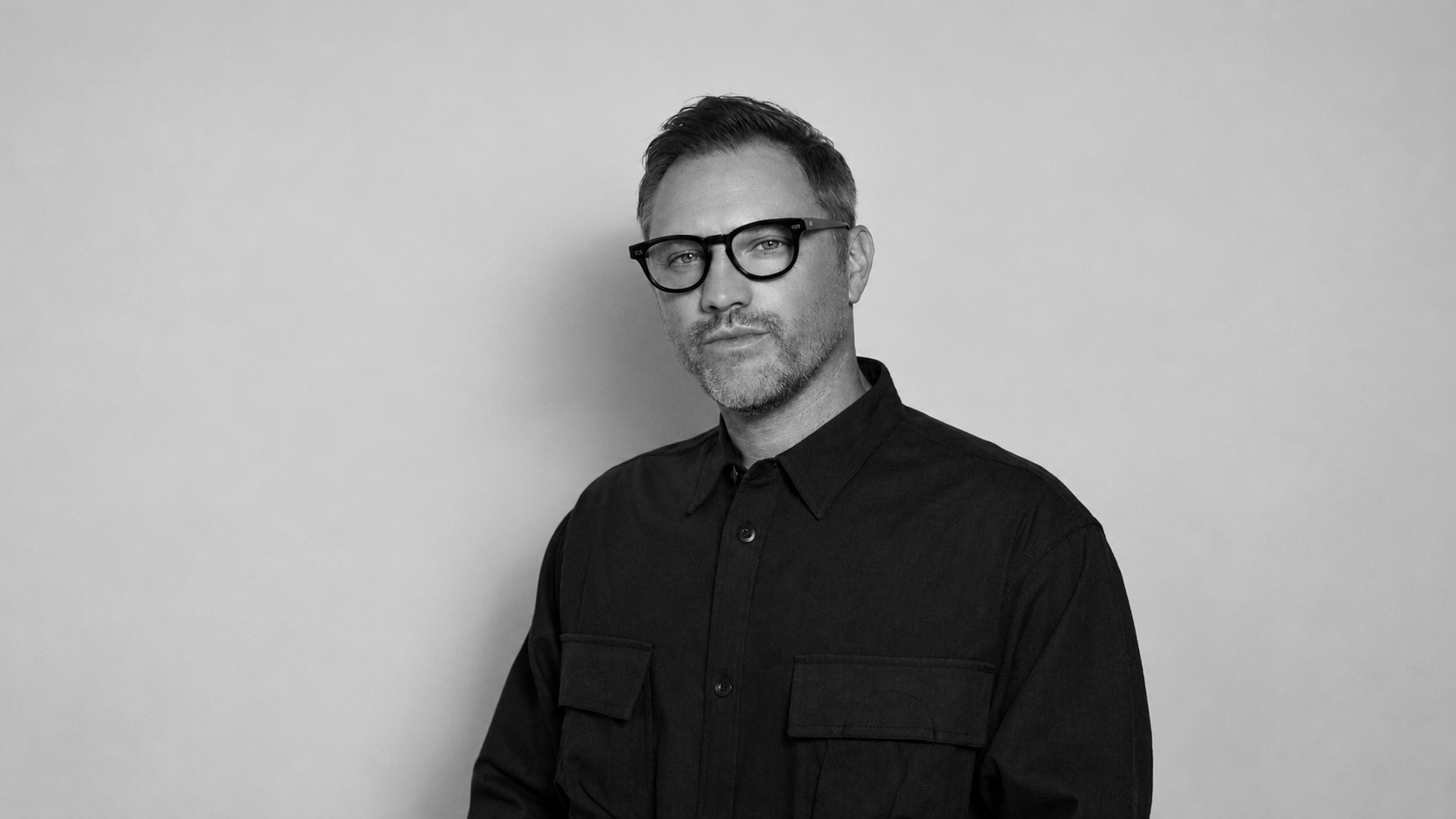
Despite continuing political and economic uncertainty, Christian Fedorczuk, CEO of PHD MENA, remains bullish on the GCC, arguing that strong fundamentals, ambitious national agendas and a technology-ready workforce continue to create opportunities for brands. In an interview with Communicate, he argues the region’s lower-funnel approach has hit its limit, and brand trust is what’s left to build on.
How are briefs changing and how are client strategic priorities evolving in the current environment?
The most important differentiator in how briefs change or budgets move, is the dynamic of each industry and business. In simplified terms, there are three broad categories of clients at PHD: international brands operating locally, primarily local players, and brands originating from the region with an international footprint. Changes to strategic priorities, briefs and budgets reflect these individual circumstances. Some budgets have shifted to later quarters or next year, some pivot towards fast-growth markets, and messaging is adapting across the funnel based on immediate needs.
Supply chain challenges and increased logistics costs have heavily influenced these decisions. Regional production lines and product availability can be impacted by raw material shortages, putting pressure on margins and price points. International brands can pivot investments towards other global growth regions, regional champions can focus on driving new international demand, while local players can optimise resources and identify new opportunities closer to home. From what we’re seeing across the markets, KSA has remained steady, the UAE tends to bounce back quickly, and Qatar appears to be taking a measured, mid-term approach to investment.
The common denominator is that unpredictability remains, globally and regionally, making speed and agility essential. This has accelerated the shift towards a real-time understanding of what works, better measurement, hyper-flexible budget allocation and adaptable resourcing models. The lines between our teams and client teams are dissolving, moving us from a brief-and-response culture towards ongoing collaboration, where we work through plans and execution together with clients and other partners.
What is the reality regarding ad budgets and performance across the marketing funnel?
Budgets became hyper-liquid rather than disappeared. Contrary to a widely held belief that there has been a lasting shift to lower-funnel performance channels to harvest remaining demand, our strategic focus is on re-establishing and growing demand through stronger trust in brands.
Disruptive times have also accelerated some positive developments: greater scrutiny of measurement, client investment in advanced analytics, AI-enabled operational discipline – where there is still a lot of room to improve – and greater creative innovation across the media ecosystem.
How do you view the UAE and the broader GCC as a vantage point for multi-market campaigns?
The underlying forces that have made the GCC a growth engine remain strong, and my personal outlook for the mid-term remains bullish. We have a young and growing population, ambitious leadership, fewer regulatory limitations, and, despite geopolitical tensions, solid economic fundamentals. The region also sits right at the heart of dynamic growth markets between Asia, Europe, and Africa.
The opportunity to attract and develop great talent remains unmatched. The workforce is international and dynamic, and there is a clear appetite to lean into technological advancements. All of this serves our industry well, and PHD MENA is particularly well placed. We manage a significant share of outbound international investment alongside extensive global hub capabilities, allowing us to help brands identify and execute growth opportunities both regionally and on the global stage.
Does Omnicom’s global integration conflict with the need for regional client agility?
Omnicom’s global integration and regional client agility are, if anything, symbiotic rather than a conflict. Integration allows us to do better work, faster and more efficiently. If you are not striving for that every day, you very quickly fall behind.
Business is competition, and we love to compete–on efficiency, technology, creativity and talent. Bring it on.
What qualifies as a “safe” market in today’s climate?
I’m not sure “market safety” in traditional consumer-market terms still exists. It is more about correctly valuing strategic opportunities.
Regionally, KSA represents a much larger domestic market, driven by long-term government investment and a still-emerging marketing ecosystem. Here, our focus is on developing talent and introducing new practices. Just look at the landscape of live sports and entertainment compared with ten years ago. It’s a new world.
The UAE, alongside its long-term national development ambitions, represents an established, highly international private sector. Both markets offer completely different strategic opportunities. Everyone is learning to deal with regional and global uncertainty, and those who draw better conclusions from it will come out on top.
What is the most significant strategic pivot you have guided clients through recently?
Somewhat ironically, the single biggest strategic pivot over the last six months has been the realisation that if market demand drops, lower-funnel harvesting hits a hard floor. If demand drops, there is nothing to harvest.
How you build brands has changed and continues to change. Building brands today requires combining monolithic campaigns with activations across social platforms, creator communities, content-driven storytelling and physical experiences. This is where many regional brands still have catching up to do, with established ways of working sometimes making it difficult to adapt quickly enough to new consumer behaviours and media realities.
Transitioning from spending significant investment behind a 30-second TV asset, to augmenting that investment across hundreds of creator-driven social assets and dynamically generated performance ads requires fundamental shifts in how you work: your agency ecosystem, contracts, approval processes, talent, and both client- and supplier-side capabilities.
It requires constant reinvention and adjustment. To some, change is painful; to us, it is welcome.
How are you positioning agency capabilities and resources looking toward 2027?
I bet neither on a region nor a client category, but on capabilities. Things can change fast, as we have seen this year, and our focus is on building long-term partnerships.
There are two types of bets here. At a global and group level, Omnicom continues to invest in its AI platform infrastructure—from audience data, planning, and investment tools to creative optimisation and automated measurement through agentic applications.
For PHD, we are doubling down on our core belief in strategy and creative solutions, enabled by advanced analytics and workflow automation. We are actively expanding capabilities across those areas while tapping into a wealth of Omnicom solutions that continue to get better.
What is your outlook for the industry and your vision for PHD moving forward?
The current political and economic uncertainty will carry into 2027, while the technological change shaping our sector is firmly established.
Rather than grand visions or bold predictions, we will focus on the mindset these times require. At its core, it is a very human factor that will make the difference: how we lean into what’s to come and help shape it, rather than allowing ourselves to be driven by factors beyond our control.
This is the only hyperbole I’ll allow myself, but we have built – and are continuing to build – a truly fantastic team. A culture that keeps moving forward and where people help each other out. For the collective that is PHD, the best is yet to come.
A shorter version of this interview appeared in the October 2026 print issue of Communicate, which has more insightful analyses, interviews and articles. Read the full issue here