A new study by LIONS Advisory and TOURISE has called on tourism brands to strengthen creative storytelling, personalisation and customer experience, warning that many travel advertisements fail to stand out despite rising demand for travel.
The report, Ideas that travel – How tourism brands win the race for tomorrow’s customers, outlines an IDEAS framework to help tourism brands improve marketing effectiveness and build stronger connections with travellers.
Released on October 21, 2026, the study found that 60% of travellers believe many travel advertisements look similar, while 50% cannot recall the last tourism advertisement they saw.
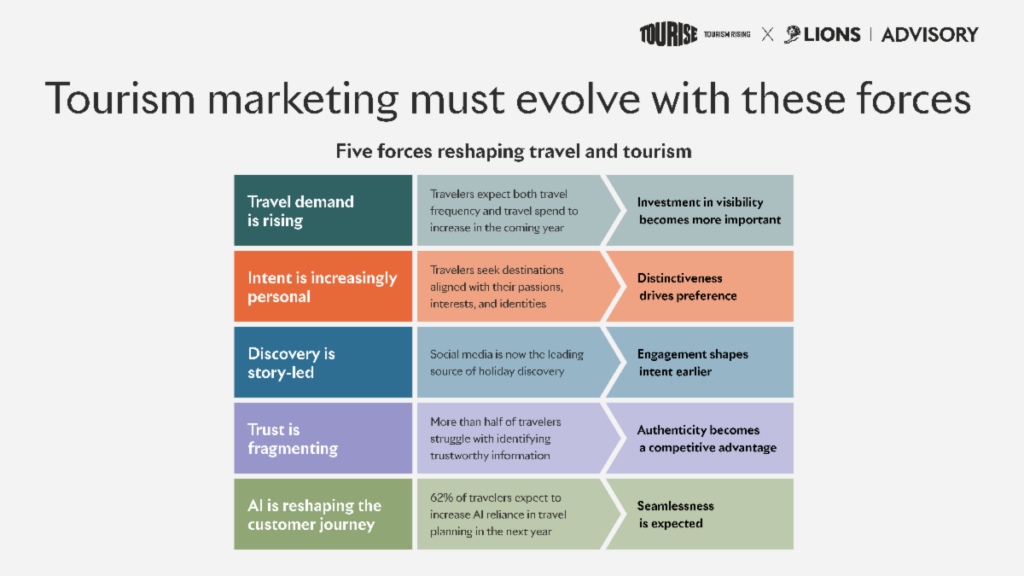
The findings point to a gap between growing consumer expectations and the industry’s marketing efforts. According to the research, 39% of respondents expect to travel more in 2026 than they did in 2025, rising to 51% among Gen Z and 47% among millennials. Almost half of global travellers also expect to increase their travel spending.
Personalisation is emerging as another priority, with 67% of respondents expecting travel journeys to be tailored to their preferences. Meanwhile, 72% expect brands to recommend experiences based on their interests, and 71% are considering visiting an emerging destination in the coming year.
Social media has become the leading source of holiday discovery, cited by 33% of respondents. However, 55% said they struggle to identify trustworthy information when planning trips, prompting them to consult multiple sources, including reviews, content creators, friends and family, AI tools and official channels.

The study also found that 62% of respondents are likely to use AI more frequently over the next 12 months for travel research and booking.
Paul Coxhill, Chief Operating Officer and President of LIONS, said: “Creativity is a commercial advantage — numerous empirical studies evidence creativity’s role in business growth. The tourism sector is fertile ground for creative effectiveness. Few categories deal so directly in emotion, experience, and memory. Yet in recent years, the sector has seen massive shifts in how people discover, book, and engage with destinations. While demand is rising, so is competition and complexity. This study is designed to make sense of the changing landscape.”
Ahmed Al Khateeb, Minister of Tourism of the Kingdom of Saudi Arabia and Chairman of TOURISE, said: “The future of tourism will be shaped through collaboration across industries and disciplines. The destinations that succeed will be those that build meaningful, trusted, and memorable experiences that endure long after the journey ends. In this environment, creativity becomes far more than a communications tool; it is a strategic driver of differentiation, competitiveness, and long-term value. The IDEAS framework offers a valuable lens through which destinations and brands can respond.”
Five priorities for tourism brands
The IDEAS framework identifies five areas for tourism marketers to focus on: investment, distinctiveness, engagement, authenticity and seamlessness.
Investment: Global tourism media investment recovered to $32.4 billion in 2025 following the COVID-19 pandemic, but its share of voice remains below pre-pandemic levels. The report, citing WARC Media, says tourism advertising under-indexes in social media, creator content, video and entertainment-led environments. It recommends sustained visibility to build future preference and capture demand.
Distinctiveness: Brands need clear and memorable positioning that reflects travellers’ interests, values and identities, helping destinations differentiate themselves in a crowded market.
Engagement: With creators, entertainment and algorithm-driven feeds competing for attention, tourism marketers need more engaging storytelling that combines emotion, authenticity and cultural relevance.
Authenticity: Travellers increasingly rely on reviews, creator content and the experiences of others when forming perceptions of destinations. The report urges brands to ensure that the experiences they deliver match their marketing promises and to treat trust as a driver of growth.
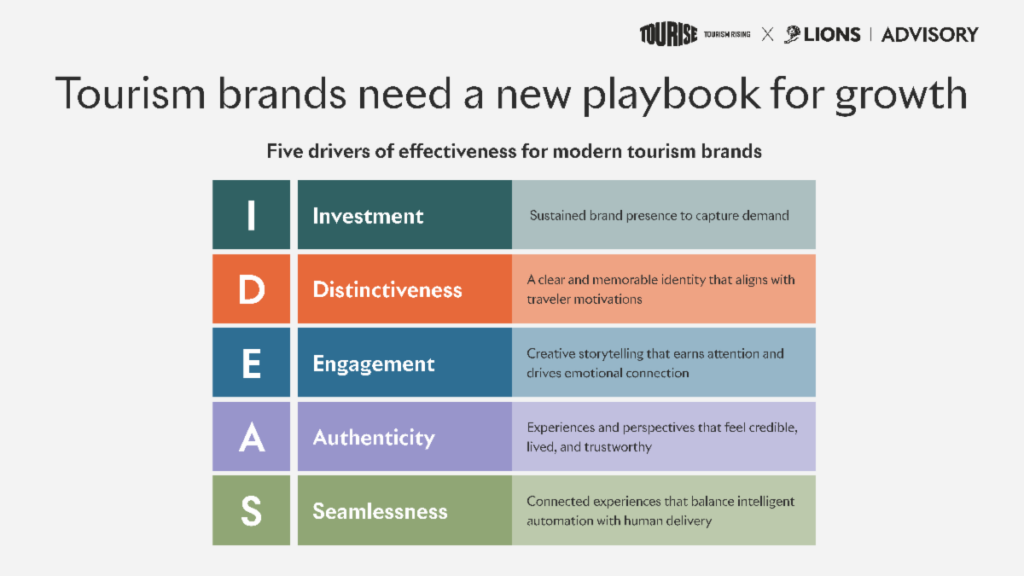
Seamlessness: As AI becomes more integrated into travel research, planning and booking, brands must appeal both to travellers and to the technologies shaping their choices. The study recommends using data and automation to improve customer value while maintaining the human element of service.
The report concludes that tourism brands must move beyond conventional advertising towards integrated marketing systems that connect storytelling, personalisation and customer experience across the travel journey.