The automotive industry has become one of marketing’s fastest-moving sectors. AI is reshaping creative workflows, product innovation is accelerating, and new brands are expanding globally at record speed. For marketers, the challenge is no longer selling innovation. It’s making people care.
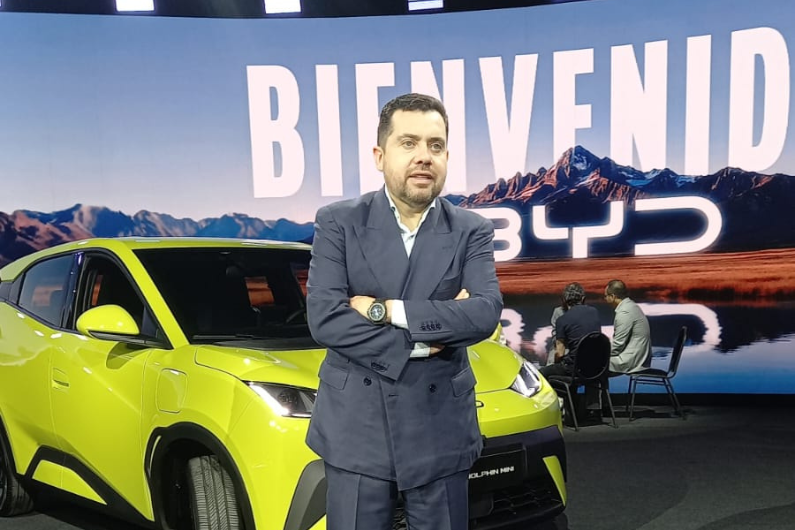
For José Miranda, the Global Chief Marketing Officer (CMO) and Director of Marketing and Communications for BYD (Americas, Europe, Middle East, and Africa), that challenge starts with one simple fact.
The company may be one of the world’s fastest-growing EV brands, but in many markets, it’s still introducing itself.
“Remember that BYD is a new brand practically around the world. We are doing a very good job, we’re very successful. We are growing very fast, and the speed of BYD is unique in the world. But it’s true that in many markets we’re in the beginning to tell the people who is BYD, what is our dream, to try to show our technology, to explain our innovation.”
AI is changing the workflow, not the idea
Fresh from Cannes Lions, Miranda says AI dominated every conversation. But despite the buzz, he sees it as an enabler rather than a replacement for marketers. “AI is an important tool to help us build a strong awareness with our customer… we discover that AI can be an incredible tool to help us in a more simple way and good quality way, to handle content, to approach our product with our customer.”
Its biggest impact goes beyond content creation. “The opportunity to be more efficient, to understand more in a simple and quickly way the KPI and the result, I think is other important point that AI can bring to us.”
Yet the creative process, he insists, still belongs to people. “For the creative point of view, until now the process is the same. We have a strong local team in the majority of the market in charge to build the brain ideas, the good ideas. But now the tool is maybe AI, and this is something very exciting.”
The message is clear. AI can make marketers faster, but it doesn’t replace the thinking behind the work.
EVs need emotion, not just engineering
Consumers aren’t simply buying battery range or charging speed anymore. They’re buying into a bigger story.
For Miranda, that story starts with purpose. “One of the reasons that I am here in BYD, because we are changing the world.”
He points to climate change and urban pollution as reasons why electromobility has become more than an automotive trend.
“The electromobility arrived to bring some solution… I believe that electromobility is the alternative in the green transportation and to bring solution in this area for that to improve the quality of our life.”
He also believes the transition needs flexibility. “When I talk about electromobility, remember that it’s not only pure electric cars. Even we have a strong portfolio of PHEV… finally in your daily life you can use an electric car and when you need more range, you can use the combination of the battery and the gas.”
Being global starts with feeling local
For a brand expanding across continents, Miranda believes localisation is the biggest competitive advantage. “Saudi is one market that is totally different than here in UAE. Or when we are in Europe, France is totally different than Germany.”
That means building local teams, spending time in market and understanding culture rather than simply translating campaigns.
“We need local team, it’s not only Chinese team, it’s a mix of talent because we want to be global.”
His philosophy is refreshingly simple. “The most important thing for a new brand is to be local… We are very proud that being global is to be local too.”
Marketing has moved from interruption to participation
Miranda’s background is in media rather than automotive, and it shows. He believes brands grow when they become part of culture instead of interrupting it. “I believe a lot that the only way to build a new brand or reputation is to be part of the society, to understand the behavior of the people.”
That thinking inspired BYD’s Ramadan partnership with MBC, where the brand appeared organically within a popular animated programme rather than through traditional advertising. “The first time that an OEM was part of this, not to selling cars, was to bring our brand be part of the content in organic way.”
For Miranda, consumers don’t just buy products. They invite brands into their lives. “We are not only selling cars, we are here to be part of the society.”
Creators versus journalists? It’s the wrong debate.
As creator marketing reshapes automotive advertising, Miranda refuses to pick sides.
He believes creators offer relatability while traditional media still delivers credibility. “When someone that I feel that is normal and in simple way explain me the aspect of the car or explain me why this car is better than other, I believe more in this.”
At the same time, he says journalism remains an essential trust signal. “The traditional media until now around the world, the credibility is there, the influence is there too.”
His conclusion reflects the new marketing reality. “It’s a mix… We need to build trust to the different stakeholders. For me, it’s not more than the media or the media more than the influencer… it’s a mix of different talents that works to amplify and to highlight the technology that we have in the market.”
In an industry racing towards AI, Miranda’s biggest lesson is surprisingly human. Technology may accelerate marketing, but trust is still built through culture, relevance and people.