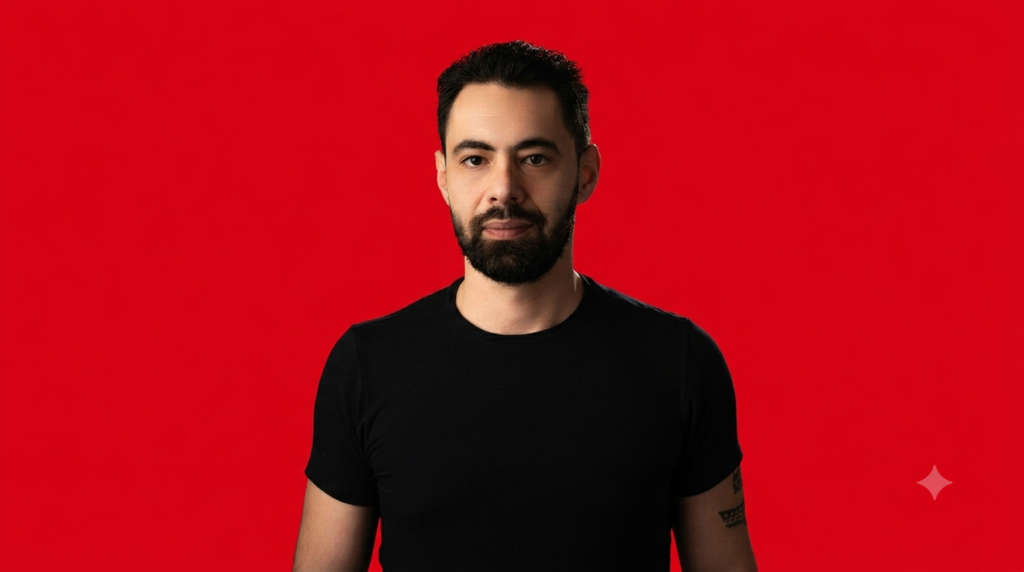
While many brands continue approaching TikTok as a traditional advertising platform, Julius Winter, Executive Creative Consultant DACH & Central Europe at TikTok, shares that the key to success is treating the platform as a full-on living ecosystem.
In practice, this recommendation has many layers, which Winter uncovered during an interview with Communicate at this year’s OMR Festival in Hamburg.
The recipe for success
According to Winter, one of the biggest mistakes brands still make on TikTok is underutilizing the platform’s native community features.
“There’s content everywhere now, with AI-generation and so on,” he explained. “For brands, it’s really about taking the platform seriously.”
Rather than treating comment sections as customer service spaces, Winter believes brands should view them as real-time creative strategy tools.
“What I tell most of my clients is: use comments not just to answer them, but to create new assets, because this is what creators are doing.”
He described how many successful creators structure their entire content strategy around community feedback and audience questions. Brands, he argues, should adopt the same mindset.
“If someone asks, ‘Do you have this skirt in blue?’ don’t just answer in the comments,” Winter said. “Create content around it.”
This dynamic transforms audiences from passive viewers into active participants – and adds points for engagement.
Winter also noted that this approach is also crucial in moments of backlash or criticism.
“You can use the community to steer the conversation,” he explained. “Sometimes brands need to jump into the conversation, explain themselves, and even apologize when necessary.”
Since social media feeds are flooded with polished visuals, automated videos and mass-produced AI content, the answer to remaining authentic is to build a community.
“Especially on TikTok, authenticity and real people will continue prevailing even more strongly in the future,” Winter said.
Why the creator economy is not oversaturated
Despite growing concerns around creator fatigue and content saturation, Winter rejects the idea that the creator economy has become overcrowded.
“TikTok’s algorithm naturally filters creators based on relevance and audience demand. If you have a following, a purpose, and you create content people care about, the market welcomes you,” he said.
The real differentiator today is specificity.
Winter believes creators no longer compete solely through broad categories like food, fashion or beauty. Today, creators stand out through layered personal perspectives and identities.
“You’re not just a food creator,” he explained. “You might be a Lebanese food creator, a vegan food creator, or a mom who creates food content.”
That specificity is precisely what allows creators to build highly engaged niche communities even in crowded categories.
“There are so many unique points of view that can become relevant on the platform,” Winter added.
Creator-led trend systems
When asked about recent campaigns that caught his attention, Winter pointed toward evolving content strategies.
Luxury brands like Marc Jacobs and Loewe stood out to him because they built campaigns around creators already driving viral moments organically.
“What they’re doing very smartly is screening the platform and collaborating with creators as soon as they start going viral,” he explained.
Winter referenced Marc Jacobs collaborating with a guinea pig piano account (@dindin.inparis) to promote Marc Jacobs Leather Mini Tote Bag and various accessories like the nano tote bag charm.
“Instead of forcing brands into trends awkwardly, such collaborations allow trends to evolve naturally through creators audiences already trust,” Winter said.
Brands should not ignore creators
For Winter, the debate around whether brands should work with creators is already over.
“Very simply: If you do not work with creators, you are missing out,” he said.
He compares creators today to directors and photographers in traditional advertising.
“Creators are the best people to execute what brands are trying to communicate in a way that actually fits the community.”
Rather than viewing creators as influencers added onto campaigns, Winter sees them as “creative translators” capable of adapting brand narratives into platform-native communication styles audiences genuinely engage with.
AI will flood platforms, but authenticity will become even more valuable
Winter believes AI will dramatically increase the volume of content online over the next few years.
“Every small business can now create fascinating visual landscapes and videos using AI,” he said.
While he sees this as a powerful democratization of creativity, he also warns that platforms may become oversaturated with highly polished but emotionally empty content.
He referenced the growing concern around the “dead internet theory,” which suggests much online engagement may mostly become machine-generated. For him, the future challenge will not be creating more content, but preserving authenticity within these automated environments.
“While much of this AI-first thinking comes from brands simply trying to cut costs, I can assure that AI slop is not really successful on platforms like TikTok,” he said.
Instead, Winter believes AI’s strongest role lies in scalability and localization.
He highlighted TikTok’s AI tool Symphony as an example of how brands can use AI strategically to adapt campaigns across multiple markets and languages more efficiently.
“In Lebanon, you need Arabic content, but you also need French,” he explained. “AI can really help with localization at scale, even providing live translation.”
The recipe for success, according to Winter, is to balance AI efficiency, creativity, while building genuine human connection through community. Because while AI may automate and increase production, community trust still belongs to people.