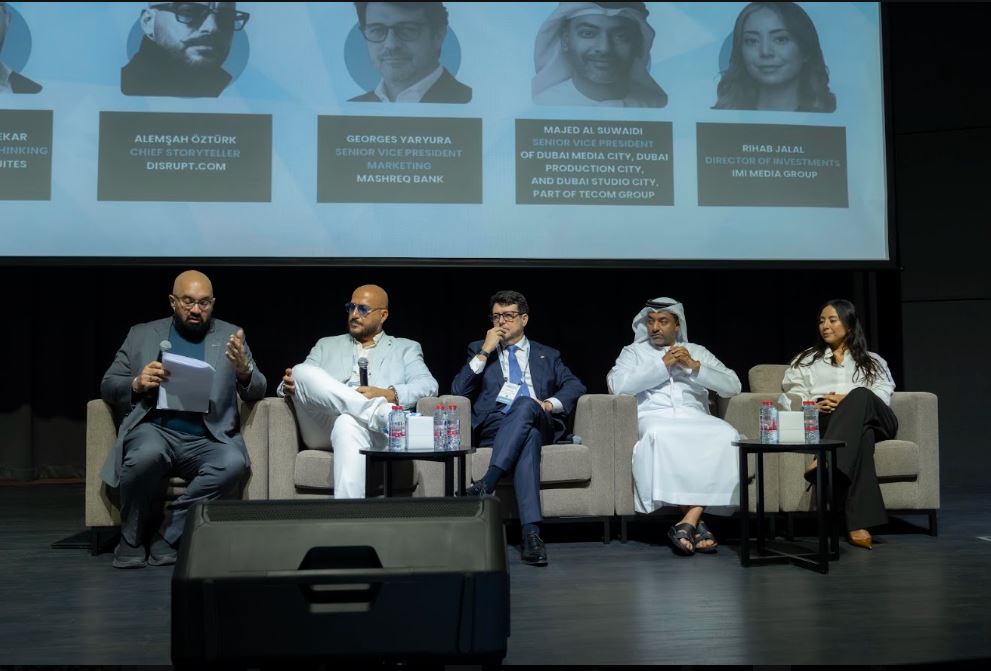
Artificial intelligence can increasingly reproduce Arabic dialects, translate advertisements and adapt creative content for different markets. But speaking the language is not the same as understanding the culture, speakers at Communicate AI 2026 said during a panel discussion in Dubai on September 29.
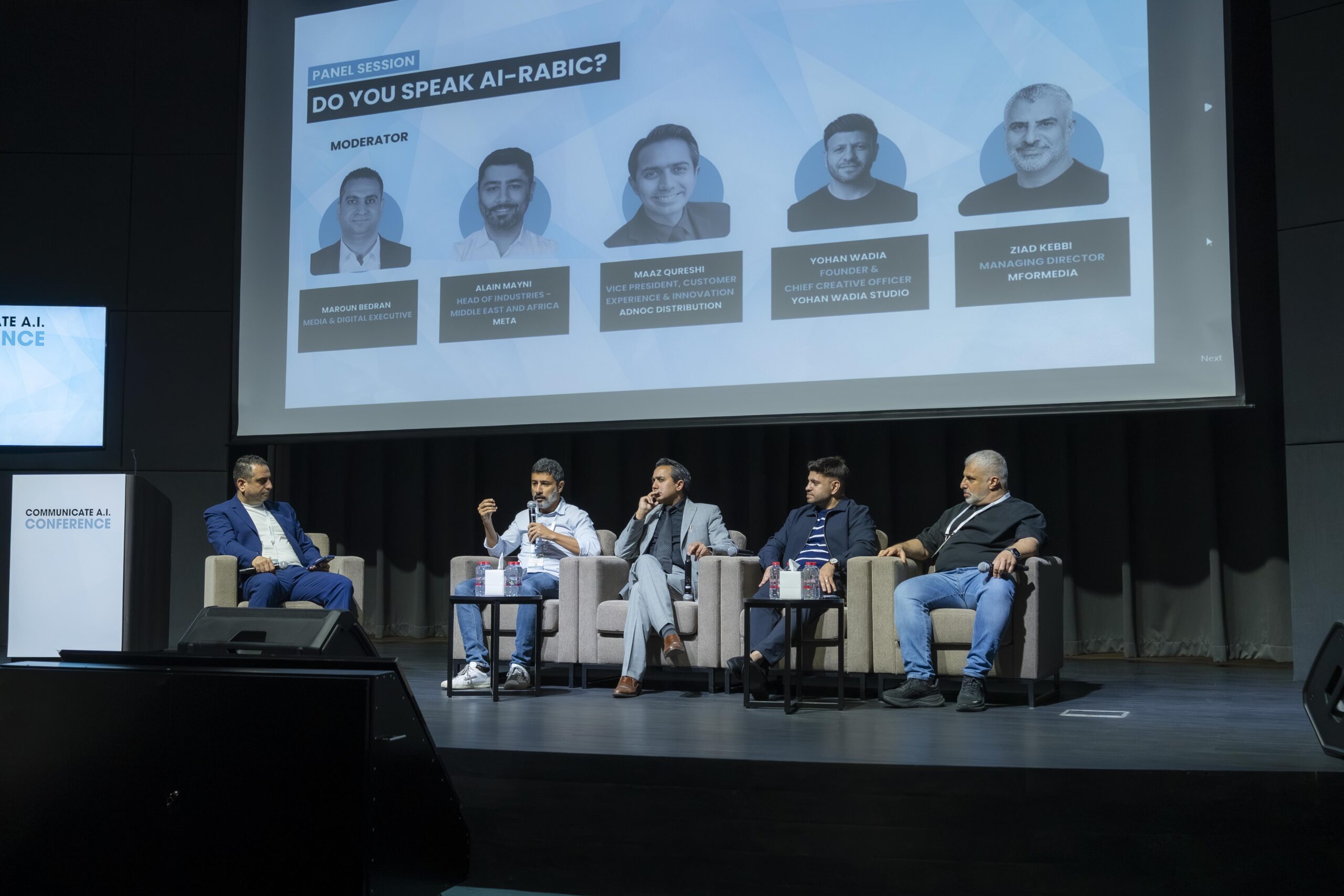
The session, titled “Do You Speak AI-rabic?”, explored how brands and creative agencies can use AI to develop content for Arabic-speaking audiences without losing the cultural nuances, emotional connections and local insights that make advertising effective.
The discussion brought together Ziad Kebbi, managing director of MFORMEDIA; Yohan Wadia, founder and chief creative officer of Yohan Wadia Studio; Maaz Zahid Qureshi, vice-president of customer experience and innovation at ADNOC Distribution; and Alain Mayni, Meta’s head of industries for the Middle East and Africa. It was moderated by media and digital executive Maroun Bedran.
The central argument was that while AI can accelerate content production and localisation, human judgement remains essential to ensure that the output resonates with its intended audience.
Language is not culture
Kebbi argued that AI should be treated as an extension of human creativity rather than a substitute for it. The technology can help creative professionals explore possibilities beyond what was previously practical, but the decision about what to create must remain with people.
He said AI-generated content could become homogeneous, with cultural understanding remaining a critical differentiator.
“Culture is not something that you can put your finger on,” Kebbi said, describing it as something people feel and experience. AI may be able to reproduce dialects, but it does not necessarily possess the lived experience required to understand the nuances behind them.
He pointed to advances in AI voice technology as evidence of how rapidly the technology is progressing, while arguing that the ability to speak a language does not automatically translate into an understanding of how people express love, grief, humour or other emotions.
For brands operating across the Middle East, this distinction has direct implications for advertising. Content that uses the correct dialect or features familiar settings may still fail to connect with audiences if it overlooks the cultural references and social nuances that shape how a message is received.
Wadia said agencies often receive global campaigns that clients want adapted for regional markets. The challenge, he argued, is to establish what cultural relevance actually means rather than simply changing a character’s appearance or replacing one dialect with another.
Agencies must go beyond the initial brief to understand how audiences in a particular market think, feel and respond to creative work, he said.
Wadia added that his studio works with native Arabic copywriters and cultural consultants to validate content, particularly when projects involve languages or dialects outside its in-house expertise. He cited work involving Kurdish Sorani as an example of the need for specialist input to ensure linguistic and cultural accuracy.
Such collaboration has become easier as agencies increasingly draw on external specialists rather than relying exclusively on in-house capabilities, he said.
Arabic content gap
Mayni said Arabic-language AI development faces a challenge beyond localisation: the limited availability of Arabic content on the internet.
He cited an estimate that although around 400 million people speak Arabic globally, less than 1% of online content is in Arabic. This shortage, he argued, affects the material available to train language models and improve their understanding of the language and its different dialects.
Addressing the gap requires collaboration between engineers, language specialists and communities, he said.
Mayni described how users can provide feedback on translations on Meta’s platforms, helping the company’s systems learn when translations fail to reflect the intended meaning. He also pointed to AI-powered video translation as a way to make content from other languages accessible to Arabic-speaking audiences while helping Arabic-language creators reach international viewers.
The challenge is therefore not simply to translate more content into Arabic, but also to expand the volume of original Arabic material and improve AI systems’ ability to understand the context in which language is used.
Mayni also discussed the role of AI in advertising, saying Meta’s Advantage+ solutions automate several steps involved in creating and distributing campaigns. These include generating creative variations, adapting formats and producing taglines in multiple languages, including Arabic.
He said advertisers using Advantage+ and other AI-powered solutions had seen a 22% higher return, compared with the broader advertising baseline he cited. The figure was presented as a company-level claim during the discussion.
The growing automation of campaign production, however, raises another question for brands: if technology can generate and distribute advertisements with increasing efficiency, what ultimately makes one brand stand out from another?
Personalisation beyond the screen
For ADNOC Distribution, AI’s role extends beyond advertising and content production to the customer experience across physical and digital channels.
Qureshi said AI was being used at different stages of the company’s operations, from generating creative material and communications to analysing customer behaviour, segmenting audiences and developing customer propositions.
He said human review remained essential before content was published or moved into production, even as AI accelerated the work leading up to that stage.
Qureshi cited the company’s digital engagement as an example of the opportunities available. According to him, approximately one in four motorists in the UAE opens the ADNOC app each month, giving the business a significant channel through which to interact with customers.
He also discussed the company’s retail media activities, which connect digital advertising with customer interactions at service stations and convenience stores.
ADNOC Distribution’s network receives close to 700,000 visitors a day, while its platform has around 2.7 million to 2.8 million users, Qureshi said.
By combining digital customer data with real-time physical interactions, businesses can tailor offers and content to the circumstances in which customers encounter them, he argued.
For example, information about a customer’s usual fuel or coffee preferences could help a retailer deliver a more relevant offer during a visit to a service station.
Qureshi said the broader objective was to move towards hyper-personalisation, in which experiences and propositions could adapt to individual customers and their changing circumstances.
He cautioned that broad customer categories could fail to capture these differences. The same person, for instance, might have different needs while travelling for business and while at home.
The principle applies to advertising as well: content becomes more relevant when it is delivered to the right person, at the right time and in the right context.
Original ideas still matter
The panellists also discussed how AI could help the region develop original intellectual property rather than simply adapting concepts created elsewhere.
Kebbi said adapting an existing global format was itself a creative process because it required understanding the local audience and finding ways to make the content resonate. But he argued that developing original intellectual property was important for creating material that could build lasting connections with audiences and be commercialised.
AI can shorten production processes and amplify creative ideas, he said, but the initial idea and the decision to pursue it remain human responsibilities.
Wadia proposed developing a community of people with local knowledge who could help agencies assess whether campaigns were culturally relevant. Such a network could include not only professional creators but also people from different communities and demographic groups who could offer insight into how content might be received.
Mayni highlighted tools designed to help creators produce and translate videos, as well as Meta’s creator marketplace, which he said would help brands identify creators and collaborate with them on content.
Qureshi, meanwhile, said businesses would continue to accelerate the development of AI-enabled services and integrate the technology across their operations.
The discussion returned to a central tension in the use of AI across the region: as producing and adapting content becomes faster and easier, cultural understanding and originality become more important in distinguishing one brand’s work from another’s.
For marketers, the challenge is not simply to make AI speak Arabic, but to ensure that what it says feels relevant to the people it is intended to reach.