Across PR, media, film and beyond, MENA jurors point to a shift: winning work is no longer just creative or effective but culturally resonant and built to perform across platforms and business outcomes.
Riccardo Fregoso
CCO for Southern Europe, MENA, and Turkey
Dentsu Creative
What will define truly world-class creative work at Cannes Lions 2026?
World-class work in 2026 will not be defined only by originality or only by effectiveness. It will be defined by the ability to combine both at the highest level.
The benchmark is shifting from “great campaign” to “great cultural system”. The best work will not simply deliver a message; it will create momentum, participation, conversation, and measurable business impact.
For me, the most powerful ideas will be the ones that can live across media, social, experience, design, technology, and culture — without losing their soul.
Is pure creative ambition being diluted by effectiveness?
It can be if effectiveness becomes the starting point instead of the consequence.
Of course, we need measurable outcomes. We are not artists working in isolation; we work for brands, businesses, and people. But the risk is that the industry becomes too obsessed with proving value and forgets how to create value in the first place.
The strongest work does both. It performs because it is brave, memorable, distinctive, and emotionally precise. Creativity should not be softened to become effective. It should be sharper.
Is global award-winning work becoming formulaic?
Yes, I think there is a real risk.
Sometimes, you can almost recognize the award-winning case study before you recognize the idea: the structure, the music, the social-purpose angle, the dramatic reveal. It becomes a genre.
The industry needs to resist that. Creativity should not become a format optimized for juries. It should come from culture, from tension, from truth, from the specific DNA of a brand.
In the age of algorithms, sameness is the enemy. Distinctiveness is everything.
How do you assess creative output from the Middle East?
The Middle East is one of the most exciting creative regions in the world right now because it is not just growing — it is transforming.
There is energy, investment, ambition, and a strong desire to build new cultural narratives. The region is not simply importing global creativity anymore; it is starting to define its own creative language.
To consistently produce Grand Prix-level work, I believe the region needs three things: more long-term trust between clients and agencies, more confidence in local cultural insight, and more obsession with craft.
The opportunity is huge: work that is deeply rooted in the region, but powerful enough to travel globally.
How do you balance commercial results and bold ideas?
I don’t see them as opposites.
The most commercially powerful ideas are often the boldest, because they create memories. They give people something to talk about. They help brands escape the noise.
As a creative leader across different markets, my job is to create the conditions where bravery feels responsible. That means understanding the business problem deeply, building trust with clients, and then pushing the work beyond the expected.
Boldness without strategy is chaos. Strategy without boldness is invisible.
What trend is over, and what is just starting?
I think the era of generic purpose is over. Consumers can feel when a brand is borrowing a cause without truly earning the right to speak about it.
What is just getting started is a new era of creative ecosystems: ideas that are not born as a single film or activation, but as living platforms across content, commerce, experience, community, creators, and technology.
The future is not the campaign. The future is the cultural wave.
With AI reshaping ideas, what will craft mean?
Craft will become more important, not less.
AI will accelerate production, variation, adaptation, and even some parts of ideation. But speed is not taste. Automation is not judgment. Output is not vision.
Craft will mean knowing what to keep, what to remove, when something feels true, when an image has soul, when a line has rhythm, when an idea has tension.
In the next few years, the real difference will not be who can use AI. Everyone will. The difference will be who has the taste, cultural sensitivity, and artistic eye to turn possibilities into something unforgettable.
Prerna Suri
Vice President
Communications Asia and Middle East
Sony Music Entertainment
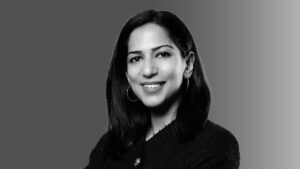
How do you see the trajectory of MENA creativity?
The trajectory has shifted from linear growth to a state of cultural sovereignty. For decades, the global gaze viewed the Middle East through a reductive lens—either as a repository of tradition or a market of “emerging potential.” That dynamic has flipped. We are now seeing a “reverse crossover” effect, where the MENA region is no longer importing global standards but exporting original creative blueprints. From the sonic subcultures in Jeddah to the cinematic visual language emerging from Cairo, the work isn’t just competing for a seat at the table; it is redesigning the table itself.
The region’s global edge is rooted in a hyper-local defiance. We’ve moved past the era of creators asking, “Will this play in London or New York?” and toward a radical focus on domestic resonance: “How does this hit on the streets of Beirut or Riyadh?” Paradoxically, this refusal to dilute the work for a global audience is exactly what makes it travel. When you stop chasing universal appeal and start capturing the specific, unvarnished soul of a place, the rest of the world has no choice but to pay attention.
What will define a standout work in 2026?
Standout work this year will be defined by cultural durability. In a world of 15-second viral cycles, the standard is evolving from “Who can grab attention?” to “Who can build a legacy?”
The bar has shifted from mere cleverness to systemic creativity. We are looking for work that doesn’t just live in a campaign deck but builds an ecosystem. Standout work will be that which feels like it has a “before” and an “after” in the cultural timeline.
What sets the winners apart?
What sets a winner apart in today’s complexity is radical clarity. As the landscape becomes more cluttered with AI-generated noise and fragmented platforms, the winners will be those who cut through with a soingular, unignorable human truth. Complexity is often used as a mask for a lack of a real idea. The winning work this year will embrace “The Rebirth of Analogue” in an AI age—using technology not as the centerpiece, but as the invisible engine that powers a deeply human emotional connection. If I can’t feel the heartbeat behind the data, it isn’t a winner.
Azhar Siddiqui
Managing Partner Middle East
Mediaplus Group Middle East
What will define truly standout work at Cannes Lions 2026?
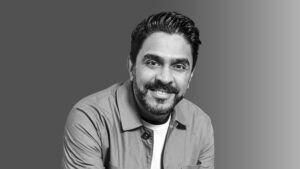
I think about media the way physicists think about light: as both a particle and a wave.
The particle is the measurable part of our craft. The targeting, the attribution, the optimization. Discrete, provable, and now has almost fully become the work of machines. The wave is everything else. The cultural resonance. The emotional charge. The way an idea moves through a society long after the campaign has ended. The wave is harder to measure, but for me, it is where the magic lives.
For 15 years, our industry has gotten better and better at measuring everything about a campaign and judging the success of an idea through data and quietly worse at how much of a lasting impact it has had on its audiences. The standout work in 2026 will come from teams who remembered that campaigns are supposed to move an audience. The teams who used the precision of the particle-based thinking to serve a bigger creative leap – not to replace it.
What will set this year’s winning work apart?
As always: BRAVERY.
In a landscape with infinite tools and infinite data, the rarest thing is a team willing to back an idea that the data cannot fully justify. That is what bold work has always been. A creative leap. A gut call. A bet on a human truth that no dashboard could have surfaced.
I think the winning work this year will be work that, based on pure data, looked slightly risky. The targeting could not be optimised. The audience could not be perfectly measured. The outcome could not be guaranteed. But someone — a planner, a strategist, a creative team, a brave client — looked at the data, respected it, and then said: “I know something the data does not.” That human instinct is the most valuable thing we have left as an industry, and one that we must build relentlessly to be relevant in the industry. The work that protects it will be the work that wins.
What’s the biggest myth agencies still believe about what wins in Media at Cannes?
That the future of our craft is technological. It is not. It is, in fact, human.
AI will continue to get better at the particle work — the targeting, the optimisation, the production at scale, the computation of zeros and ones. That is a good thing. It frees us up to do the work that actually matters: the wave work. The judgment. The taste. The intuition. The conviction to back an idea that defies the data because that’s where the magic lies.
The myth is that the agencies that invest most in technology will win. The truth, in my view, is the opposite. The agencies that invest most in their people — in their ability to think, to feel, to not be afraid to take a creative leap, to override the spreadsheet with a better human instinct — will win Cannes for the next decade.
The particle was still, until the wave shook it, and then it created the universe. The work that wins this year, and the agencies that endure, will be the ones that take that idea seriously.
Ash Chagla
Chief Creative Officer
SCIENCE & SUNSHINE
What will distinguish the most awarded work at Cannes Lions 2026?
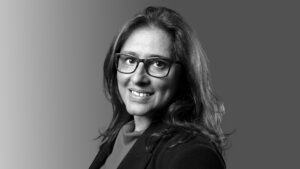
Cannes has always rewarded the same things: a strong idea, well executed, that actually works. That hasn’t changed just because we have more tools now.
The best work still rises because it makes you feel something, or see something differently, or solves a problem in a way you didn’t expect. The tools might evolve, but the bar is still the idea.
What will set this year’s winning work apart?
Probably how simply it all comes together. There’s a lot more noise now, more formats, more platforms, more ways to complicate things.
The work that stands out is usually the one that cuts through that. Clear thinking, a fresh perspective, and just enough craft to elevate the idea without drowning it.
Asiya Ali
Founder and MD
MKV Digital
What will distinguish the most awarded work at Cannes Lions 2026?
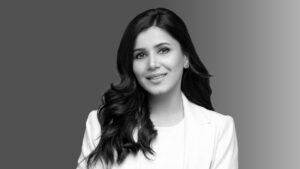
In the Social and Creator category, I believe the most awarded work should not look like advertising, and more importantly, it should not behave like it.
Today craft alone isn’t enough. The work that stands out will feel embedded in culture, not inserted into it. It will do something… shift behavior, create utility, and spark participation, not just tell a story.
From a MENA perspective, there’s a real opportunity here. The region has often leaned toward polished, global-looking work. What will stand out now is the opposite: ideas that are specific, honest, and culturally rooted, but executed in a way that travels
What will set this year’s winning work apart?
Conviction. There’s a lot of technically impressive work right now and very little that feels decisive. The strongest ideas will be the ones that take a clear stance and follow through without dilution. AI can scale output. It can’t replace taste, judgment, or intent. I think that’s where the separation should happen.