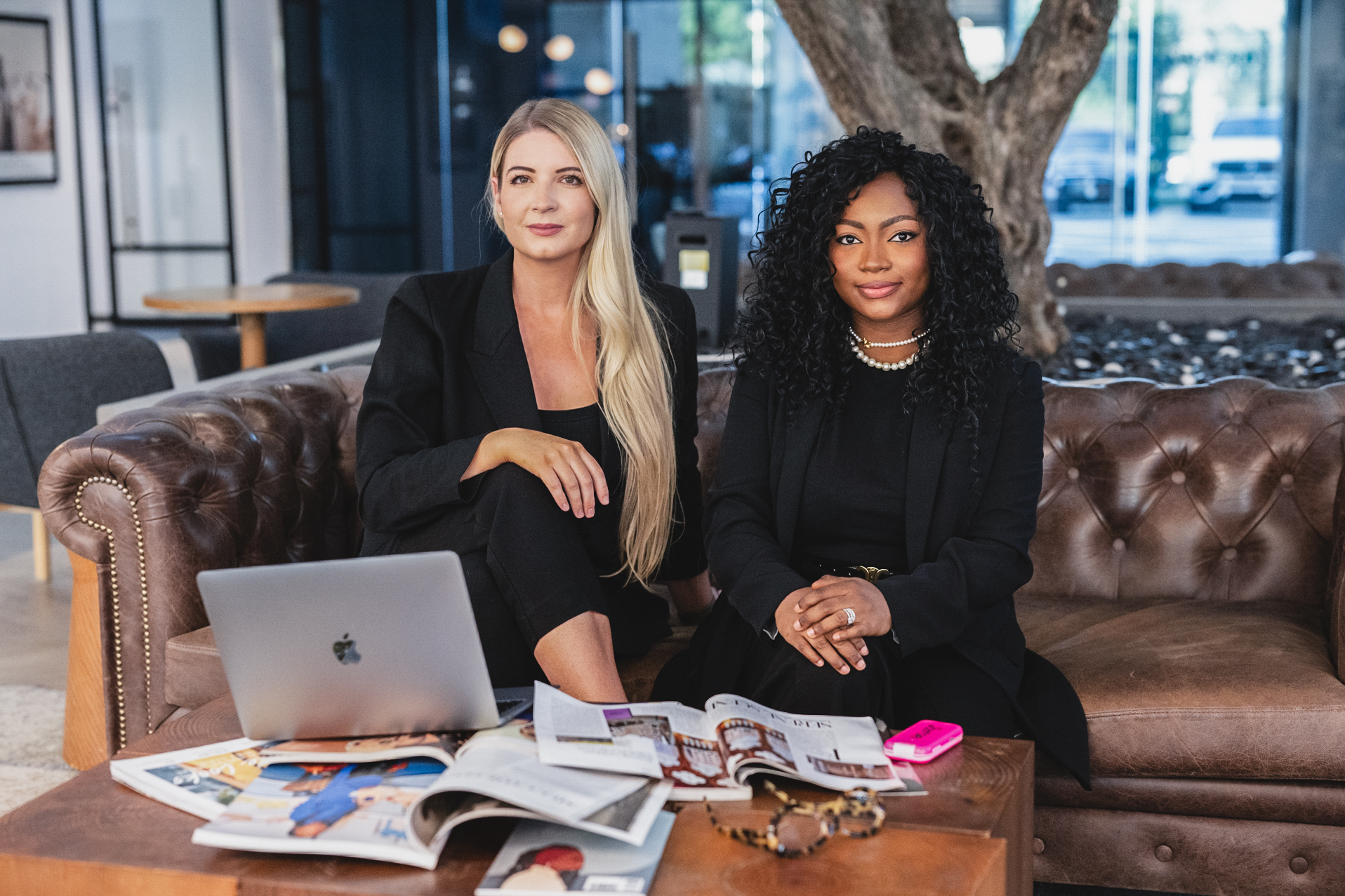
Every AI founder will tell you their product is different because of the model underneath it. Zainab Imichi Alhassan and Sarah Curtis, the Dubai-based founders of relationship-communication app Good Husband, will tell you that’s exactly the wrong place to compete. “You absolutely can go to ChatGPT or Claude and ask it what to say to your partner,” Alhassan says. “Most people don’t necessarily want to prompt engineer their relationship.” That gap, between a powerful general model and a person who just doesn’t know what to say right now, is where Good Husband decided to build a brand instead of a feature.
For a marketing audience numb to “AI-powered” everything, the more interesting claim is the thesis behind the product. “The AI is the engine, and the brand is the product,” Alhassan says. “Anyone can call the Claude API. What they cannot replicate is the specific context we built around it.”
Curtis frames it as a generational shift in what AI companies are actually for. “We think AI is moving from helping people do things to helping people navigate things,” she says — from productivity into “context, judgement and behaviour.” For brand teams already fighting to be more than a feature wrapper on someone else’s LLM, that’s less a relationship-app soundbite and more a warning shot.
Trust as a design decision, not a comms line
The part of this conversation that should make CMOs sit up isn’t the founders’ origin story, it’s how deliberately unsentimental they are about trust. “Trust has to be designed into the product, not added later as messaging,” Alhassan says. Good Husband keeps no conversation history and no log of what was said. “The moment the response is generated, it is gone from our end.”
Curtis is clear about where the product draws its line: “If a request is aimed at manipulation, guilt-tripping, or controlling a partner, the product declines to write that version and offers an honest alternative instead.” A built-in safety layer scans messages for signs of real danger, self-harm or abuse and, in those cases, doesn’t generate a reply at all — it surfaces crisis resources instead.
The authenticity question every AI product will eventually face
Ask a founder if their tool makes people less authentic, and most reach for reassurance. Alhassan reaches for a rule instead: “Good Husband does not write his messages for him; it gives him options. He reads them, edits them, and chooses what sounds like himself.”
Curtis extends the point regionally, which is where this stops being a relationship-app story and starts being a GCC story. “Good Husband works in any language,” she says — Arabic in Saudi, French in France, “the product responds in kind.” But she’s honest about the ceiling: “The AI understands linguistic context better than it understands cultural expectation.” So the product stays narrow on purpose — communication craft, not relationship advice — which is arguably the more defensible strategy for anyone building AI for a genuinely multilingual, multicultural market like the GCC.
What it means beyond relationships
For an industry audience, the closing thought is the one worth sitting with. Alhassan sees Good Husband less as a category and more as a proof point: “The opportunity is not AI for everything. It is AI for this exact thing, at this exact moment, better than anything else.” Curtis lists what could be next — “parenting, grief, career transitions, health conversations, financial decisions” — every high-stakes, emotionally loaded moment a brand hasn’t yet bothered to build for specifically.
Launching from the UAE, with a product built around WhatsApp-native, multilingual, culturally aware conversation, Good Husband is a small case study in a bigger regional bet: that the GCC’s AI opportunity isn’t in copying Silicon Valley’s horizontal tools, but in building narrow, trusted, human-specific ones first.