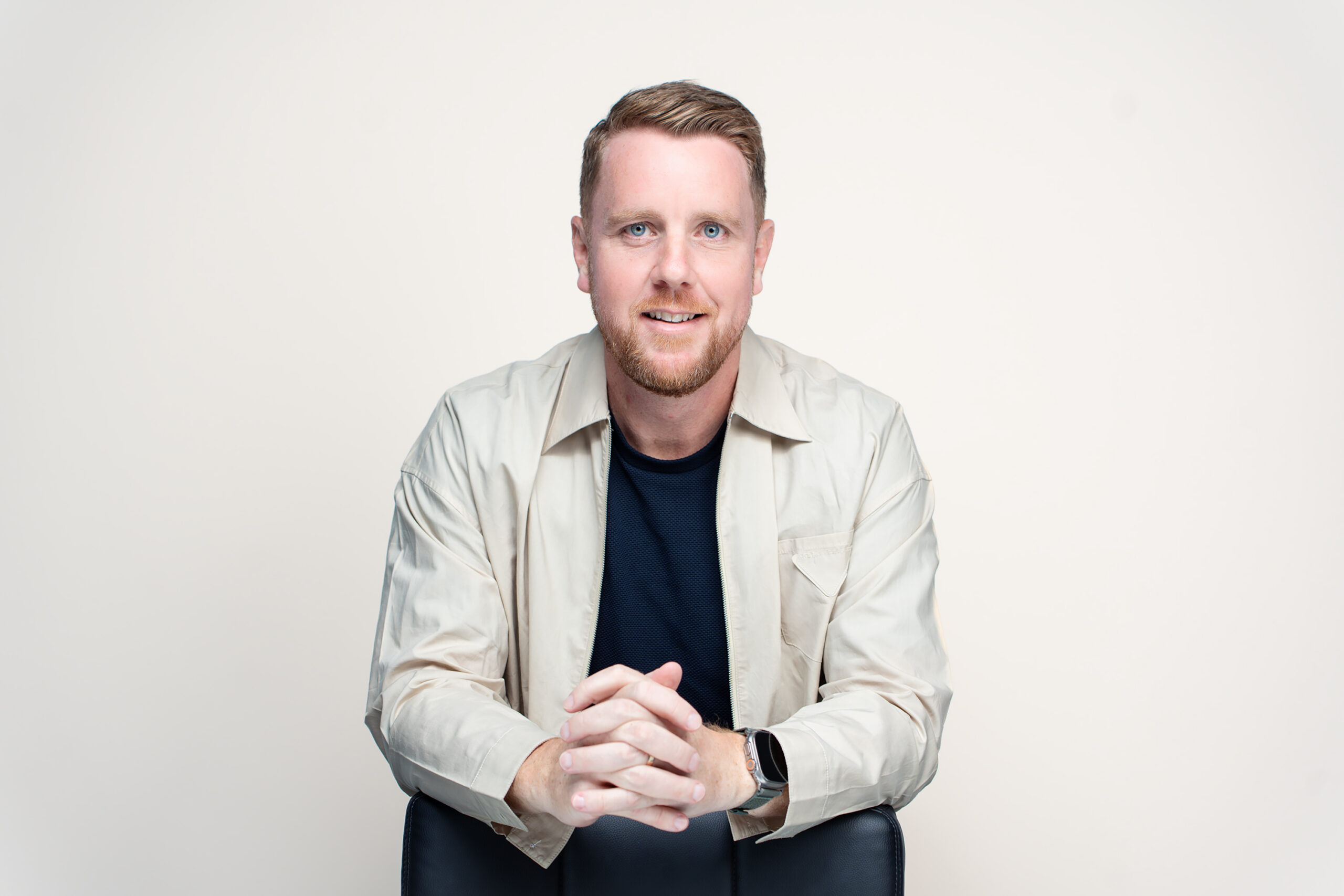
By Nick Walsh
At the beginning of this year, the Middle East story was overwhelmingly about growth. Record visitor numbers, new capacity, sold-out venues, double-digit ambitions, new destinations, new brands and seemingly endless opportunity.
For many businesses, the market itself was providing momentum. As we approach September, the long-term opportunity hasn’t gone away. Far from it. But the immediate conversation has changed significantly. There is more caution, more pressure and a much sharper focus on what needs to happen commercially between now and the end of the year.
Targets need to be recovered. Units need to be sold. Rooms need to be filled. Bums need to be put on seats. Footfall needs to convert. And every marketing dirham needs to work harder.
That’s a pretty seismic shift in a relatively short period of time.
Which raises an obvious question: if your business priorities have changed, has the marketing capability around them changed too? Or does your agency model still look pretty much the same as it did in 2024?
Built for a different market
Most agency rosters weren’t really designed. They evolved.
An agency was appointed for one requirement, another was added for something else, scopes grew, retainers rolled over and responsibilities started to overlap. New capabilities were bolted on around the edges.
When the market is growing quickly, you can get away with some of that. When growth becomes harder fought, you probably can’t.
Because marketing itself has changed. What was once a relatively manageable collection of disciplines has become a complex capability ecosystem spanning brand, creative, performance, commerce, customer experience, CRM, social, influence, content, experience, data, technology and increasingly AI.
Not every business needs all of those things. Certainly not in equal measure.
The point is that different business problems now require very different combinations of capability.
And that capability doesn’t necessarily sit within the agency that happens to be your incumbent.
Specialisation is changing where expertise lives
One of the biggest changes I’ve seen in the agency landscape is the depth of specialist capability now available.
There are agencies with serious bench strength in CX, commerce, brand, performance, experience, social, influence, CRM, content, data and technology. These aren’t small departments sitting inside a generalist agency trying to offer everything to everyone. They are entire businesses built around being brilliant at something.
Then there is another form of specialism that I think is going to become increasingly important: sector expertise.
There are agencies and teams that live and breathe automotive, hospitality, luxury, healthcare, financial services, sport, entertainment, retail or tourism. They understand the customer, the commercial model, the challenges and the language of the category. In many cases, they have a genuine passion for it too.
That matters when the pressure is on. How much time do you really want to spend teaching your agency your category when you could bring in people who already understand the problem?
And importantly, some of the best talent in our industry is increasingly choosing these specialist environments.
Expertise no longer necessarily sits inside the biggest agency building.
For marketers, that creates an enormous opportunity. But accessing more expertise isn’t enough. The real challenge is knowing which expertise you actually need.
Stop asking which agency. Start asking which capability.
As planning for 2027 begins, I think we need to turn the traditional roster conversation on its head.
Don’t start with the agencies you have.
Start with what the business needs to achieve.
Where does growth need to come from? What are the immediate commercial priorities? What capabilities will genuinely move those numbers? What should your own team be brilliant at? Where do you need deep external expertise? Where would sector knowledge make a difference? What can technology now do faster or more efficiently? And what does AI fundamentally change?
Only then should you ask who is best equipped to deliver it.
Think of this as Capability Architecture: deliberately designing the right combination of internal capability, specialist partners, sector expertise and technology around the outcomes the business actually needs.
Instead of taking the roster you already have and trying to make every new problem fit within it, start with the problem and build the capability around it.
It sounds obvious.
I’m not convinced it’s how most marketing organisations have historically been built.
AI changes the equation again
AI makes this even more urgent.
As technology makes certain marketing activities faster, cheaper and easier to execute, brands will inevitably question what they continue to outsource. And they should.
Some activities will come in-house. Some agency scopes will reduce. Some production models will fundamentally change. Other capabilities may become more valuable precisely because technology makes execution increasingly accessible.
I don’t think the answer is necessarily building enormous internal marketing departments.
We could see something much more interesting: smarter internal teams, enabled by technology and connected to deeper external expertise when they need it.
That puts pressure on the traditional agency model too.
If an agency’s primary value is providing resource, technology is going to challenge that value very quickly. If its value is specialist expertise, creativity, category knowledge, intelligence or experience that would be difficult for a client to replicate internally, that’s a very different proposition.
The question for agencies is therefore changing too.
Not simply: what services can we sell?
But: what capability do we possess that genuinely creates value?
More specialists shouldn’t mean more complexity
There is an obvious challenge with all of this.
Nobody wants 15 agencies, 15 meetings, 15 scopes of work and 15 competing agendas. Marketing leaders certainly don’t need another job refereeing between partners. But the alternative doesn’t have to be handing everything to one agency.
The answer isn’t fragmentation, and it isn’t consolidation for the sake of simplicity.
It’s orchestration.
The opportunity is to unite the right internal people, specialist partners and technology around shared commercial outcomes.
Connected capability rather than disconnected agencies. That requires more than good intentions. Collaboration can no longer simply be something everyone promises during the pitch.
It needs to be designed into the model from the beginning: clear roles, clear accountability, shared objectives, connected workflows and leadership across the whole ecosystem.
Technology should increasingly help make that possible too, connecting teams, knowledge, workflow and performance in ways that simply weren’t available when many of today’s agency models were created.
The future doesn’t necessarily belong to the biggest agency roster or the smallest one.
It belongs to the best connected capability.
Diagnose before you select
Which brings us to the RFP.
If the market is moving this quickly, is the first response to a new business challenge really to spend months asking five agencies to tell you how they would solve it?
There will always be situations where a formal competitive process is appropriate. Procurement discipline matters and competition can absolutely improve the quality of a decision.
But perhaps we’re starting in the wrong place.
Before asking “Which agency should we appoint?”, perhaps the better question is:
“What capability and partnership model do we actually need?”
- Diagnose the business challenge.
- Define the capabilities required.
- Understand what should sit internally.
- Identify where specialist expertise will make the biggest difference.
- Determine what technology can enable.
- Design how the different parts will work together.
- Then identify the partners best equipped to deliver it.
Agency selection becomes the outcome of the strategy rather than the starting point.
That is a fundamentally different way of building a marketing ecosystem.
2027 won’t be 2024 again
Perhaps the biggest mistake marketers could make now is waiting for the old market to return.
The fundamentals of this region remain incredibly strong and there is still enormous growth ahead. But the next phase of that growth may need to be created rather than simply captured.
It will be more contested, more accountable and more focused on outcomes.
At the same time, marketing will continue becoming more specialised. AI will keep changing what organisations build internally and what they buy externally. New expertise will emerge. Traditional scopes will change. And marketers will have more choice over where and how they access capability than ever before.
That demands a different mindset.
The winners won’t necessarily be the brands with the biggest budgets, the largest rosters or the biggest agencies.
They will be the organisations that can identify the capability they need, access the best expertise, connect it effectively and continually adapt the model as their business changes.
So as marketers start building their plans for 2027, there is one question worth asking:
If you were designing your marketing capability today for the business challenges and opportunities ahead, would you build what you currently have?
If the answer is no, now is probably the time to redesign it.
(Nick Walsh is the Founder and CEO of Migrate and a Founding Regional Partner of the Alliance of Independent Agencies Middle East.)