Most agencies keep their pay grades close. Omnicom Media MENA shares them with its staff.
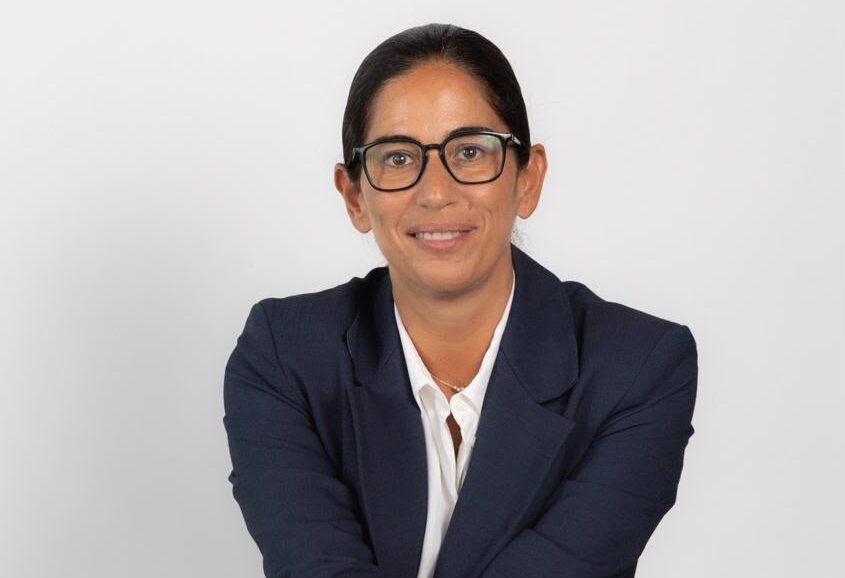
That openness is part of why Joumana Hathout, General Manager, People and Culture, can say something few HR leaders in the region would put on the record: Omnicom’s pay scales haven’t moved. “Our scales remain the same,” she says. For Hathout, pay is hygiene. It has to be fair, but “it’s never the number” that makes people stay.
Communicate spoke to Hathout during the research period for our 2026 GCC Advertising & Marketing Salary Survey, fielded in Q3. Her answers line up closely with the data. The survey found junior media hires landing on near-identical starting salaries whatever their specialism. Hathout says AI is “slightly compressing the pyramid”, moving agencies away from hiring in volumes. She also says the talent map has widened. Opportunities that used to be concentrated in the UAE, Saudi and Qatar are opening up to talent in Beirut, Jordan and Egypt.
How would you describe the GCC talent landscape right now?
The general landscape hasn’t changed much in a sense where the talent has always been in the region. We have people that are excited to be in this region. There is availability of talent, and there was always the discussion: is it an employee market, is it an employer market, who is pulling? For me, in markets that are quite evolving, you will always, always need talent. We believe in the potential of this region. We are continuously investing in the potential of this region. Actually, we’ve never gone silent in terms of hiring, which gives me hope and an indication that there are jobs, there is potential.
What I would say that is probably a bit different from a landscape perspective is the actual capabilities that are required versus a year back or two years back. The job itself might have changed. People are expected maybe to do different things, to use new tools, but the talent itself is still required, especially in a market that, despite everything that has happened, despite all the geopolitical situation, the uncertainty, there is still a lot of potential.
Since February 28, who’s calling the shots: agencies or talent?
I don’t see it as anyone calling shots. There’s a lot of talk that this is an employer market, or this is an employee market. The number or the volume of the roles might have changed, for sure. But when it comes to the talent itself, for me, the talent is needed. We are an organization that is evolving. We are talking about new disciplines, about new capabilities. So we will continuously need that. It’s just about the selection process today is a bit more deliberate. We are taking our time in the selection. That’s the luxury, potentially, that we have. But it’s not like it’s a push and pull and I don’t need talent. In smart businesses and industries that are evolving and companies that are transforming, there are always, always pockets of growth. And people who take technology tools and use it to their advantage, I think they will always be needed.
How is AI changing the way you hire and structure talent?
I’m not a technology person. I wouldn’t want to predict the future. But what I would say is, when it comes to AI and how it’s changing things for us, I think it’s slightly compressing the pyramid, where we basically used to hire in volumes like anyone else. Today, it’s more about nurturing certain skills with individuals, because what AI is actually doing is raising the premium on the skills that have always been needed. At least for me as Joumana, it’s making the mechanical part of my job a lot easier. It’s stripping away a lot of the administrative tasks.
So what we’re trying to do internally is we’re investing. I think we’ve never had a time where we’ve invested more in learning and development across all markets. We’ve built a massive academy in Lebanon. We’re doing the same in Dubai and Saudi. While you need to learn how to use AI to do your job a lot more efficiently and differently, for me, there are certain key skills that will always be needed. What we are trying to do is build AI fluency across the board rather than creating separate teams and saying this is a team that will manage thought leadership or whatever on AI. It’s helping people use these tools to their own benefit, helping them do their job differently and efficiently while continuously investing in the skills that matter.
What does the talent pool need to learn, or unlearn?
I wouldn’t say there is something specific that needs learning. I think that the appetite to and the aptitude to take on those tools to do your job more efficiently is required. So people need to lean in, I would say, to use those tools that are available, which has been the case forever. In terms of unlearning, I don’t have any specific thing to say.
I think today the roles, as I was saying, are a bit different. A client lead definitely manages the relationship with the client, but at the same time is able to do measurement. A creative person is definitely focused on the creative output, but at the same time is able to use AI tools. A strategist, definitely doing a strategy, but at the same time doing data analytics. So I think this is important for people to understand: there is an added layer to every job that probably wouldn’t be the case a year or two years ago.
Before, it used to be pure execution for us. That part of the job is becoming much faster, but you really need the skill set that has always, as I said, been needed, which is someone sitting and judging that output, doing some critical thinking. We’ve been doing it through the Academy, but at the same time with mentoring and coaching young talent in this region, which is exceptional talent, accelerating their learning journey to make sure that their critical thinking, their aptitude, their ability to judge the output is as sound as knowing how to use those tools.
What’s the bigger challenge right now: attracting talent, or keeping it?
A few years back, we used to talk about the number, the compensation aspect of things. What are you gonna pay a certain job? I wouldn’t want to say it’s a challenge, but the opportunity is everything around that number: whether it’s learning and development, all the mentoring and coaching that you need to do, or mobility across markets. I don’t think there has been a better time where those opportunities are available.
If I want to come back to your question, the challenge is making sure that we are fast enough to ensure that our team is equipped, not to be specialized in one thing, but to learn different things at one time. And that’s a huge, huge ask, not only from the HR teams across the region, but also from the leadership team: having the right mentorship program in place, having the right coaching programs in place, having the ability to move people across markets. Beirut is a great example of this, by the way, because we used to have a lot of execution teams sitting in Beirut. The talent here is exceptional. I’ve been with them every single day now, and you see the potential. So it’s on us to open those opportunities: how do we expand their scopes, and how do we expand the opportunities and the problems they work on? We’ve always been a business of people. And I think having those structured people programs, I wouldn’t want to call it a challenge, but it’s our biggest opportunity today.
Which skills are hardest to find?
We haven’t, as an organization, faced roles that were so difficult to close. Talent is available. There are a lot of opportunities in the region. There are a lot of people that want to stay in the region, but actually the map has widened. I will talk about Beirut and I will talk about Jordan and Egypt. These opportunities used to be concentrated in those expensive markets, like UAE, Saudi, Qatar. Now that the map has widened so much, there is talent across the board, and exceptional talent, which comes back to my point where we’re really facilitating, not necessarily by moving people around, but opening up the opportunities for the people sitting in different regions. It’s more of what are we doing as an organization and where are we putting our focus to ensure that the talent available in the market has the appetite to join the agency.
Gen Z versus millennials: are they looking for the same things, or has it moved beyond the package?
I might have an unconventional answer to this. Yes, I’ve been in the region for 20+ years leading HR teams and leading organizations, but for us specifically, I wouldn’t want to say that number is not important. But I don’t see that today people are asking less or they want more. Internally, we really haven’t moved much in terms of our scales. Our scales remain the same. We’ve always been an organization that’s extremely transparent in our pay grades and our benefit grades. We share them with employees, so it’s not like there is something that has massively changed post- and pre-COVID. We pay for a job. We pay for what you need to do, and we assess that, and we do job evaluation.
Whether it’s flexibility, it comes down to the benefits. For me, these are benefits. It’s important that we are in tune and understand the market dynamics and what works for our talent. But for me, what attracts talent and what will always make talent stick around is the opportunities that they are given: how many clients am I working on, how difficult are the problems that I’m working on that trigger my thinking, make me grow, how much exposure do I have to my leadership team so that I can learn from them, how many opportunities do I have to solve problems in different markets. Talent that we have in this region is very, very smart. This is what they are looking for.
So to answer your question, these are all for me hygiene, important to be fair when it comes to the hygiene, but people who are smart, I would say, are not looking at the number and what surrounds that number. They’re looking at, okay, how am I gonna grow? How fast can I grow? What are the learning opportunities? Is this a company that is evolving? Is this an organization that, if I look three years down the line, I would say, okay, they are not lagging behind?
Is that what keeps people at Omnicom?
100%. I wouldn’t want to go into numbers, but at times where the region had the biggest turnover or churn rate, we remained quite stable. And it’s never the number. There’s always going to be a lucrative thing. It’s a healthy market condition. But why people stick around has always remained, will always remain the same. It’s how much am I learning, how fast am I growing, what are the opportunities I’m getting exposed to? Am I working with smart people? Am I working on tools that are needed? And is the organization equipping me with the right ammunition to handle what’s coming to us in the most efficient way?
Hathout calls pay hygiene. Even hygiene has a benchmark. Floor, median and ceiling salaries for 130-plus roles across UAE Creative, Media and PR, Saudi Creative and agency leadership are in Communicate’s 2026 GCC Advertising & Marketing Salary Survey HERE.