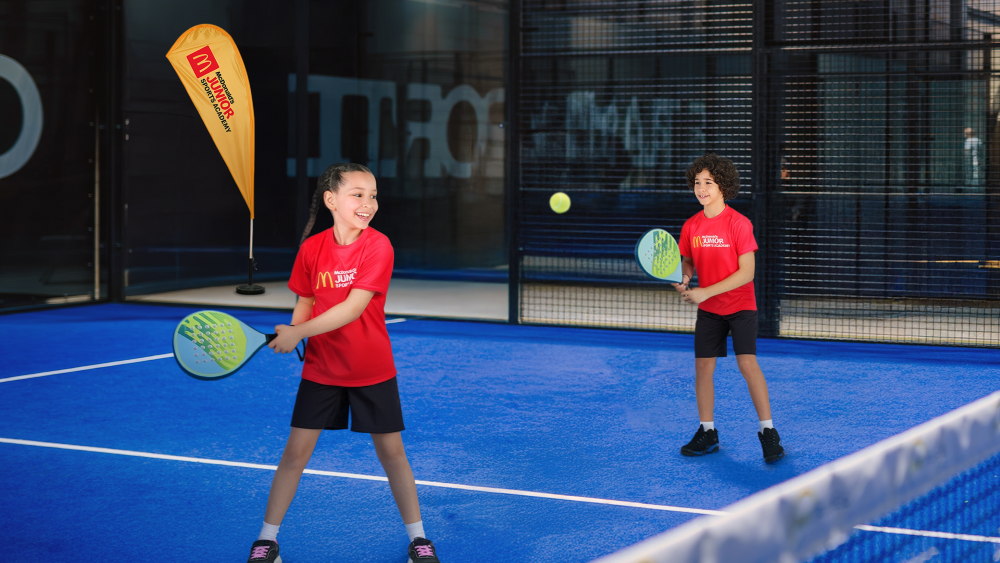
Youth sports has become more than an extracurricular activity for millions of American families. It is now a defining life stage, shaping household routines, priorities and spending patterns well beyond the playing field.
Nearly two-thirds of U.S. parents, or 63%, are actively involved in youth sports through their children, according to a February 2026 survey of 662 adult parents conducted by EMARKETER in partnership with DICK’S Media. For brands, that creates a high-frequency, high-attention environment where purchase decisions are made repeatedly and often in real time.
From snacks and restaurant meals to hotel bookings and vehicle upgrades, youth sports is influencing how families allocate their budgets. More than 84% of sports parents say that role affects what they buy, with 41.5% saying it has a great deal of influence.
A lifestyle that reshapes household spending
For many families, youth sports dictates not only weekend schedules but also broader purchasing priorities. More than four in 10 sports parents say they actively invest in products and services that support their child’s success, while another 23% prioritize convenience to keep up with demanding schedules.
That commitment extends well beyond uniforms and equipment. Parents are spending on dining, travel, consumer goods and transportation, all shaped by the rhythms of practices, games and tournaments.
The lifestyle also generates frequent spur-of-the-moment purchases. More than half of sports parents, 53.5%, say they make unplanned purchases often or very often because of their child’s athletic activities. Those purchases are typically driven by immediacy—time pressures, location and convenience—rather than careful pre-planning.
On game and practice days, 60.2% of sports parents say they spend somewhat or significantly more than on non-sports days.
Sideline decisions spread through team communities
The purchasing influence of youth sports extends beyond individual households. Sports families operate within tightly connected communities where recommendations travel quickly.
Nearly all sports parents—95.9%—say their buying decisions are influenced to some extent by other sports families. A recommendation for a hotel, a family-friendly restaurant or a new snack can quickly move from one parent to an entire team, and from one team to a wider league.
That peer effect amplifies the impact of each purchase decision. Brands that win over one sports parent may find their influence spreading organically across a broader network.
At the same time, loyalty is far from guaranteed. Nearly half of sports parents, 49.2%, do not consistently stick to the same brands. Just 38.4% say they often rely on familiar brands, suggesting a willingness to experiment with new products and services.
For established companies, that creates a retention challenge. For emerging brands, it offers a valuable opening.
Convenience and quality shape food purchases
Food and beverage spending is among the clearest examples of youth sports’ influence on household budgets.
Sports households are about 50% more likely than non-sports households to buy snacks and drinks multiple times a week. Every practice, tournament and game creates another opportunity for purchase, turning the sidelines into a recurring marketplace for consumer packaged goods companies.
Quick-service restaurants are also benefiting. Sports parents are more than 50% more likely than non-sports parents to visit QSRs multiple times a week, often driven by the need for fast, convenient meals between activities. They are also more than twice as likely to spend $300 or more per month on QSR dining.
When choosing a restaurant, price remains the leading consideration, cited by 64% of sports parents. Convenience follows at 50.6%, while 39.1% prioritize speed of service. Healthier menu options matter too, with 26.6% citing them as important. Loyalty programs appeal to 23%.
Vehicles become part of sports infrastructure
For sports families, the family vehicle often functions as essential equipment.
Transporting children to practices, games and tournaments—often along with teammates and gear—has made vehicle choice a critical consideration. Nearly half of sports parents, 49.6%, say they are very likely to buy or lease a new vehicle within the next two years, almost double the rate among non-sports parents.
More than 42% say they would definitely consider paying more for a vehicle better suited to their family’s needs, compared with 22.9% of non-sports parents.
Sport utility vehicles dominate driveways, with 53.2% of sports households primarily driving an SUV. Sedans account for 26.6%, followed by pickup trucks at 9.1% and minivans at 7.2%.
Price remains the top factor in vehicle selection, cited by 54.9% of sports parents, closely followed by safety features at 43.4%.
Travel spending rises with tournament schedules
Youth sports is also reshaping family travel patterns.
Sports parents are more than three times as likely as non-sports parents to have taken a trip in the past year for a child’s activity. Those trips often involve substantial spending on hotels, gasoline and rental cars. Sports households are also far more likely to spend more than $3,000 annually on non-work travel.
When planning travel, price is the primary concern for 66.4% of sports parents. Convenience ranks second at 44.1%, followed by family-friendly amenities at 41.7%.
Brand trust and loyalty also play a significant role. Nearly 30% of sports parents value travel rewards programs, almost double the rate among non-sports parents. More than 36% cite brand trust as an important factor.
Brands seek opportunity in high-intent moments
For marketers, youth sports offers access to a highly engaged and affluent consumer segment. Nearly half of sports-parent households earn more than $100,000 annually, compared with about one-quarter of non-sports households.
These families are not only willing to spend more; they are actively evaluating products and services across categories. Nearly half say they are likely to trade up for better equipment and apparel during sports seasons.
The most effective marketing messages focus on practical and emotional benefits. The top message, cited by 47.7% of sports parents, is that a product or service helps their child perform better. Comfort, time savings and reduced parental stress also resonate strongly.
As retail media networks expand, advertisers are finding new ways to reach sports families in moments of high purchase intent—whether they are ordering gear, booking travel or grabbing dinner between games.
Ultimately, youth sports has evolved into a powerful economic ecosystem. It shapes where families go, what they buy and how they make decisions. For brands, the opportunity lies not simply in selling products, but in becoming part of a lifestyle that increasingly defines family life across America.