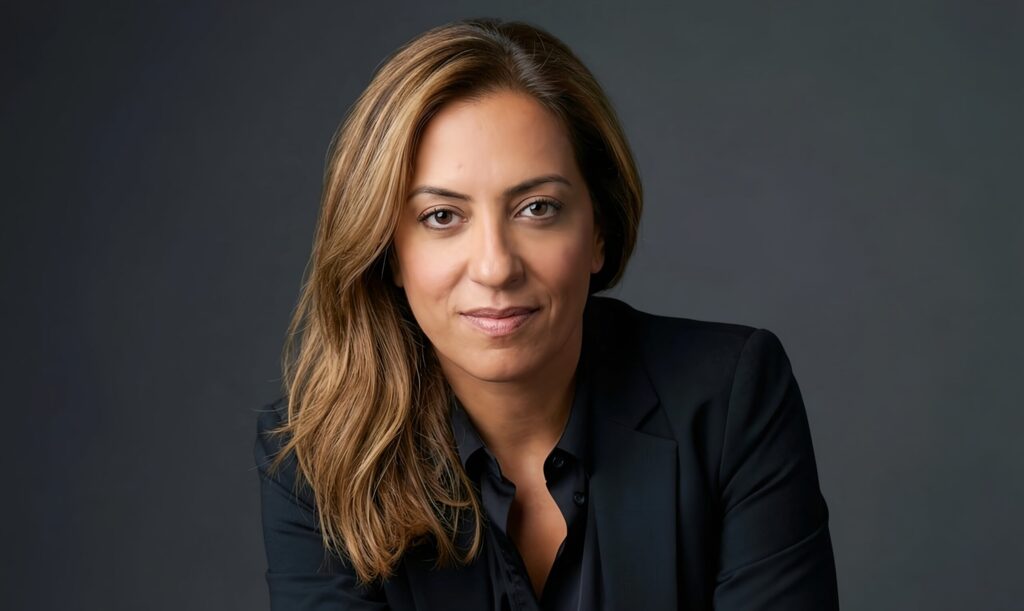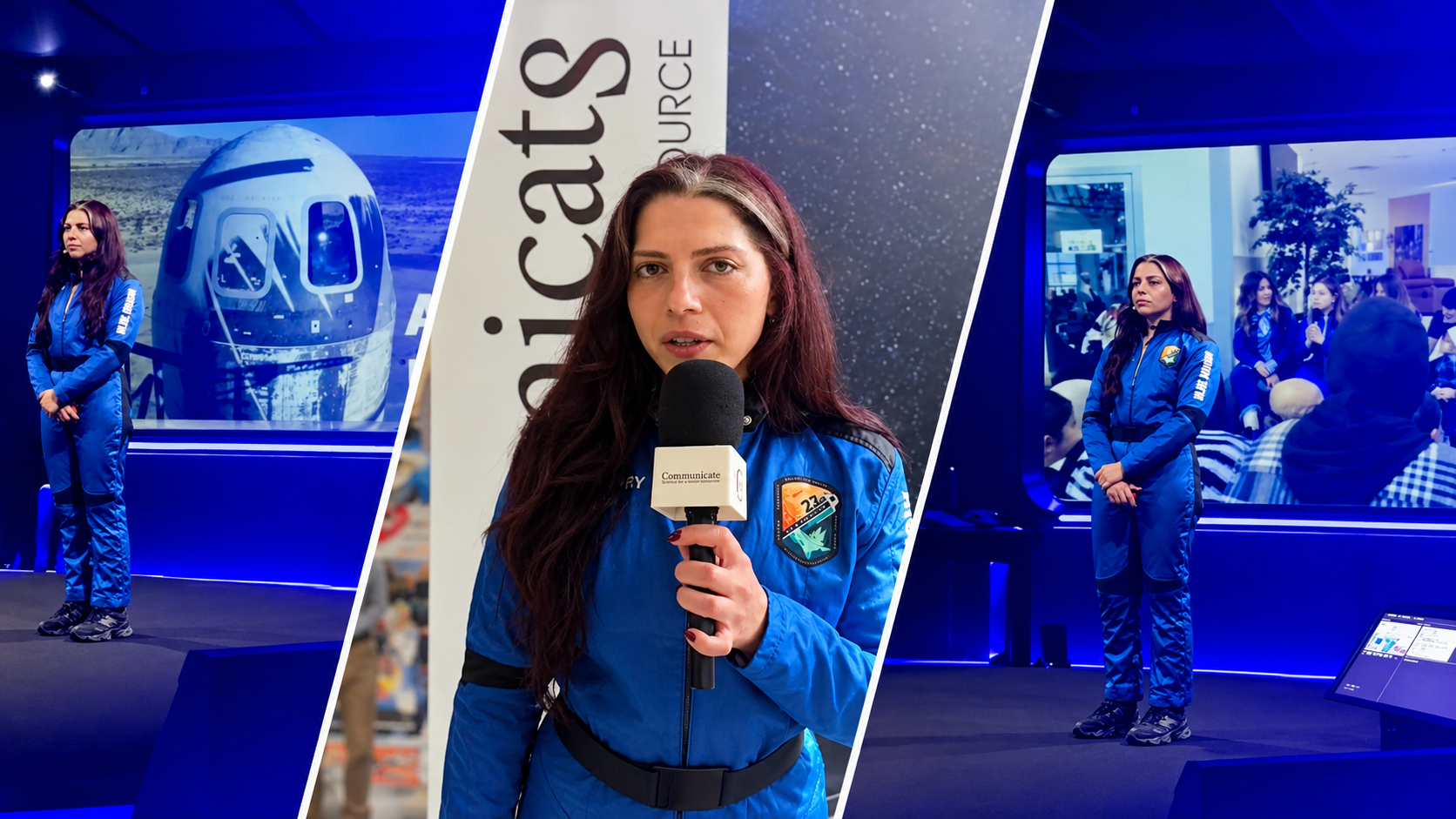
The first Arab and African woman in space headlined WPP Media’s NextM: Uncharted. Her lessons on resistance, trust and difference land squarely on the brand world.
Before Sara Sabry reached space, she heard “no” a lot. No to mechatronics, because it would be “too difficult for someone like you.” No to biomedical engineering, because there would be no jobs at home. No to the whole dream, because “it’s not for people like us.”
“The question that I got the most was, why couldn’t I be normal?” she told the audience at WPP Media’s NextM: Uncharted in Dubai earlier this week. “But the thing is, I refused to accept all of this.”
On August 4, 2022, she flew aboard Blue Origin’s NS-22 mission from West Texas, a suborbital flight of about 10 minutes that crossed the internationally recognized boundary of space. Her seat was supported by the nonprofit Space for Humanity. She became the first Egyptian, and the first Arab and African woman, in space. Her job up there was to study the overview effect, which she describes as “what happens to your brain when you see Earth from space. It completely breaks your reality.”
For a room of marketers, her most useful idea was a simple equation. Innovation, she said, is taking something established and adding something new. What people forget is the resistance that comes with breaking the old version. Anyone who has pitched a bold campaign to a nervous board knows that feeling. Sabry’s advice is to stop taking it personally. “If you not only expect resistance, but you embrace it, you can disconnect from it,” she said.
Her best story was about a yoga class. At the end of a long workday, she asked a group of women aged 40 to 50 to hold a plank and cheer each other on, with no clock in sight. They lasted seven minutes. “These limits really don’t exist,” she said. “They only exist in your own mind.”
Creators and community-led brands will recognize the mechanism. The people didn’t change. The encouragement around them did.
As a CEO and Founder, Sabry now runs KORA TechLabs, a US-based deep tech startup building explainable AI, starting with workplace health. She told Communicate that the way most AI is deployed today is a risk. “If we deploy AI the way it is right now, it’s going to create havoc in the world because it is not trustworthy,” she said. “Unless you’re able to build something that you can trust, that you can audit, you will not be able to deploy it where it matters.”
She also wants the region in the room where those systems are built. “I think we need a seat at the table,” she said, warning that many foundation models are not trained on diverse data. “There’s so many of us. It doesn’t make sense for it to not take us into account, especially women too.” For brands using AI to reach Arab audiences, that’s a commercial warning too.
Asked what she would tell a young girl who dreams of following her, Sabry didn’t hesitate. “That it’s actually good to be crazy,” she said. “Being different is not negative.”
In a market where AI can make every brand look and sound the same, that may be the most commercial advice of the day. Space, she said, leaves no one unchanged. “You cannot go to space and come back and go back to your normal life.” The same could be said of a good idea.