Egypt doesn’t have a creativity problem. It has an effectiveness dilemma.
Every Ramadan, the nation turns advertising into full-blown theatre, cinematic storytelling, megastar cameos, and jingles that outlive the shows they interrupt. Campaigns trend, hashtags explode, and for a few weeks, brands dominate culture.
But once the applause fades, one uncomfortable question lingers: what actually moved the business?
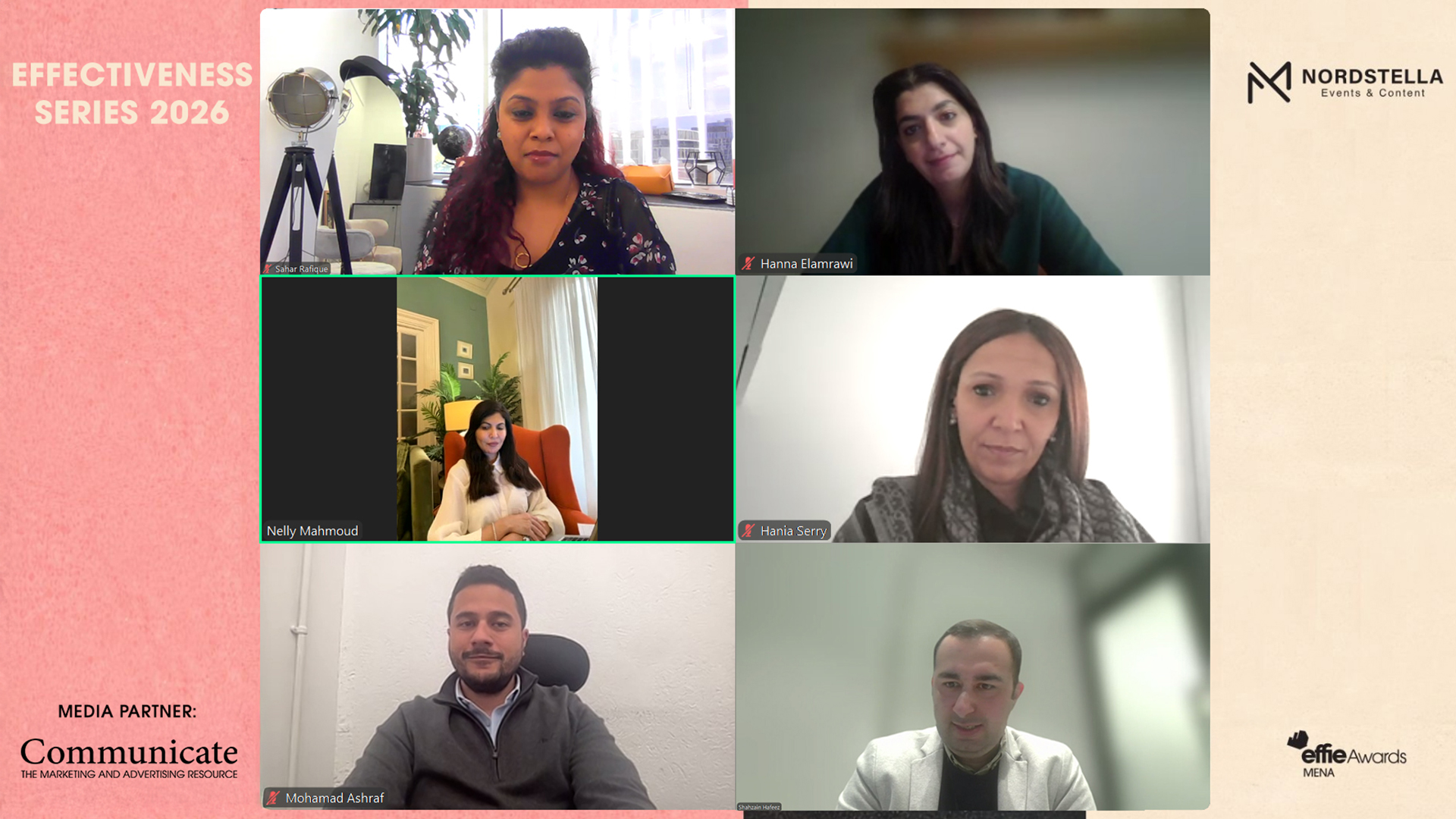
That’s the tension at the heart of NordStella’s 2026 Effectiveness Webinar (Egypt Edition), held in partnership with MENA Effie and Communicate. The conversation wasn’t about whether Egyptian advertising is great; it clearly is. It was about whether it’s working hard enough where it counts.
Memory leads to moments
Shahzain Hafeez, Chief Digital and Marketing Officer at L’Oréal Egypt, cut straight to the core: “Our job is not just to sell, it’s to be remembered,” he said. Because in reality, most consumers aren’t in-market when your campaign drops. “95% of people are not buying at any given moment. If we’re not building memory links consistently, we won’t exist when they are ready to buy.”
It’s a sharp reframing of what success looks like. Not spikes of attention, but sustained mental availability. Which is where Egypt’s love for big, seasonal, celebrity-led campaigns starts to show cracks.
Hafeez didn’t dismiss the formula, but he did challenge its overuse. Celebrities can drive reach and engagement, but they often overshadow the brand itself. And Ramadan-only bursts? They risk turning brands into seasonal memories instead of permanent ones. The takeaway was simple: continuity beats intensity.
Or as Hafeez put it: “If we only show up once a year, we disappear just as fast.”
The missing middle
If Hafeez set the stage, the panel exposed the gap. Because somewhere between insight and execution, effectiveness often gets lost.
Noha Kamal, Managing Director and Co-Founder of The People of the Internet, captured the industry shift neatly: virality is no longer the brief, it’s a byproduct. Post-COVID, clients are asking sharper questions, and expecting sharper answers.
Hania Serry, CMO at Savola, built on that: “We talk a lot about creativity, especially in Ramadan. But the briefs don’t always define growth KPIs, market share, value, real business impact. Without that clarity, you get attention… not results.”
And that’s the recurring pattern: campaigns engineered to win the moment, not the market. Mohamad Ashraf, Co-Founder and CEO Strategy and Growth at Strike Ads, pointed to where the real shift is happening: “Egypt gets credit for creativity. But the misconception is focusing on the ad itself. The real shift now is data-driven planning; brands like L’Oréal and Unilever are leading that change.”
Which leads to the most dangerous trap of all: jumping straight into execution.
Nelly Mahmoud, Chief Marketing Officer at EGBank, distilled it into a far sharper thought than the industry often allows: “This isn’t an Egypt problem,it’s everywhere.” The mistake marketers make is jumping to the ‘how’ before defining the ‘why’. If you don’t start with the purpose, the execution won’t deliver impact.
Simple. Universal. And still, often ignored.
When everyone owns growth… no one does
Then came the conversation no one could avoid: accountability. Because effectiveness doesn’t just break at the idea stage, it breaks in the system. As one speaker put it: “Growth is a collective effort, but without alignment, everyone optimizes for their own KPI, not the business outcome.”
And that’s where things unravel. Media optimizes for reach. Creative pushes for standout ideas (and yes, awards). Digital chases clicks. Sales teams chase revenue. But rarely are these stitched into one unified definition of success.
Hania Serry highlighted the structural flaw: “It’s easy to define KPIs in silos. The real challenge is aligning everyone to one set of goals, ultimately, market share growth.”
Nelly Mahmoud pushed it further, bringing it back to ownership: “You have different teams owning different parts: awareness, reach, conversions. But who orchestrates all of this?” Her answer is one the industry needs to hear: “The CMO has to own it, not to do everything, but to orchestrate across everyone.”
Because effectiveness isn’t about isolated wins. It’s about connected impact.
And that only happens when:
- Accountability is shared and ownership is clear
- KPIs are unified
- Growth is defined upfront
Or put more bluntly: alignment is the new competitive advantage.
The effie reality check
If the panels diagnosed the problem, a panel of former Effie judges delivered the verdict.
Hanna Elamrawi , Senior Manager, Marketing Comms Africa The Coca-Cola Company), Engy El Maghraby Vice President Marketing Beyti (an Almarai subsidiary), and Ramiz Mohy, Head of Digital Marketing L’Oréal stripped effectiveness down to what actually wins:
- Creativity alone won’t cut it: impact on revenue will
- Data and storytelling must connect: behavior change is the metric
- Cultural buzz is a bonus: not a business model
The judges were clear: creativity might win attention, but it doesn’t win on its own. What matters is proof, incremental revenue, market impact, and real behavioral change.
But if that’s the standard, why does so much work still fall short?
Engy El Maghraby pointed to a surprisingly simple gap: “You can have a great execution… but many campaigns miss a call to action. What do you want the consumer to do?”
In other words, the issue isn’t always bad creativity, it’s incomplete thinking. Campaigns that look good, feel right, even get talked about… but stop just short of driving action. In a market like Egypt, especially during high-noise jingle moments like Ramadan, that gap becomes even more visible. Showing up isn’t the challenge. Standing out with intent is.