
Artificial intelligence is increasingly being viewed as strategic infrastructure rather than just a productivity tool, with global conversations shifting towards governance, geopolitical influence, executive leadership and public trust, according to a new report released by CARMA.
The second edition of CARMA’s Perceptions of AI report, titled Perceptions of AI: A Power Shift from Productivity Tool to Strategic Infrastructure, analysed 6,006 articles from 500 tier-one media outlets across 45 markets and surveyed 6,300 people in 19 markets to assess how AI is being perceived by both the media and the public.
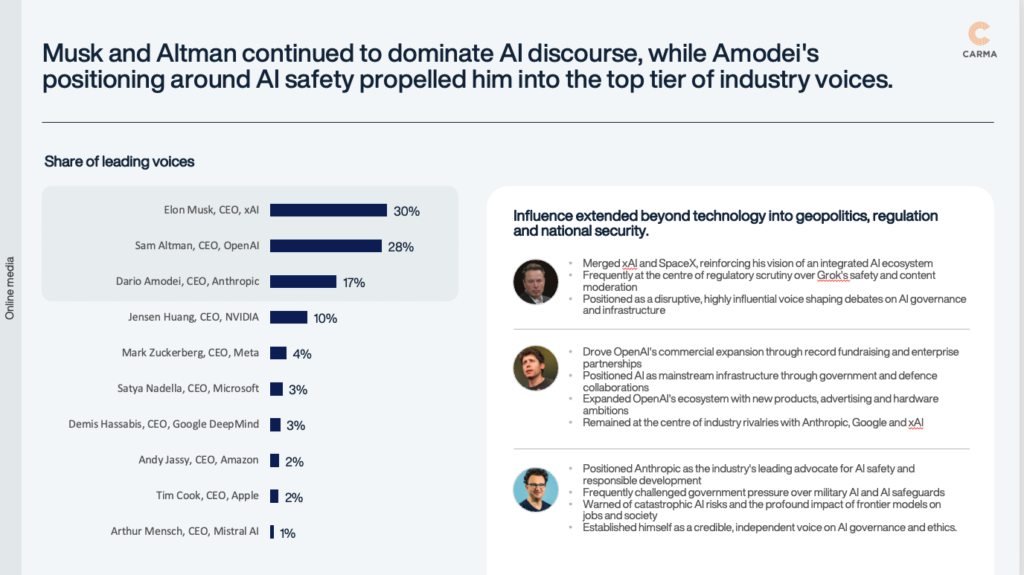
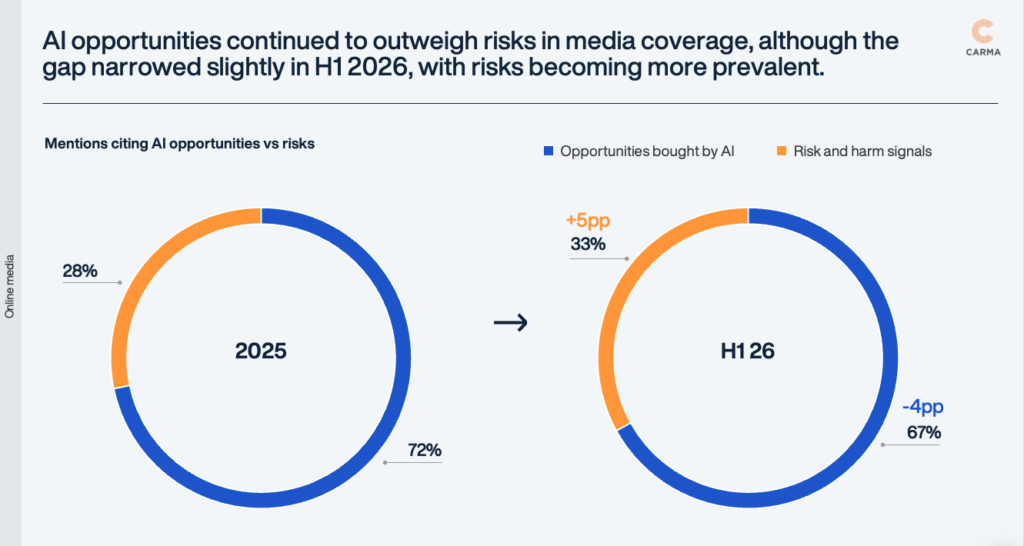
The report found that discussions around AI have evolved significantly since 2023. While earlier conversations focused on productivity gains and economic opportunities, the first half of 2026 marked a shift towards viewing AI as a matter of national strategy. Media coverage increasingly centres on issues such as technological sovereignty, national security, export controls, AI infrastructure and geopolitical competition.
Commenting on the findings, Jennifer Sanchis, Insights & Consulting Director, Europe & US at CARMA, said: “Artificial intelligence has evolved beyond just a story about innovation alone to embrace the narrative of a defining force shaping geopolitical influence and corporate accountability. Organisations that employ or rely on AI as a buzzword risk eroding trust, while those that demonstrate measurable outcomes, transparency about how AI is used as well as clear human oversight will define the next generation of credible leadership.”
The report also highlights changing public attitudes towards AI. While trust in AI increased from 26% in 2025 to 33% in 2026, respondents have become more critical of how organisations communicate about the technology. Nearly six in ten respondents believe companies exaggerate their use of AI, while almost half said they pay less attention to communications simply because they mention AI. The findings suggest that audiences now expect organisations to demonstrate tangible outcomes and responsible use of AI rather than making broad claims.
According to the report, business leaders are playing a growing role in shaping AI’s reputation. Chief executives continue to receive the most positive media coverage on AI, although academics remain more trusted by the public. As AI becomes increasingly linked to workforce transformation, restructuring and corporate governance, organisations are also being judged by how their leaders implement and oversee AI.
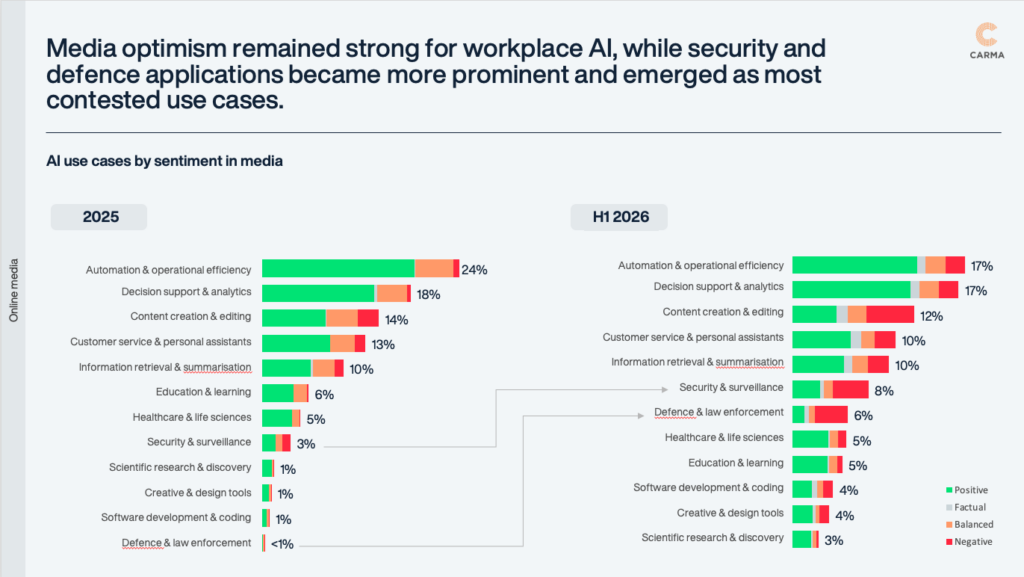
The report offers eight recommendations for communications professionals, urging organisations to move beyond simply promoting AI and instead communicate how it is governed, monitored and integrated into decision-making.
It also identifies transparency as a key opportunity for organisations. While both media coverage and public opinion recognise safety as essential for trustworthy AI, transparency remains underrepresented in media narratives despite being one of the strongest drivers of public confidence. The report says organisations can strengthen trust by clearly explaining how AI systems work, where human oversight exists and how decisions are made.
“AI is now embedded in the decisions that shape businesses and economies, and the organisations that succeed will be those that treat it as a strategic responsibility that demands rigorous measurement and a commitment to building trust at scale,” Jennifer Sanchis concluded.