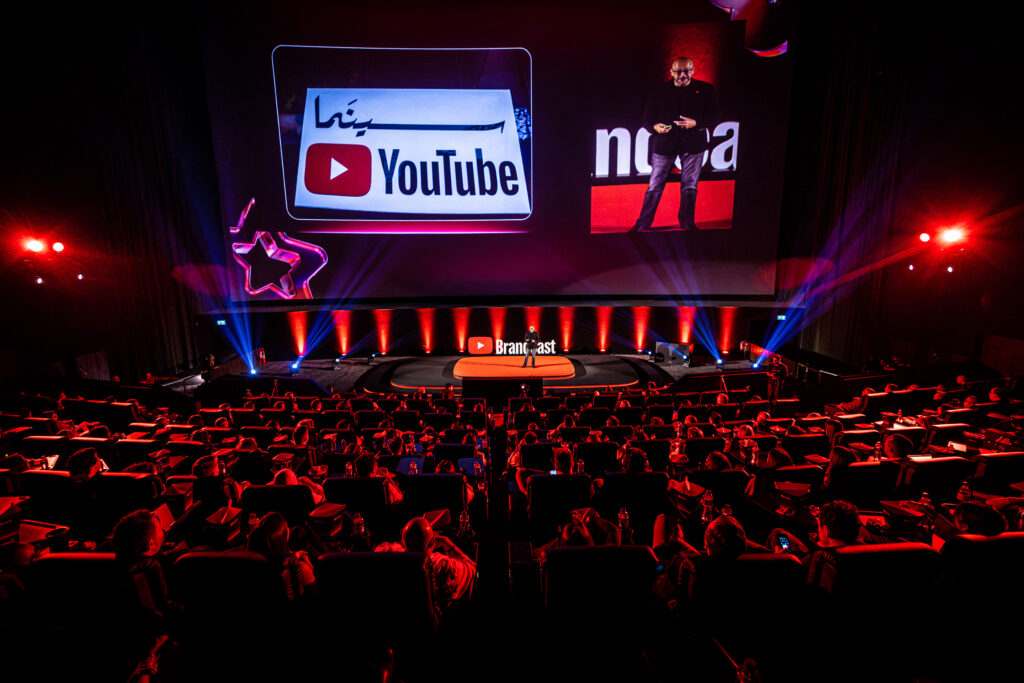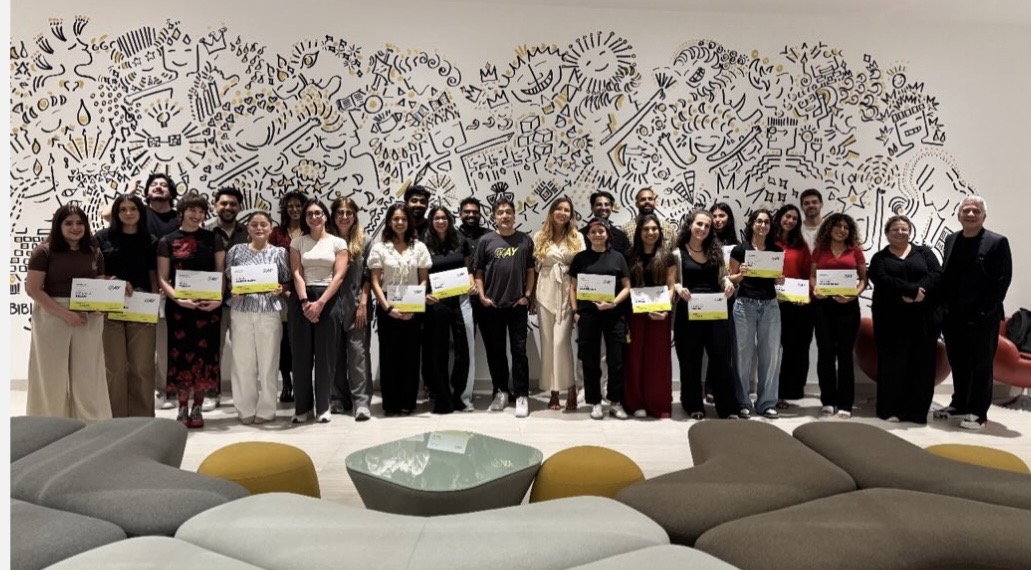
Twenty-five students. Six groups. One Coca-Cola brief. And a jury that included a Coca-Cola global VP, a Publicis CSO, an FP7 McCann ECD, and the Editor-in-Chief of Communicate. On a Saturday evening at the American University in Dubai, fittingly, the campus where several of the graduates study advertising: RAY, Dubai’s first dedicated advertising school, held its inaugural graduation, and it felt less like a classroom wrap-up and more like a launchpad.
RAY was built on a simple premise: the best way to teach advertising is to make it feel exactly like the industry it’s preparing students for. Over three weeks and nine masterclasses, covering everything from strategy and conceptualizing to AI, craft, and case studies , students learned from the people who live it: Derek Green, CCO at TBWA\RAAD; Muhammad Ali, ECD at Leo MEA; Nayaab Rais, Executive Creative Director at FP7 McCann MENAT; Passant El-Ghannam, CMO MENA at Kraft Heinz; and Santiago Cuesta, RAY’s co-founder, among others. Communicate came on as a media partner for the inaugural cohort, covering the journey, sitting on the final jury, and offering scholarship spots to standout graduates.
The final assignment was no classroom exercise. Students were handed Coca-Cola’s real “The World Will Wait” brief, the brand’s global platform, rolled out worldwide since August 2026 with Grey and WPP Media, built around a sharp cultural tension: people treat notifications as urgent and meals as optional, when it should be the other way around. Anchor films like “Laptop Face,” cheeky out-of-home lines (“No one ever said this meal could have been an email”), and the #AFKMeals creator movement had already set the tone. Now it was the students’ turn to crack it themselves: decode the insight in their own words, build a social strategy around it, and prototype two creator concepts to bring it to life.
Six groups, six completely different takes. One team leaned into memory and the ritual of “sticking around” after a meal. Another reimagined New Year’s Eve as Coca-Cola’s big occasion. A third cast burned-out creators as the heroes, proposing Coca-Cola-funded time off. One group built around music as an emotional trigger rather than a jingle. Another nailed the strategic core almost perfectly — centering real life over screens. And the final team flipped the brief on its head with a “looking up versus looking down” provocation. The range, in ambition, scale, and sheer presentation polish, was, by the jury’s own account, the most exciting part of the night.
The Verdict
No one brought sharper, more candid feedback than Islam ElDessouky, Coca-Cola’s Global VP of Creative Strategy and Content, who sat on the panel alongside Nayaab Rais, Professor Dina Faour of AUD, and Communicate’s Editor-in-Chief, Julien Hawari. Islam pushed the students hard on one core discipline: an idea has to work everywhere. “If the idea is very attached to a specific vehicle or medium, then the idea is a tactic,” he told them. “It’s not really an idea that can travel across the board.” He challenged teams that drifted from the meal occasion itself, reminding them that for a brand built on frequency, “we have 3 billion Cokes opened” every single day — repeatability, not just a clever concept, is what makes an idea commercially real. He also pushed back gently on the industry’s obsession with memory as the ultimate payoff. “The payoff is life itself,” he said. “The right now that we’re having this time together is the payoff.”
Nayaab Rais, who spent two weeks mentoring the cohort, said what struck her most wasn’t raw talent — it was how fast these students absorb and apply it. She described their energy as “infectious,” and admitted a level of sophistication in their thinking that caught her off guard for students straight out of university. For a creative leader years into the industry, she said mentoring this generation is also a kind of reset — a “burst of energy” that’s “contagious almost” on the days the job starts to feel routine. She was candid about why programs like RAY matter now: agencies simply don’t carve out the mentorship time they used to, which makes structured spaces like this one essential, not optional.
That exchange cut both ways. Tamara Mianapon, an AUD advertising student and one of the 25 graduates, admitted she walked in intimidated, unsure how she’d hold her own in a room full of people “way more ahead” of her in the industry. Two weeks later, she left with a different takeaway entirely: that advertising isn’t something you learn from one professor or one playbook, but something you absorb from everyone around you, each bringing “their own thirst for knowledge.” It’s that mix — of art, psychology, and business — that hooked her in the first place.
Malek, an art and brand designer with two years in the field, came in wanting to broaden beyond branding into strategy and advertising, “they all fall under the same umbrella in the end,” as she put it, and left with real clarity on her next career steps. Her verdict on working a live Coca-Cola brief: the feedback from industry professionals didn’t just critique the work, it “directed us and showed us the right path” to building an idea that could actually hold up in the real world. Chirag, a strategist in the cohort, said the lesson that stuck hardest wasn’t technical at all — it was being reminded, class after class, to actually live your life instead of chasing the next project. That instinct, pushed by judges and professors alike, left him more confident in the industry than he’d felt in years, he said, calling it “amazing and wonderful” to be handed frameworks for turning observation into ideas again.
That’s the real story behind RAY’s first graduation: not just the polish of six campaign pitches, but a room where Gen Z talent and industry leadership traded energy in both directions. For Communicate, backing this first cohort, sitting on the jury, offering scholarships, opening internship doors, is a statement of intent: investing in the next generation of creatives isn’t a side project, it’s part of how the industry renews itself.
If round one is any indication, the next cohort should expect a packed room. Twenty-five students didn’t just graduate from a course — they pitched Coca-Cola, got real-time feedback from the people shaping global campaigns, and left with scholarship offers and internship shots with Communicate on the table.