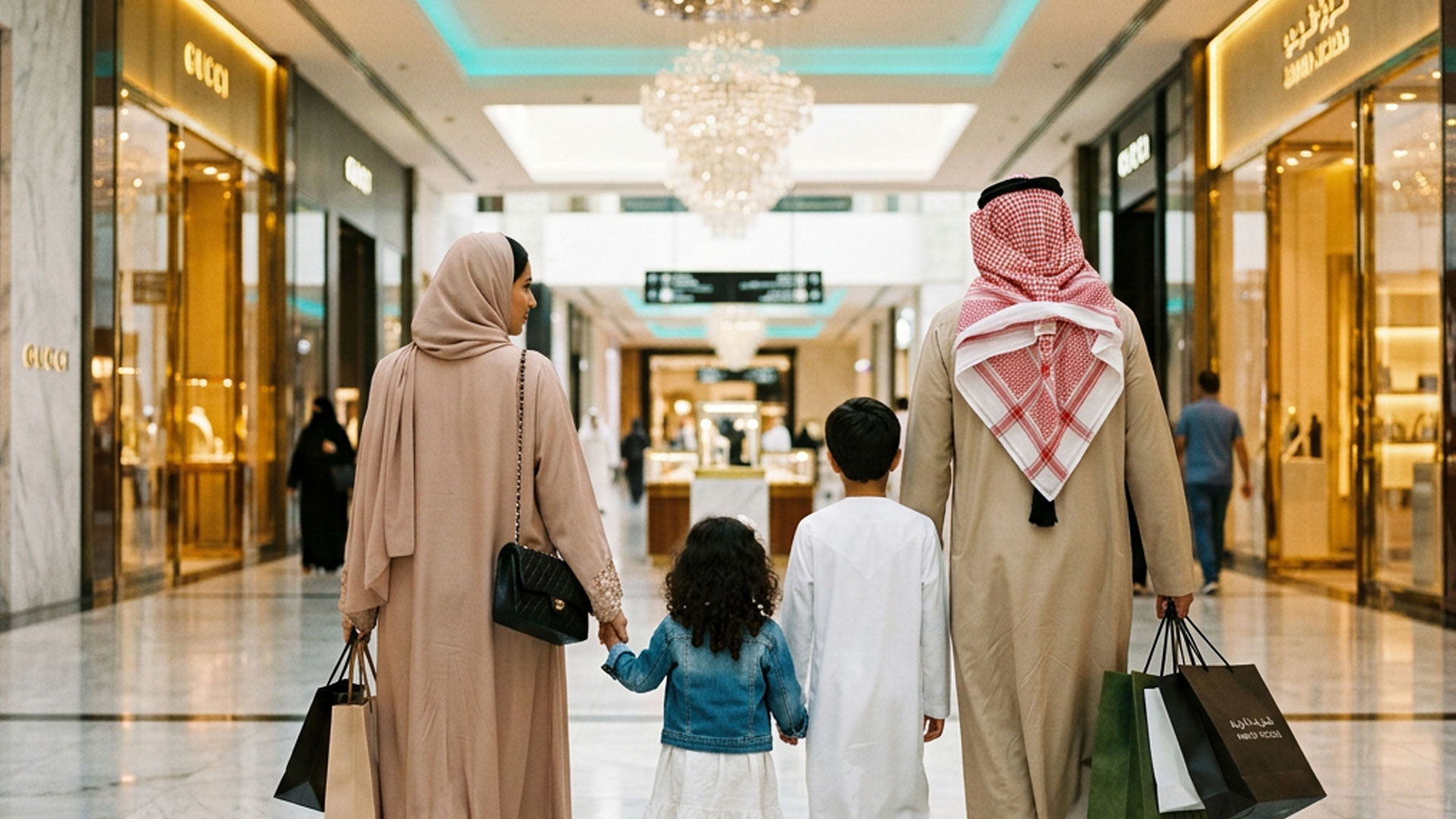
In May 2025, the GCC luxury industry appeared to be one of the brightest spots in global retail. A Chalhoub Group report described the region’s personal luxury market as “unstoppable,” projecting that sales across the Gulf would rise from $12.8 billion in 2024 to $15 billion by 2027, powered by tourism, wealthy expatriates, retail expansion and resilient local spending. Less than a year later, however, the Iran war has sharply disrupted that narrative, sending shockwaves through one of luxury’s most prized growth markets.
The 2025 report had made a compelling case for Gulf exceptionalism. While the global personal luxury market declined 2% in 2024, the GCC expanded 6%, with a five-year compound annual growth rate of 9%, far ahead of the global pace of 5%. The market had grown from $7.9 billion in 2019 to $12.8 billion in 2024, underlining how the Gulf had become an increasingly vital engine for brands battered by softness in China and Europe.
Fashion was the largest category, accounting for $5.5 billion or 43% of the market, rising 6% year-on-year. Prestige beauty was the fastest-growing segment, climbing 12% to $2.4 billion, while watches and jewellery together contributed $4.9 billion. The report noted that ultra high-end labels such as Louis Vuitton, Dior, Hermès, Chanel and Loro Piana collectively represented more than half of the GCC high-end fashion market.
Tourism fueled growth
Geographically, the UAE dominated with 56% of total GCC luxury sales, followed by Saudi Arabia at 18%, Kuwait 13% and Qatar 10%. Dubai Mall, the report noted, had become the most visited place on Earth, drawing 111 million visitors in 2024. Qatar recorded a record five million tourists, while Saudi Arabia was benefiting from a rapidly expanding retail landscape.
Tourism was central to the optimism. Air arrivals to the GCC had risen 8% in 2024, while tourist spending on fashion and beauty increased 5%. Russian tourists were the highest spenders in the UAE, while Saudi visitors remained big luxury consumers in Dubai due to pricing and assortment advantages. More than 90 new fashion and beauty stores opened across the GCC in 2024, reinforcing confidence that luxury demand would keep accelerating.
That confidence has now been badly shaken.
War hit sales
LVMH chief executive Bernard Arnault recently warned this week that failure to resolve the Middle East conflict could trigger a “world catastrophe” with severe economic consequences. The world’s largest luxury group said the conflict had already shaved one percentage point off first-quarter organic sales growth, effectively halving the company’s quarterly expansion. Organic growth came in at just 1%. Arnault said a resolution could revive business in the second half, but uncertainty remains acute.
Sales at top European luxury brands have sharply declined in the UAE, as the ongoing Iran conflict disrupts one of the industry’s fastest-growing markets, according to a Reuters report.
Luxury retailers recorded sales drops of 30–50% in March at Mall of the Emirates compared to the same period last year, Reuters reported. Footfall at the mall — which houses flagship stores from LVMH brands such as Louis Vuitton and Dior, Kering’s Gucci, and other labels like Cartier, Chanel and Rolex — fell by about 15%.
Similarly, the traffic at Dubai Mall, a major tourist hub, dropped even more steeply, declining by around 50%, suggesting a deeper hit to sales. In Abu Dhabi, the impact was less severe but still notable, with sales at The Galleria Al Maryah Island down roughly 10%, according to the report.
Uncertain outlook
The broader luxury sector, valued at around $400 billion, has already been under pressure since a post-pandemic boom ended in 2022. While global sales declined by 2% last year, the Gulf region had remained a rare bright spot, contributing about 5% of global luxury consumption and posting strong growth.
This reversal is especially painful because the Gulf was meant to offset weakness elsewhere. Chinese demand remains subdued, and Europe has struggled with macroeconomic caution. The GCC had offered something rare: wealthy consumers, tax advantages, growing tourism, government-led development and confidence in conspicuous consumption.
Now the same region that was expected to carry global luxury into 2027 has become a source of downside risk. The Chalhoub report itself had flagged geopolitical instability as one of the few major threats to forecasts. That caveat has proved prescient.
Luxury brands still believe the Gulf remains a long-term opportunity. Wealth has not disappeared, and tourism could rebound if stability returns. But for now, the 2025 vision of an “unstoppable” GCC luxury boom has collided with the oldest market disruptor of all: war.