
Short-form video apps are rapidly reshaping subscription and advertising strategies in the Middle East, with installs of “Short Drama” apps more than doubling over the past year, according to a report by AppsFlyer.
The firm’s State of Subscriptions for Marketers 2026 report found that installs of Short Drama apps in the UAE rose 109% year-on-year, making the category one of the fastest-growing in the region. The segment has also become a major destination for marketing budgets, ranking as the second-largest category for Android ad spend in the Middle East.
The parallel rise in user growth and advertising investment suggests the category is moving beyond experimentation, with marketers increasingly scaling campaigns rather than testing the format.
The report attributes the growth to shifting consumer preferences toward mobile-first, episodic content formats that encourage frequent engagement. It also noted that discovery in the category is increasingly driven by paid acquisition, with a growing share of installs linked to advertising rather than organic channels.
Across subscription app categories, paid user acquisition showed strong gains. Utility and Productivity apps recorded a 491% year-on-year increase in paid installs on Android and a 99% increase on iOS. OTT and Streaming apps posted a 31% rise on Android and a 640% jump on iOS, indicating stronger monetisation potential among iOS users despite Android’s larger scale.
These trends highlight diverging platform dynamics, with Android driving user growth and volume, while iOS delivers more concentrated gains in higher-value categories where users show a greater willingness to pay.
The report also found significant variation in how effectively apps convert users from free trials. Gaming apps attracted the highest share of trial users, with 12.2% entering trials, but only 19% converting to paid subscriptions. By contrast, Education and Lifestyle apps converted more than 40% of trial users, while Health and Fitness apps saw many users opting to pay upfront without trials.
The findings suggest that free trials are not universally effective and must be tailored to category-specific user behaviour and expectations.
Monetisation models are also evolving. OTT and Live Streaming apps are consolidating around subscription-led approaches, while Short Drama apps are increasingly incorporating ad-supported elements, allowing users to trade time and attention for access instead of paying directly. This hybrid approach is helping developers expand their user base while maintaining revenue streams.
“The subscription app market is still growing, but the centre of gravity has shifted,” said Sarah Maina, Regional Manager for the Middle East and France at AppsFlyer. “Android is now the primary growth engine, emerging markets are driving the bulk of new subscribers, and the categories pulling ahead are the ones that figured out where their audience actually is.”
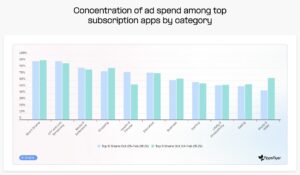
AppsFlyer said the report is based on anonymised and aggregated data from 2,900 subscription apps across 13 categories, including OTT & Live Streaming, Short Drama, Health & Fitness, Education, Utility & Productivity and Gaming.
The analysis covers 1.7 billion paid installs and $2.1 billion in user acquisition advertising spend between October 2024 and February 2026. The company said all results meet strict volume thresholds to ensure statistical validity.