When it comes to content formats, audiences want static and dynamic, polished and raw, fast-paced and professional, often all at once. But the future of content, according to Canva, is hybrid.
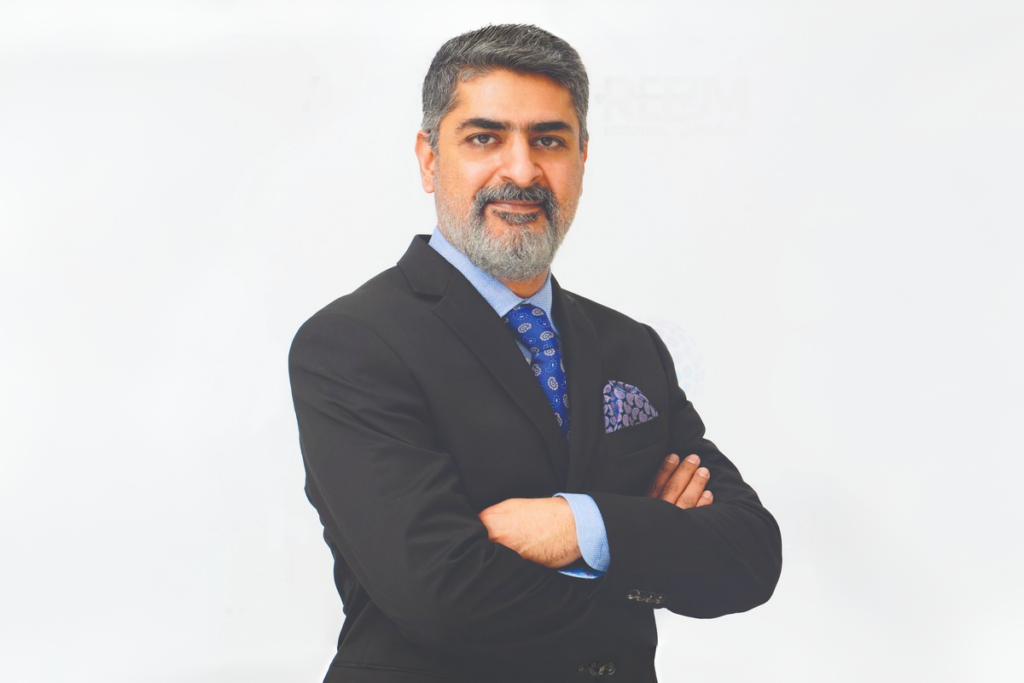
“If you look at it from the perspective of dynamic versus static content, what people really want is a combination of both,” said Michael Feichtner, EMEA Sales Lead at Canva, during an interview with Communicate at this year’s OMR Festival in Hamburg. “It’s not that people only want a four-minute video. They also want static elements inside that content — presentations, graphics, visual layers. It’s really becoming a mix of formats.”
While short-form videos now dominate digital platforms, audiences still expect presentations, pop-up elements and static design assets woven into those experiences, and GCC audiences are no exception.
AI-powered design
“Design has always been created by humans,” Feichtner explained. “Now, with the help of AI, Canva is shifting into an AI company with design at its core.”
Still, he emphasized that AI should function as an assistant rather than a replacement for human creativity.
“You should be using AI as an assistant to create whatever you want, not the other way around,” he said. “It should not be the case that AI is creating everything on your behalf.”

For Feichtner, the future of creative work depends on balancing human direction with AI-powered execution. That rule should be applied by companies searching for ways to integrate AI without losing originality, emotional intelligence or brand identity.
“Your job is to provide the right inputs, and our job as a software company is to provide better outputs.”
Creativity starts with prompting
With AI tools becoming more accessible, Feichtner believes human creativity and AI execution depends on the quality of ideas and prompts that users bring into the systems themselves.
“The more you read, the more you know, and the better you prompt,” he said.
For him, prompting is quickly becoming a new creative skillset.
“The more specific your prompt is, the better the output will be,” Feichtner explained. “The more creatively you approach your prompt, the better the outcome will become.”
Rather than replacing imagination, he believes AI tools are rewarding users capable of combining knowledge, curiosity and creative thinking into stronger inputs.
Video content demand is accelerating across the GCC
According to Canva, one of the clearest trends in the GCC is the growing appetite for video content creation.
“There is definitely a huge demand and hunger for video content creation,” Feichtner said.
That demand mirrors wider market trends as brands across Saudi Arabia, the UAE and the broader GCC are prioritizing short-form video, creator-led storytelling and visual-first communication strategies.
At the same time, Feichtner argues the market is not moving toward video alone. Instead, audiences are consuming layered multimedia experiences where motion, design and static assets work together simultaneously.
“The market is really heading toward a mix of formats overall,” he explained.
Canva and the global AI ecosystem
While many consumers still perceive Canva primarily as a design platform, Feichtner revealed that the company now sees itself firmly inside the AI ecosystem.
“What many people don’t realize is that Canva is actually the third most-used AI tool globally,” he said.
Today, users increasingly begin creative workflows directly inside AI platforms, whether through ChatGPT, Claude or other generative systems. Many of these tools have direct design integrations with Canva. The design platform is also integrating additional AI capabilities directly into its system and collaborating with other AI providers to strengthen its own tools.
Saudi Arabia and the UAE are driving enterprise demand
Beyond individual creators, Canva is also seeing growing enterprise adoption across the Gulf.
Feichtner, who leads Canva’s B2B Enterprise division across EMEA, said the company is receiving increasing inbound interest from Saudi Arabia and the UAE as businesses look for scalable creative and collaboration tools.
“People use Canva privately first, maybe for birthday invitations or wedding invitations, and then businesses realize everyone is already using it internally,” he revealed.
AI may automate design, but it is also democratizing creativity
Historically, professional design tools were often limited to highly trained specialists using complicated software platforms. Feichtner believes one of Canva’s biggest impacts has been making design more inclusive.
“Canva broke into that space by allowing people without traditional design skills to create something visually appealing,” he said.
While AI tools continue becoming more accessible, Feichtner sees creativity itself expanding rather than restricted to technical experts.
At the same time, he believes strong human direction will remain central to the creative process.
“AI may accelerate production and simplify workflows, creative intention still begins with people,” Feichtner concluded.