For Max Fashion’s Marketing Head, the future of retail is not about choosing between digital and physical. It is about making customers feel like they are shopping one seamless brand experience.
The fashion fitting room has always been a place of decision-making. It is where hesitation disappears. Where a customer looks in the mirror, turns around, checks the fit, and decides: this is for me.
For years, online shopping has struggled to recreate that moment. A product image can show the colour, the cut and the styling, but it cannot answer the most human retail question: How will this actually look on me?
That gap is exactly where Max Fashion saw an opportunity for artificial intelligence. The retailer recently launched its virtual try-on experience in the UAE, powered by Google Cloud technology, allowing customers to upload an image of themselves and digitally see how selected outfits would look before purchasing.
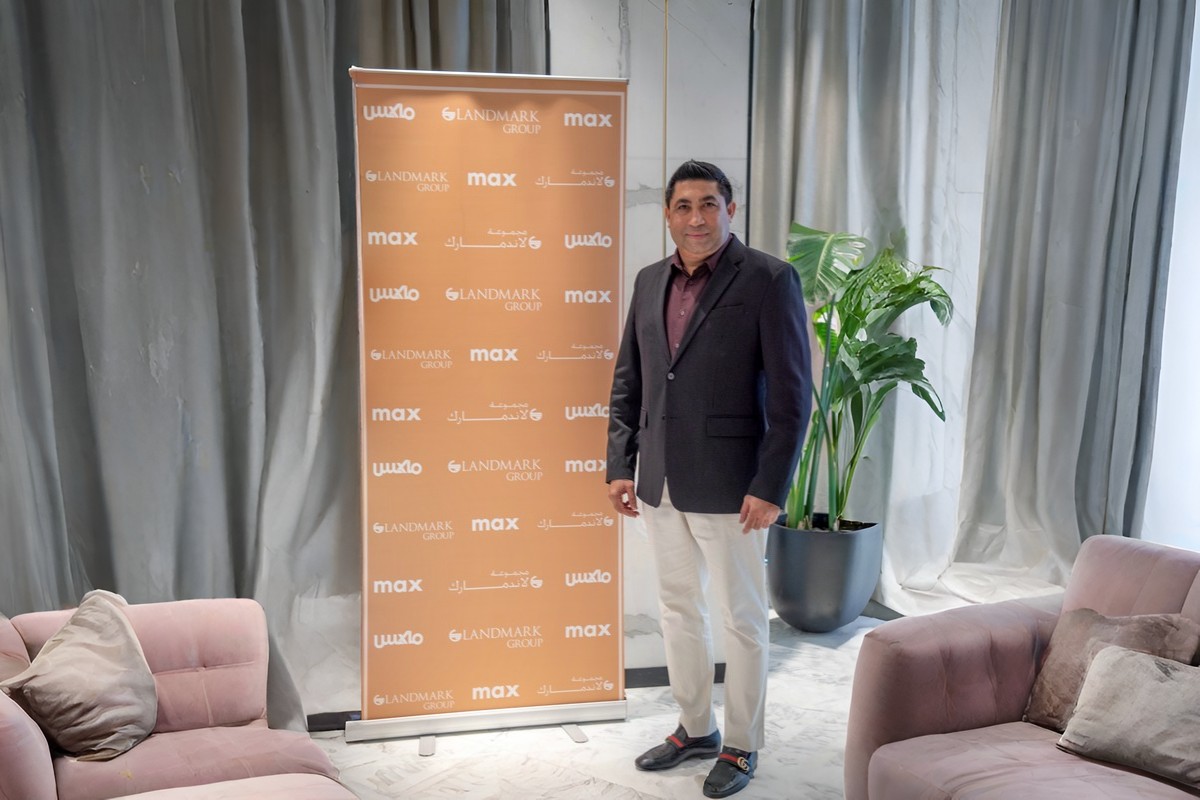
But for Haroon Rasheed, Senior Vice President and Head of Marketing at Max Fashion, the idea was never about jumping onto the AI bandwagon. It was about solving a very real customer problem. “There is a lot of AI hype today,” he says, “but what made this interesting was that it was actually solving a real business problem.”
The challenge was simple: customers were browsing online, but missing the confidence they get from physically trying something on in-store. “People used to go online and they used to actually browse but then they didn’t have a space to kind of see if this particular outfit actually suited them or not,” Haroon tells Communicate.
“For us, it was important to see if you could actually take that experience, that brick-and-mortar experience of being able to actually fit into the outfits, be sure of what a customer is buying before they walk away with it.”
The launch reflects a wider shift happening across retail. The battle is no longer online versus offline. The brands winning are those removing the distinction altogether.
“People don’t shop online or offline, they just shop a brand,” says Haroon. “And when they do that, it’s important that you keep things very seamless. The very fact that the customer doesn’t feel that I’m shopping online or offline is a victory for the brand.”
From transactions to experiences
For marketers, the rise of AI is creating a new question: are brands using technology to create better experiences, or simply adding technology because they can?
Haroon believes the difference comes down to whether brands start with the customer. “The problem happens when it starts taking over without understanding the customer,” he says.
That philosophy has shaped Max Fashion’s approach as the brand evolves its omnichannel strategy. The retailer’s loyalty ecosystem provides insights from millions of customers, helping inform decisions around products, experiences and communications.
The brand’s Shukran Loyalty programme includes around 14 million Landmark Group customers, with approximately 9.8 million actively shopping with Max. “Some of our top customers come and shop with us 7-8 times a year,” Haroon says. “So it’s pretty much our responsibility that we make sure that the experience is worth their while.”
That focus is becoming increasingly important in the Middle East, where consumers are young, digitally connected and increasingly demanding. Haroon points to markets such as Saudi Arabia, the UAE, Egypt and Kuwait, where younger consumers are reshaping expectations.
“They understand their tech, they know exactly what they want,” he says. “Very well-travelled as well. So I think all of this makes them a very compelling audience, no doubt, but it’s also an audience that needs where you have to raise up to the occasion to convince them to be loyal to you and shop with you.”
For brands operating in the region, familiarity is no longer enough. Loyalty has to be earned.
AI needs a human filter
While AI is transforming how brands create, personalise and engage, Haroon believes marketers need to be careful not to lose authenticity in the process.
The same technology that can make shopping easier can also blur the line between what is real and what is generated. “You have to be extra careful as a brand, be more responsible because one thing is for sure, it is still a real customer shopping with us,” he says.
For Max Fashion, transparency is critical.
“We don’t want to find ourselves in those situations because we believe we owe it to our customers,” Haroon says. “Our customers want real experiences and we want to try and make sure that as far as possible we are truthful to what we are doing from a communication standpoint.”
He believes AI’s biggest opportunity is not replacing creativity or human connection, but enhancing them.
“The whole idea of AI is to simplify the whole process because there’s a lot of visualization that you can do with AI, especially in marketing,” he says.
But knowing where to stop matters.
“We have to be careful, authentic, and real when we deal with the emotions that bring brands closer to their customers.”
The new advertising is the experience
For marketers, the traditional role of campaigns is changing. Consumers are no longer just watching advertisements. They are experiencing brands through stores, social platforms, creators and technology.
Haroon believes customer experience itself has become a powerful form of advertising.
“I think so,” he says when asked whether customer experience is becoming the new advertising.
The goal, he explains, is not to create complicated brand stories, but to simplify the customer journey. “Keep things very simple, very human, very real,” he says.
That philosophy also extends to the creator economy, where authenticity is becoming the biggest currency.
While creators continue to influence purchase decisions, Haroon believes audiences are becoming better at recognising what feels genuine and what feels staged.
“The more genuine you are, the better,” he says. “Customers are extremely smart today, they understand what is collaboration and what is real.”
For brands partnering with creators, the challenge is moving beyond reach and towards relevance. “I think creators need to do more. To connect at a more real level,” Haroon says. “It’s important to weave genuine experiences for their audiences as well as for the customers at large.”
Retail’s next chapter
Looking ahead to 2030, Haroon believes the retailers that succeed will be those that combine technology with responsibility.
“If you don’t use tech, you don’t use the abilities of what tech can bring you, I think you’ll be left behind,” he says.
But technology alone will not build loyalty. “Tech can help build brand love, but I think it’s still the real emotions that will build love for a brand,” he says.
For Max Fashion, the future is not about choosing between AI and human connection. It is about using technology to make every interaction feel more personal.
Because in a world where every brand can adopt the latest tools, trust may become the most valuable technology of all.