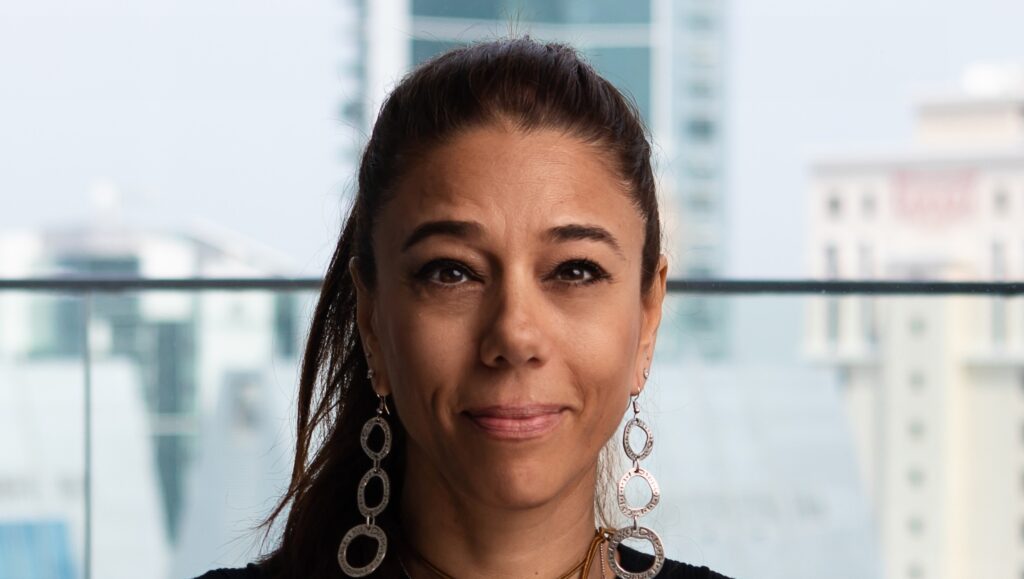
How can marketers preserve authenticity, creativity, and emotional connection in an AI-powered ecosystem? For Eva Lukai, Senior Account Executive at Google, the answer lies not in resisting AI, but in redefining the relationship between technology and human creativity.
“The human needs to be in the lead and not merely in the loop,” Lukai said during an interview with Communicate at this year’s OMR Festival in Hamburg.
That perspective shaped much of her vision around the future of marketing, content creation, and consumer behavior.
AI’s most underutilized capability may be analytics
While much of modern AI usage revolves around image generation and content automation, Lukai believes marketers are still overlooking one of technology’s most powerful applications:
“The power of analytics when it comes to AI, Gemini, and integrated systems is still heavily underutilized,” she explained.
According to Lukai, connecting multiple data sources into systems like Google Gemini and Gemini Enterprise allows marketers to run a single query and instantly generate insights across internal files, research, and workflows.
As organizations continue accumulating massive amounts of fragmented data, AI-powered insight generation can be extremely valuable for both efficiency and strategic decision-making.
The future belongs to multimodal AI systems
With the explosion of AI platforms across the market, marketers are now facing another challenge: choosing the right tools.
For Lukai, the answer depends on practical use cases.
“It’s really about what you need it for,” she said. “You need to think about different use cases and how they connect together.”
She believes multimodal systems, or platforms capable of processing text, video, image generation, and deeper reasoning simultaneously, currently hold one of the strongest competitive advantages in the market.
“For instance, Gemini being multimodal is a huge asset,” Lukai explained. “There may be systems better at one specific thing, but multimodality is one of the biggest advantages right now.”
AI fatigue and the need for authenticity
With generative AI flooding digital platforms with synthetic content, marketers are also facing a rise in consumer AI fatigue.
People are now capable of identifying repetitive, low-effort AI-generated material, which is pushing brands to rethink how authenticity is communicated online.
For Lukai, the distinction between human-made and AI-generated content is becoming less relevant than the quality and originality of the final output.
“I think everything can either be AI-generated or human-made,” she said. “It just needs to bring that human edge.”
She pointed to Google’s VEO3 challenge during last year’s YouTube Festival Berlin as an example of AI-enhanced storytelling done successfully. German brands including Sparkasse and Zalando collaborated with Google and the creative content studio 27km to produce storytelling-driven campaigns using AI-powered tools.
“I equally loved all three campaigns so much,” she said.
The success of those campaigns, according to Lukai, came from the fact that AI was supporting creativity rather than replacing it.
Hyper-informed consumers in marketing
One of the biggest behavioral shifts marketers are still underestimating, Lukai argues, is the rise of the hyper-informed consumer.
“The democratization of information is changing everything,” she said.
With AI-powered search tools and instant access to information, consumers are no longer passive recipients of advertising messages.
“We’re now dealing with hyper-informed consumers who have very high expectations,” Lukai explained, pointing to expectations around quality, transparency, and fact-checked information. “Consumers are becoming less and less passive.”
This awareness is forcing brands to produce better-researched, more balanced, and more sophisticated content as audiences become increasingly selective about what they trust.
Niche creators are becoming media ecosystems
Lukai also highlighted the growing importance of niche creators within platforms like YouTube.
“I think niche creators are becoming more and more important,” she said.
Rather than relying solely on mass influencers, brands are finding success through highly specialized creator communities built around specific interests, humor styles, or formats.
“Whatever you like, whether you’re a food blogger or a magician, YouTube becomes your personal primetime experience.”
According to Lukai, YouTube’s ability to personalize viewing experiences around highly specific interests is precisely what makes creator ecosystems so powerful today.
Creativity is not disappearing
While debates continue around whether AI democratizes or dilutes creativity, Lukai rejects the idea that accessibility automatically removes originality.
“The human edge is what keeps creativity unique,” she said.
For her, AI’s role is not to replace artistic emotion or storytelling instincts, but to make creative tools more accessible to a wider range of people and businesses.
“Creativity is not dead,” Lukai added. “It’s changing and evolving.”
Ultimately, Lukai believes successful brands and creators are the ones capable of balancing AI efficiency with genuine human connection.
Because while AI may generate faster workflows, deeper analytics, and scalable production, the emotional core of storytelling still depends on people.