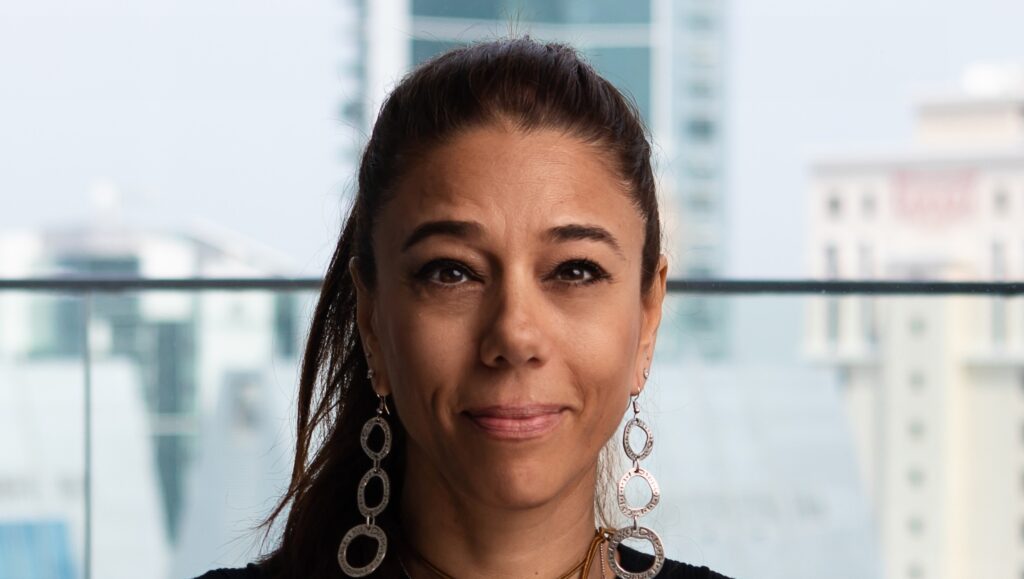
Abu Dhabi’s Creative Media Authority is positioning itself at the centre of the emirate’s fast-growing creative economy, spanning film, television, digital content and talent development. In this interview, Salwa Al Hadhrami, Head of Creative Content and Creative Community Projects, discusses the authority’s mandate, the launch of the Family in Frame Award, the importance of authenticity in storytelling, and why sustainable talent pipelines matter as much as global recognition.
Please share about the mandate of the Creative Media Authority? What campaigns and projects do you lead?
The Creative Media Authority (CMA) plays a central role in shaping and advancing Abu Dhabi’s creative media sector, with a mandate to develop a sustainable and multidisciplinary industry across the emirate. It brings together a broad ecosystem spanning film, television and digital content, while implementing a regulatory framework that enables growth, innovation and private sector participation.
Within this ecosystem, CMA oversees a number of specialised entities and initiatives, including the Abu Dhabi Film Commission and talent development platforms such as Creative Lab and Arab Film Studio.
I lead content development across the Creative Media Authority and its entities, ensuring a consistent and meaningful narrative across our initiatives, platforms and industry engagement. Alongside this, I also oversee Creative Community Projects, which focuses on identifying and supporting creative talent from within the community by providing opportunities to work on real projects aligned with key national moments. This includes strategically using marketing budgets to champion homegrown talent, ensuring creative investment directly supports the local ecosystem while reinforcing our commitment to building a sustainable creative media industry.
Through this, emerging creatives gain hands-on experience across production, content creation and storytelling, guided by industry professionals. My focus is on shaping these initiatives into meaningful outputs through structured programmes or open platforms like Family in Frame, creating space for emerging voices to be seen, supported and developed. We have seen strong outcomes through this approach, including successfully connecting talent within the ecosystem, turning opportunity into tangible professional progression.
The Family in Frame Award sits within the UAE’s “Year of the Family”, but beyond the official framing, what was the real spark that made you feel this needed to exist right now?
The timing feels especially meaningful, as it’s a moment where there is a shared focus on unity, connection and coming together. The idea itself came from something quite instinctive. As an Emirati, I’ve grown up seeing how central family is to who we are, as it shapes our values, our sense of belonging and the way we connect with others.
Across the creative community, you can see how much of people’s work is influenced by those personal experiences. Through our work across CMA’s platforms and initiatives, we often see how these personal stories naturally shape creative expression. What felt missing was a simple, accessible way to acknowledge that in an honest way. Not through polished narratives or large productions, but through the everyday moments that often say the most, moments that reflect both our heritage and the diversity of lives and stories that make up the UAE today.
The award creates space for people to pause, observe and capture what family means to them, in their own way.
We often talk about “family” as a big idea, but it’s usually the small, ordinary moments that carry the most emotion. Why do you think photography is such a powerful way to hold onto those everyday truths in the UAE today?
Photography has a quiet way of capturing what we might otherwise overlook. It allows us to pause and recognise the value in everyday moments — the gestures, the routines, the connections that often go unspoken but mean the most.
In the UAE, where life is shaped by both deep-rooted traditions and a rich mix of cultures, those moments carry even more meaning. They reflect not only our heritage, but also the diversity of experiences that exist side by side.
Photography makes those everyday truths visible. It preserves them in a way that feels immediate and personal, allowing people to hold onto moments that might seem small, but are often the most meaningful.
The judging panel brings together photographers with very different disciplines, from portraiture to sports to documentary-style work. What was the thinking behind curating this mix of perspectives?
The diversity of the panel was very intentional. Family, as a theme, can be expressed in many different ways, so it was important to bring together perspectives that look at storytelling through different lenses.
Ranald Mackechnie brings a global perspective shaped by his experience photographing both international figures and leaders within the UAE, with a very refined eye for composition and storytelling. Khalid Alhashimi adds a strong cultural dimension, with a deep understanding of the region and a commitment to documenting authentic human narratives.
Hind Al Raeesi offers a different energy through her work in sports photography, where capturing emotion in real time requires instinct, precision and timing. Abdullah Al Braiki brings a sensitivity to both portrait and landscape, with a focus on detail and emotional depth, while Mohamed Somji contributes a very considered approach to portraiture, with a strong emphasis on expression, composition and the subtleties of human connection.
Bringing these perspectives together allows for a more balanced and thoughtful evaluation, where each image is not only assessed for its technical quality, but also for the feeling it conveys and the story it holds.
When you evaluate submissions, what does “authenticity” mean in practice, especially when you are dealing with personal, lived moments rather than staged creative work?
Authenticity is something you feel before you analyse it. It often comes through in the emotion of an image and in the way a moment is captured, rather than how perfectly it is composed.
When you’re looking at personal, lived moments, it’s not about whether everything is technically perfect and more about whether the image feels honest. That can be a glance, a gesture, or a quiet interaction that reveals something real about the relationship between people.
You can usually sense when a moment is genuine. There’s a natural ease to it, an emotional truth that doesn’t feel staged or constructed. That’s what we look for — images that carry a feeling and allow others to connect with that moment in a meaningful way.
Beyond trophies and exhibitions, what would make you quietly think: “this award actually changed how people see their own families”?
I think it would be in the small shifts. If people begin to look at their own lives with a bit more attention and start to notice the moments they might have otherwise overlooked.
If someone feels encouraged to capture a moment with their parents, their children, or even something very simple at home, and sees that as something meaningful, then that’s impact. It’s not about changing something in a big or visible way, but about creating space to reflect on what already exists.
At its core, family shapes who we become — our values, our sense of responsibility and the way we connect with others. These are things people already hold closely, but we don’t always pause to see them reflected back.
What will be special is when these images come together in the exhibition. It becomes a shared moment, where people can see different reflections of family across cultures, generations and experiences and recognise something of their own within it. If the award can create that sense of connection and shared understanding, then I think it has done what it set out to do.
As an authority that actively builds the ecosystem (from film and content production to talent development and regulatory frameworks), how do you personally define “effectiveness”? Is it about global recognition of Abu Dhabi’s creative output, the growth of local talent pipelines, or the commercial sustainability of the industry you’re helping shape?
Effectiveness is not one single outcome and sits across a number of interconnected areas. There is value in seeing creative work from Abu Dhabi and the UAE reach wider audiences and be recognised beyond the region, but that is only one part of the picture. What matters just as much is the strength of the ecosystem behind it.
From a content perspective across CMA’s entities and initiatives, effectiveness is about how well the sector is able to preserve and express cultural heritage and identity, while also reflecting the diversity that defines the UAE today. It’s about ensuring that creative work feels authentic to where it comes from, while remaining open and relevant to different audiences.
It is equally about the development of national and local talent, creating pathways for individuals not only to enter the industry, but to grow within it, build careers and contribute to shaping its future. Beyond that, it’s about enabling creatives to take that further, to establish their own businesses, collaborate with others and become part of a wider, connected ecosystem.
At the same time, there has to be a strong foundation that supports long-term sustainability, from the regulatory environment to the infrastructure and opportunities that allow the sector to thrive.
All of these elements align with the UAE’s broader vision for the creative media sector to build an industry that is globally competitive, culturally grounded and sustainable over time. When these layers come together, where talent is empowered, creativity is authentic and the ecosystem supports growth and collaboration, that’s when you start to see real effectiveness.
And zooming out a bit. When looking at the wider industry debate around Effectiveness vs Awards (including platforms like Cannes Lions), do you think awards today are still a true reflection of effectiveness, or are they increasingly serving different purposes?
I think awards and effectiveness do not measure the same thing, but they can overlap. Awards recognise creativity, craft and strong ideas, while effectiveness is about the impact that work has over time, on people, on the industry and on the wider community. When those two align, that is where the strongest work sits.
Ultimately, the merit goes to the work that truly resonates and makes a difference. Whether through recognition or real-world impact, the work should stand out where it matters most, in how it connects, influences and contributes beyond the moment.