As Doha prepares for the second edition of Art Basel Qatar in January 2027, the challenge is to turn the global art fair into more than a marketplace for collectors and galleries: building a lasting platform for artists from the Middle East, North Africa, South Asia and the wider Global South to gain visibility, recognition and a place in the international art conversation.
Art Basel, the fair founded in Switzerland in 1970, hosts editions around the world in Basel, Miami Beach, Hong Kong and Paris. However, its Doha edition, being led by Iraqi curator Wassan Al-Khudhairi under the theme “between / بين”, is especially significant because it is the fair’s only platform in the Gulf and the wider MENASA (Middle East, North Africa, and South Asia) region.
This gives the Qatar edition a distinct role. It cannot simply be another stop on the global art-market calendar, where international collectors arrive, galleries sell, and the attention moves elsewhere after a few days.
Doha should instead become a place where artistic value is not only purchased, but also produced: where artists from MENASA, and the wider Global South are seen, written about, collected, funded, and remembered beyond the fair week.
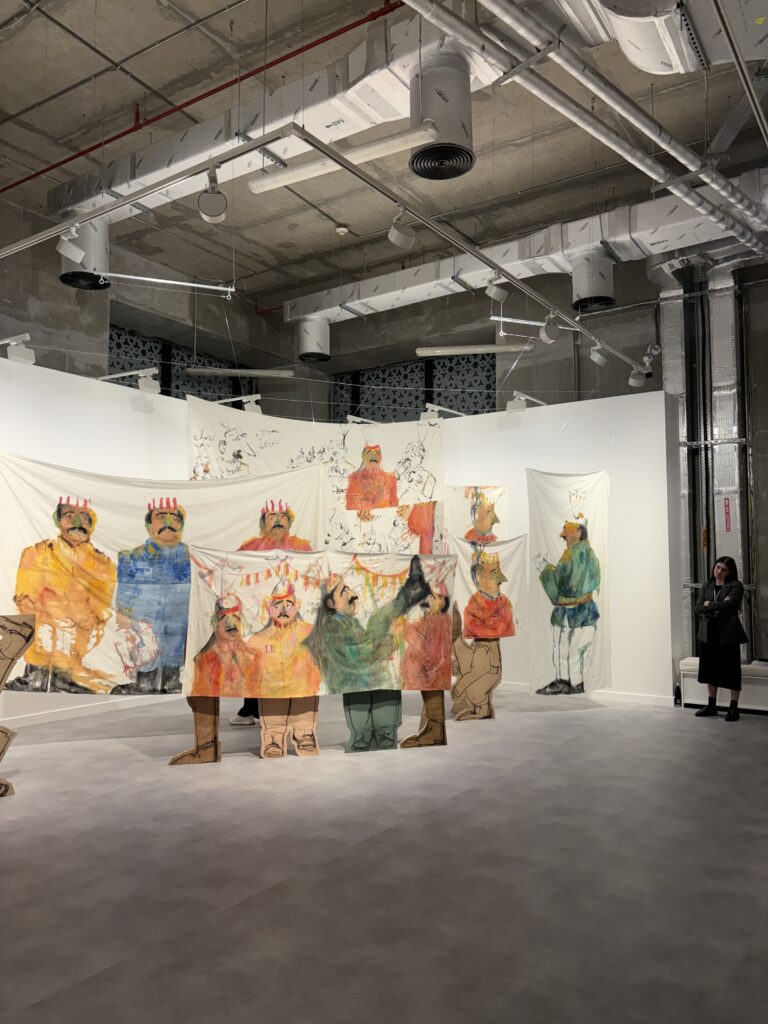
The question of whether it can fulfil this role first emerged with its inaugural edition in Qatar in February this year. Held under the theme “Becoming” and directed by renowned Egyptian artist Wael Shawky, a renowned Egyptian artist, the edition stood out for its focus on artistic transformation and cultural exchange.
Art Basel Qatar was not only entering a new region, it was also trying to move away from the traditional booth-based commercial art fair, toward a more open exhibition format. This included featuring galleries from the Gulf, wider Middle East, North Africa, and South Asia, and bringing together 87 galleries from 31 countries and territories.
In fact, Art Basel described its Qatar edition as “an unparalleled gateway for outstanding artistic talent from the Global South and beyond,” with the aim of establishing a long-term platform for artists and cultivating a new market across the MENASA region.
However, that is an ambitious claim. The Gulf has long been a buyer, patron, and builder of cultural institutions. Art Dubai, now two decades old, has already helped position the region as a serious art-market meeting point. Qatar Museums, Louvre Abu Dhabi, the Sharjah Biennial, Diriyah Contemporary Art Biennale, and other institutions have also shown that the Gulf is not new to cultural ambition.
The real challenge, then, is how to make the fair a long term platform for artistic exchange and support and not just a short term commercial fair.
This matters because the global art market has often treated London, New York, Paris, Basel, and Hong Kong as its natural centres. Doha’s entry is important only if it expands who is seen, collected, written about, and remembered. The opportunity is not simply to bring another luxury fair to the Gulf, but to make room for artists and galleries from the Middle East, South Asia, Africa, and the wider Global South.
If Art Basel Qatar is presented as a gateway to MENASA, then it must avoid turning a large and diverse region into a single market category. The region is not one story, one aesthetic, or one audience. Its strength lies precisely in its differences: languages, histories, conflicts, materials, spiritual traditions, and artistic movements that do not always fit neatly into Western art-market expectations.
There were glimpses of this possibility in the first edition. The presence of artists such as Kashmir-born Raqib Shaw, British-Pakistani artist Haroon Mirza, and Ghanaian artist El Anatsui suggested how Doha could become a platform for artists whose work moves across regions, identities, and histories. For artists from places often treated as peripheral to the art world, visibility at a fair like Art Basel Qatar is not only about sales. It is also about being placed within a global conversation.
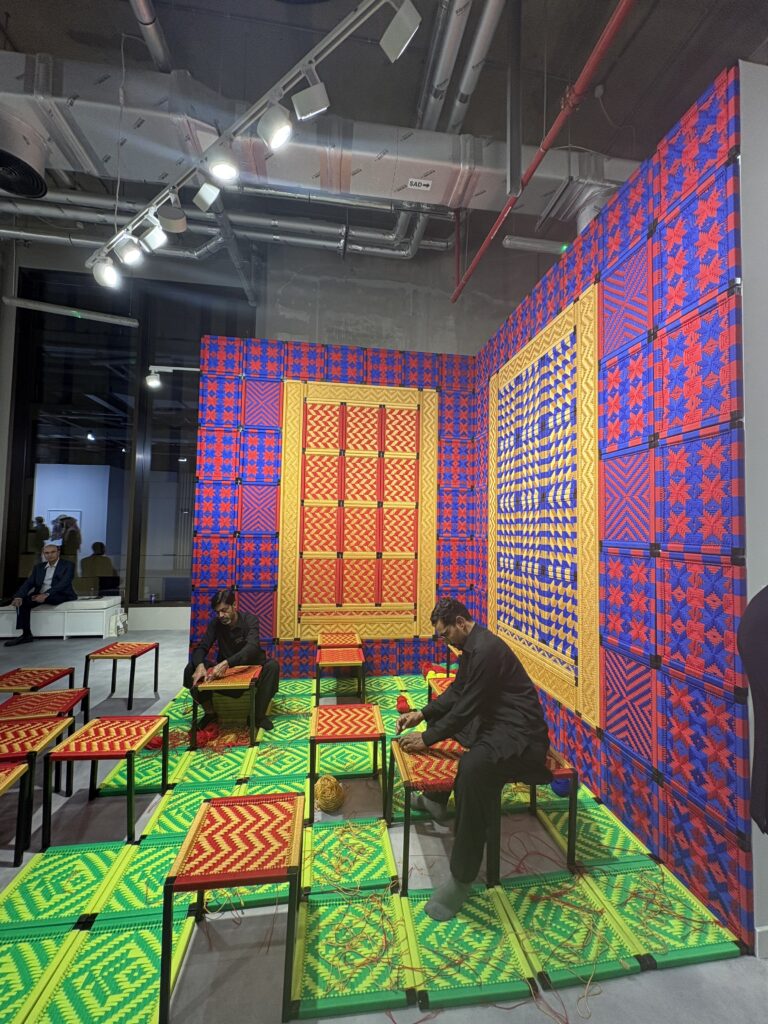
Still, the question remains: will Art Basel Qatar make the art world less narrow, or will it simply reproduce the same exclusivity in a new location? Art fairs are expensive, elite, and often built around collectors more than the public. If Doha is to become a meaningful centre, it must do more than attract galleries and VIPs. It must also create space for criticism, regional scholarship, younger artists, local audiences, and cultural exchange that lasts beyond the fair week.
The 2027 theme, “between / بين,” gives Art Basel Qatar a useful language for this challenge. If “Becoming” announced Doha’s arrival, “Between” should ask harder questions: between market and institution, centre and periphery, Gulf and Global South, spectacle and substance.
Al-Khudhairi has described the 2027 theme as an “invitation for connections across generations, geographies, and perspectives.”
That openness is exactly what the Qatar edition now has to prove in practice.
The real success of Art Basel Qatar will not be measured only by collectors, galleries, or international headlines. It will be measured by whether Doha can help widen the map of the art world, and whether the artists it brings into view remain visible after the fair closes.
(Sakhra Riyaz is a researcher and writer currently based in Doha, Qatar)