A PR agency owner recently found herself doing the one thing clients never hire her for: pulling the plug. Ellie, Founder of KPR, had a major hospitality launch ready to go, months of planning, glossy content, pressure from a client who needed numbers. Then the Israel-US-Iran conflict escalated. News feeds filled with interception alerts. The campaign was still beautiful; it was just wrong.
“Telling a client to stop. That’s never easy… The job of a good PR is to protect the long-term reputation,” Ellie says.
Welcome to the new marketing brief in the GCC: keep brands visible, keep teams sane, keep the tone humane – all while the spreadsheet looks like it’s gone back to the Covid days of 2020.
The day the inbox went quiet
If you want to measure the impact of this conflict on marketing, don’t start with GDP curves. Start with Ellie’s inbox.
“Our emails went quiet literally overnight and new business enquiries dropped. Events and launches were postponed and campaigns paused.” Her agency sits in the kernel of the storm: hospitality and food and beverage. The city’s infrastructure is still there, hotels are still open, her team is still working – but the work itself has shapeshifted. The questions have moved from “How do we position this?” to “Should we say anything at all?” and “How do we not sound like aliens?”.
Throughout the GCC, the money has shapeshifted too. Some clients requested a temporary pause. Cash flow is suddenly a character in the story, not a line in a finance report. When you’re a small shop, the fear of uncertainty is not abstract. And yet, Ellie’s first reaction was not to open the P&L. It was to open a group chat.
“The first thing I did wasn’t to look at the finances… it was to make sure my team were ok… The business can wait — the human questions cannot,” she explains. They went fully remote, not because of productivity metrics, but because “there’s something about being in your own space when the news is like this.” Office return is now at the bottom of her to-do list.
Jonathan, unpaid leave and the agency that hit pause
A few miles away, the conflict landed in a different way for Jonathan, who works at a niche mid-sized agency serving hospitality and events. Two weeks into the crisis, he was told he was being put on unpaid leave. Some of his colleagues were quietly let go.
The reasons were brutally simple: their clients froze digital marketing budgets. Not cancelled, just froze. Contracts were technically alive, scopes theoretically intact, but everything in the pipeline was shoved into an indefinite “later” folder. The agency’s niche (once its superpower) suddenly became its vulnerability.
It’s a very 2026 kind of paradox: the same specialization that wins you business in boom times is the thing that ties your cash flow to one category’s heartbeat in times of uncertainty.
Inside the “back to Covid mode” economy
Zoom out from the agency floor and the picture looks eerily familiar.
An industry insider, who spends his days watching consumer markets across the GCC, describes the luxury sector in the UAE as ‘stalled’. Saudi’s premium segment is wobbling but holding. Kuwait is softening. Hotels are cutting staff again. Restaurants are quietly trimming teams and menus. In some boardrooms, the phrase “back to Covid mode” is no longer a metaphor, it’s an instruction.
The expert argued that automotive marketers are discovering that when shipping costs jump and demand slides at the same time, “launch film” drops several places down the priority list. FMCG, particularly in Saudi, is gritting its teeth and carrying on, volumes holding, margins squeezed. In the UAE, a smaller expat base means you can win all the share you like and still sell less stuff.
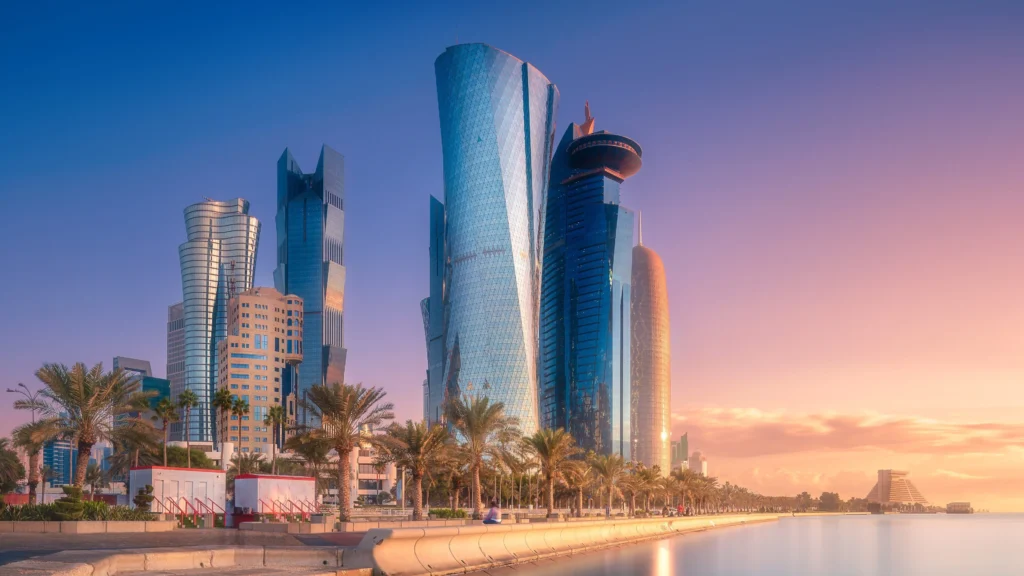
Then there is Qatar, where the story is less about footfall and more about infrastructure. Key gas-related facilities have been hit. The rebuild timeline is measured in months and maybe years.
Long-term contracts are already shifting, and with them, the advertising that sits on top of those industrial realities. Somewhere between fertilizer disruption and energy re-routing, marketers are discovering that “supply chain” is no longer someone else’s problem.
Nick’s room of independents
Unlike previous shocks, this one is not just shrinking the market, but reshaping how it works. Positivity here does not mean pretending the numbers look fine. It means telling the story of what agencies are doing now that they don’t.
If Ellie’s inbox and Jonathan’s leave letter show the uncertainty, Nick Walsch, the Founder and CEO of Migrate, is watching the response.
Nick spent more than two decades inside networks running agencies through the 2008 crisis, the 2012 slowdown and Covid. Last year he left to launch Migrate, with one slightly audacious idea: build proper infrastructure for independent agencies in the Middle East. Migrate’s early focus was helping international agencies land, expand and launch in the region. The demand was strong.
He argues that outside the top tier, the industry lacks real infrastructure. “It quickly became clear that there isn’t much infrastructure in the industry. There are some media titles and award shows, but beyond the top 8–10 agencies, there’s very little support. There are events, but not real platforms for growth. PR has stronger structures, but the rest of the industry lacks that,” he says.
Nick helped spearhead a regional Alliance of Independent Agencies, a community built on three C-letter pillars: Community, Capability and Connectivity.
They soft-launched in December. By the time the conflict hit, they had enough agencies on board to start something unusual in this market: regular drop-in sessions where leaders show up, cameras on, and talk honestly about what is actually happening.
The alliance has been running drop-in sessions where leaders come together to share openly and support each other, Nick explains. The themes are surprisingly consistent:
- It’s a market slowdown, not a shutdown.
- Experiential and on-ground work are hardest hit.
- Agencies are preparing for “the day after”.
- There is strong focus on client partnerships and value protection.
- Commercial pressure is increasing, budget cuts, delays, fee pressure
- Events are postponed, not cancelled , a positive sign
- Layoffs are a last resort.
And then there’s the human stuff: segmenting teams by need, being transparent about the numbers without flipping people into panic, sharing mental-health resources that were once treated as a nice-to-have.
The most un-Middle Eastern thing of all? Agencies, historically fierce rivals, are now sharing plans, advice and support. “The industry has traditionally been competitive, but the Alliance is changing that,” Nick says.
It seems that this is the first time independents in the region are behaving like a network, without becoming one.
The “missing middle”
There is a bigger structural story humming under the surface.
Roughly 86% of the region’s marketing work still sits with networks, a full 30 points higher than the global average. That has less to do with capability and more to do with comfort: procurement departments trust big names, boards like familiar logos, and networks have spent decades building visibility that independents simply don’t have.
At the same time, demand has been quietly shifting toward specialists: commerce, CX, experiential, data and tech shops that can solve very specific problems without the overhead of a holding company. Nick calls the gap between those two realities the “missing middle” concept. When big brands pause, mid-tier clients suddenly matter more. When long planning cycles break, being able to turn something around in a week matters more than global alignment calls. When every dollar has to prove itself, the ability to blend performance with brand sensitivity stops being a conference panel and becomes the brief.
Independents that survive this phase with their teams and their client relationships intact will come out of it with something case studies can’t fake: proof that they can hold the line amidst disruption.
From “look at us” to “we see you”
If this conflict is rewriting the rules of marketing in the GCC, the biggest rewrite might be tonal.
Ellie has a simple test for whether a brand is getting it right: do they sound like they’ve noticed how people feel?
“So many brands are still broadcasting at people,” she says. “The ones that stand out have shifted from ‘look how amazing we are’ to ‘we see you, we’re here, we’ve got you’.”
In hospitality, that looks like a quiet DM to regulars, not a fireworks-heavy launch. It looks like resident-focused offers that acknowledge people are still here, still wanting some normality, even as they refresh the news. It looks like pausing the big “Welcome World” storytelling and doubling down on “We didn’t leave” stories for the people who actually kept the lights on.
Short-termism is everywhere: clients want things that work this week, not next quarter. Performance budgets feel safer than brand building because you can screenshot the results. “Brand is what survives a crisis… you’ve quietly hollowed out the thing that makes people loyal to you.”
Where the hope is hiding
Optimism lives somewhere else: in what marketers and agencies choose to build in this moment. Ellie says: “people. Specifically, I’m watching whether residents are coming back out. Whether the restaurants are filling up again on a Thursday night, whether the queues are back at the coffee shop and whether people are meeting friends and making plans, rather than staying home and refreshing the news.
That’s my barometer, because in hospitality, consumer confidence isn’t an economic indicator, it’s a feeling, and I think feelings show up in behaviour long before they show up in data.”
In the UAE, the hospitality industry is quietly learning how to talk to residents as if they are the main event, not a helpful buffer between peak tourism seasons. In Saudi, FMCG marketers are figuring out how to defend volume and relevance when households are feeling every riyal. In Qatar, agencies that once told infrastructure-adjacent stories as a backdrop are suddenly having to explain supply chains in human language.
Now that the conflict has temporarily ended, the real question is what comes after.
Ellie has a theory about that. “The recovery narrative. And the brands that stayed visible through this period are going to own it. There’s a window opening right now that most brands can’t see yet because they’re too focused on managing the present. When confidence returns — and it will — there will be a moment where Dubai collectively exhales. And the brands that will lead that moment aren’t the ones who went dark and then suddenly reappeared with a big splash, it’ll be the ones who never really left.”